
Good Health and Well- Being
Promoting Good Health and Sanitation
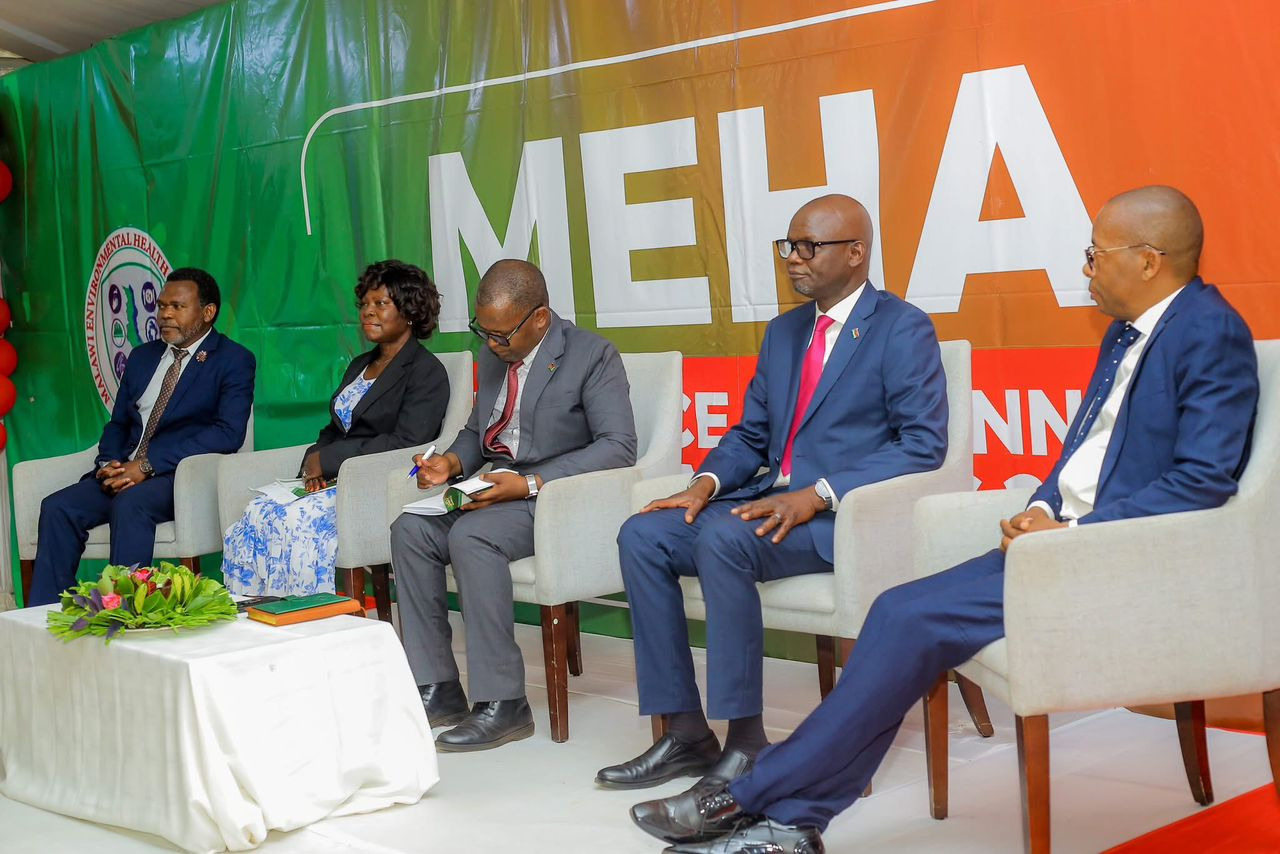
Officials at the MEHA 2025 Conference
The Malawi University of Business and Applied Sciences (MUBAS), through the Centre for Water, Sanitation, Hygiene and Appropriate Technology (WASHTED), is advancing Sustainable Development through research by addressing key public health and environmental challenges.
WASHTED showcased its research at the Malawi Environmental Health Association (MEHA) 2025 Conference and the First National Public Health Research Dissemination Conference, presenting studies on water, sanitation and hygiene (WASH), adolescents’ mental health, wastewater treatment, sanitation-related quality of life and plastic waste.
The research demonstrates MUBAS’s contribution to evidence-based approaches that support healthier communities and sustainable public health systems. At the MEHA Conference, WASHTED was also recognised with the Best Research and Innovation Institution Award for its contribution to environmental health research and innovation.
Through its research and knowledge-sharing initiatives, MUBAS continues to contribute to SDG 3 by generating practical evidence to inform public health interventions, environmental management and community wellbeing.
Promoting Mental Health and Wellbeing for All
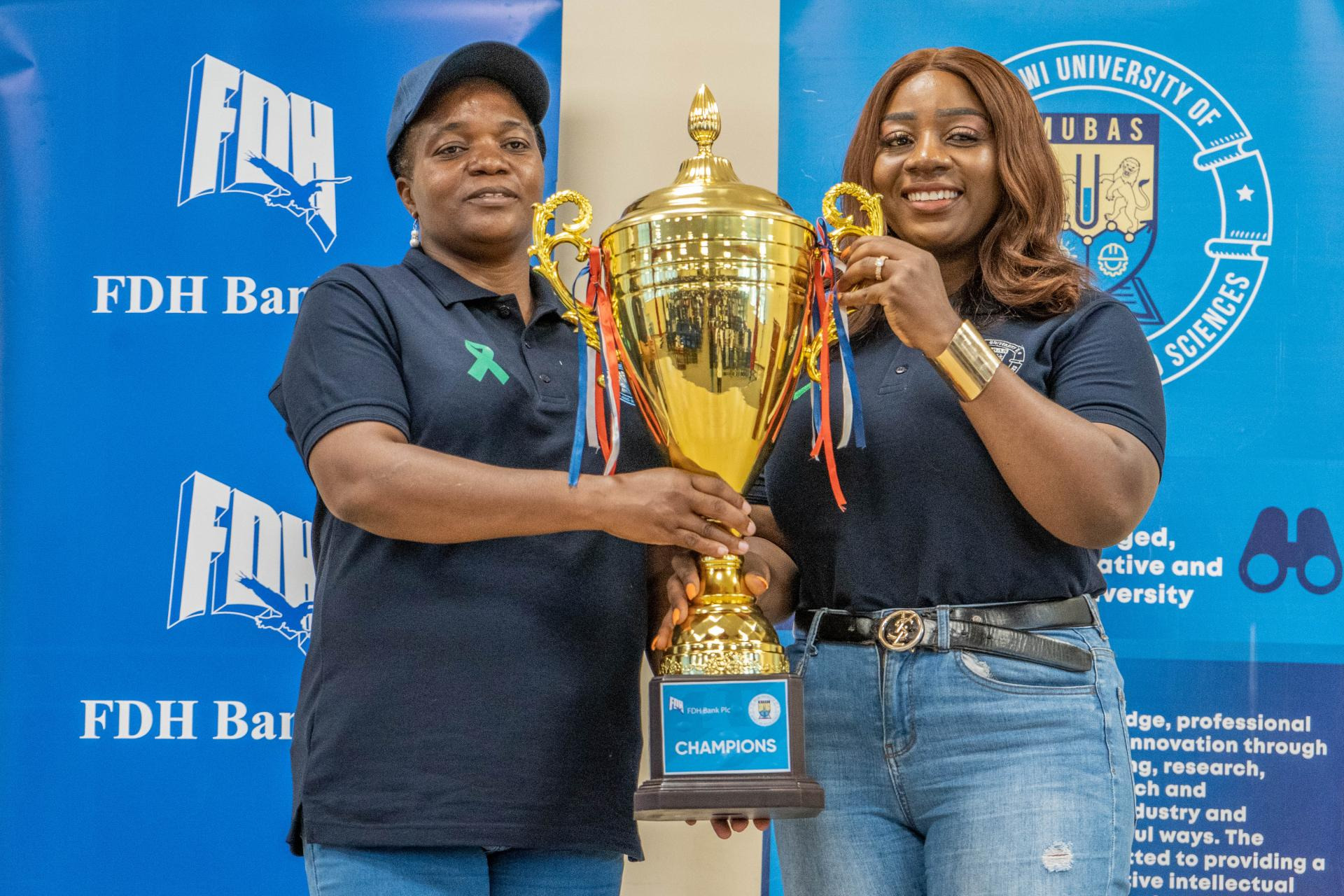
Assoc. Prof. Nancy Chitera (Left) pauses with Chiwaka, FDH Representative
The Malawi University of Business and Applied Sciences (MUBAS) strengthened its commitment to SDG 3, through the Mental Health Week 2025, held from 1 to 6 September under the theme Mental Health Care: A Universal Right.
The programme brought together students, staff and partners for awareness activities, open discussions and engagements aimed at promoting mental health and reducing stigma. The programme highlighted the importance of mental health in academic achievement, personal development and social inclusion.
Speaking during the closing ceremony, Nancy Chitera emphasized the need for a supportive environment where students and staff can access the care and understanding needed to thrive.
With support from FDH Bank, MUBAS also promoted holistic wellbeing through recreational and sporting activities under the 2025 Vice Chancellor’s Trophy. Through this initiative, MUBAS demonstrated its continued efforts to create an inclusive environment that supports the mental, social and physical wellbeing of its community.
Students Champion Clean Communities Through Environmental Action
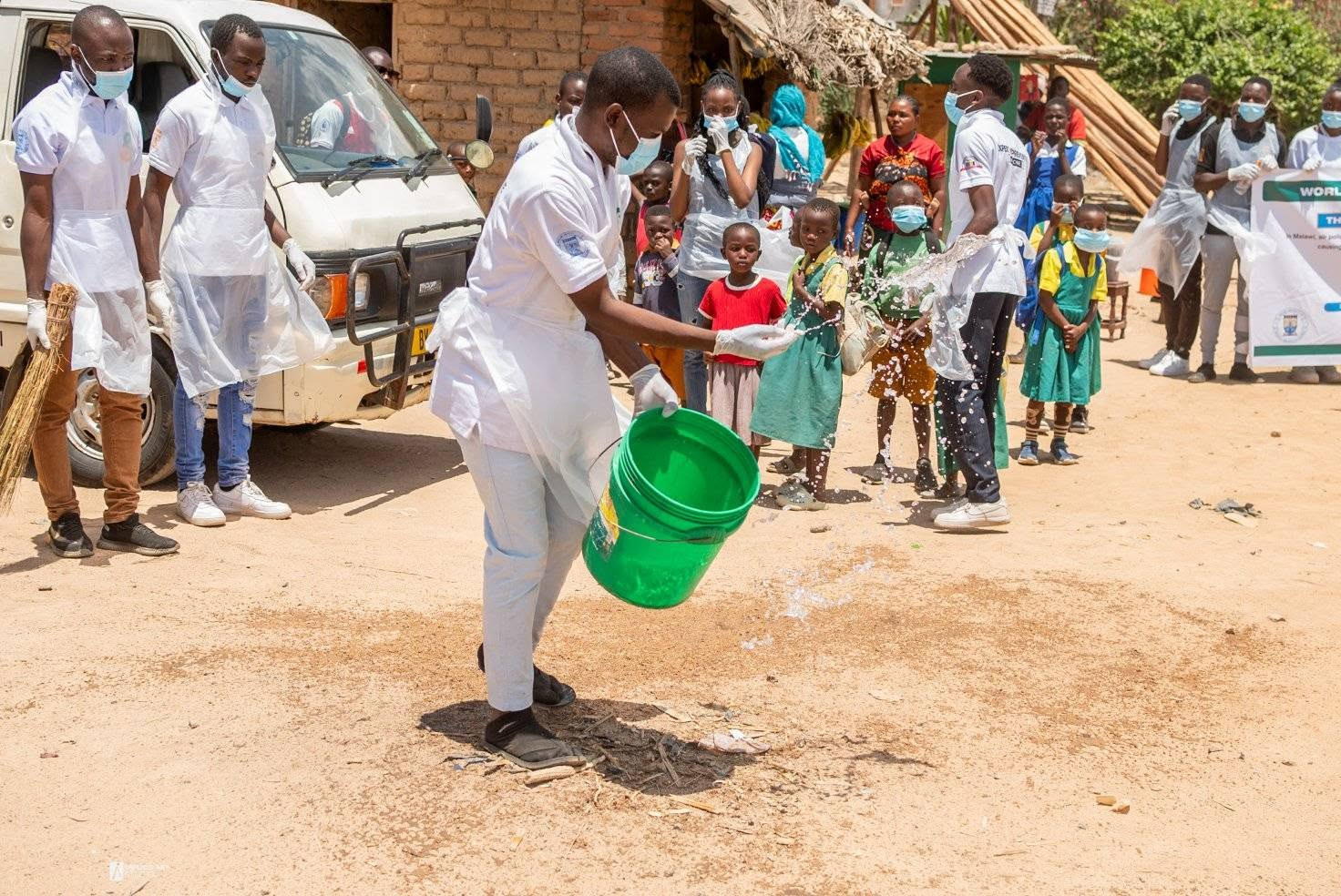
MUBAS’ Environmental Health students take part in community cleaning activities in Makata, Ndirande
As the world commemorated World Environmental Health Day 2025 under the theme “Clean Air, Healthy People,” Students from the Malawi University of Business and Applied Sciences (MUBAS), through the Malawi Environmental Health Society and in collaboration with the Malawi Environmental Health Association (MEHA), engaged communities in Makata, Ndirande, Blantyre, to promote healthier living through environmental awareness and community action.
The students sensitised residents on air pollution, its health impacts, and practical ways to reduce exposure to harmful pollutants, including improving household ventilation and reducing smoke from solid fuels.
The initiative also demonstrated the important role young people can play in creating healthier and more sustainable communities. This aligns with SDG 3, Target 3.9, which seeks to reduce illness and deaths from hazardous chemicals and air, water and soil pollution.
Evidence Documents & Supporting Data
Verified institutional documentation, datasets, and certified audit artifacts for SDG evidence.
References & Evidence Sources
- [1] Health and Sanitation
- [2] Mental Health
- [3] Environmental Action