
MUBAS Strengthens SDG Policy Implementation Through Research and Government Partnerships
1. Scientific Evidence Supporting National Environmental Policy and Climate Services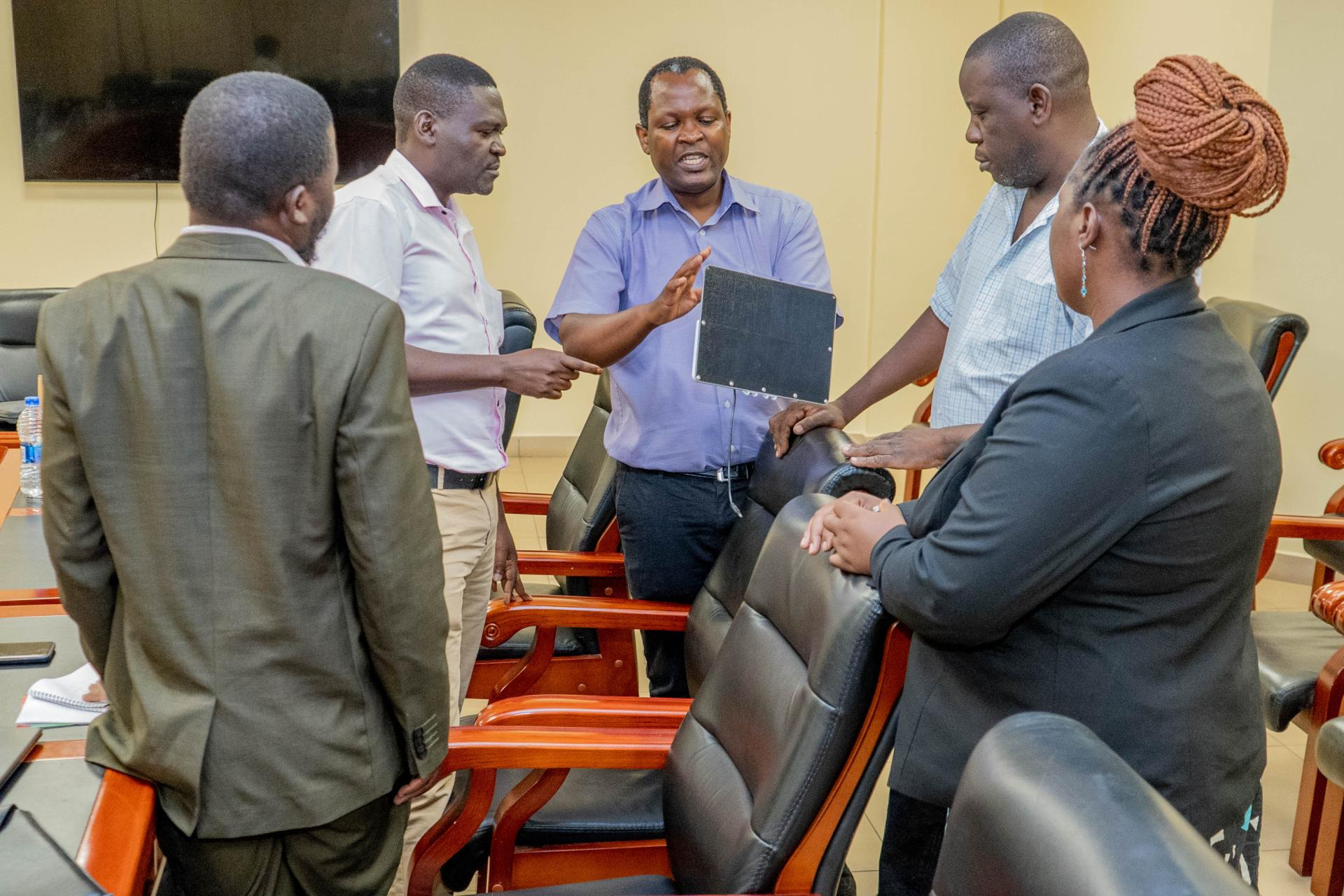
Recognising the importance of reliable air quality data in protecting public health and informing policy development, the Malawi University of Business and Applied Sciences (MUBAS), through its Department of Physics and Biochemical Sciences (PBS), in collaboration with the Government of Malawi and with funding from the University of Chicago’s Epic Air Quality Fund, embarked on an air quality monitoring project. The initiative contributes to Sustainable Development Goal 3 (Good Health and Well-being) by generating scientific evidence on air pollution and its potential effects on human health, supporting the development of evidence-based policies and interventions to reduce exposure to harmful pollutants.
The project seeks to generate scientific evidence on air pollution levels, trends and environmental risks. It addresses gaps in reliable air quality data that have previously limited government institutions’ ability to assess pollution levels, identify environmental health risks and develop appropriate interventions. Through research and data collection, MUBAS supports informed decision-making on air pollution management and public health protection.
As part of the project, MUBAS collaborates with the Department of Climate Change and Meteorological Services (DCCMS), Malawi’s national agency under the Ministry of Natural Resources and Climate Change responsible for monitoring weather and climate. This partnership strengthens scientific research, air quality monitoring and the use of environmental data in national climate and environmental services.
On 17 September 2025, MUBAS hosted a technical engagement meeting with DCCMS officials to review monitoring progress, share research findings and explore ways of integrating university-generated evidence into national environmental services and decision-making processes.
A significant outcome of this collaboration is the integration of MUBAS air quality observations into Malawi’s Air Quality Forecast Bulletins, produced by DCCMS. The observations support government forecasting systems by contributing to model validation, strengthening pollution monitoring and improving environmental reporting for public awareness and decision-making.
Through this partnership, MUBAS contributes scientific evidence to inform the development and strengthening of Malawi’s national environmental policy and air pollution control frameworks. The research supports policy development in air quality monitoring, emissions reduction, pollution forecasting and public reporting. By improving the availability of reliable air quality information, the initiative supports evidence-based government interventions aimed at reducing exposure to air pollution, preventing pollution-related health risks and promoting healthier living conditions in line with SDG 3.
2. Supporting National Skills Development Policy Implementation through MUBAS and TEVETA Partnership.
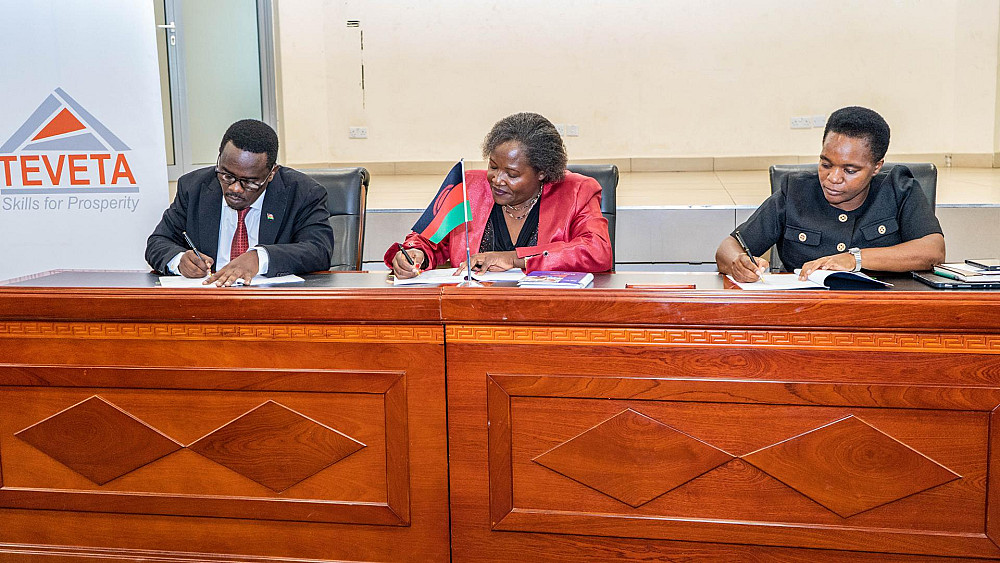
The Malawi University of Business and Applied Sciences (MUBAS), through its partnership with the Technical, Entrepreneurial and Vocational Education and Training Authority (TEVETA), contributes to national skills development priorities by supporting policy implementation and providing institutional expertise that can inform the development and strengthening of Malawi’s technical and vocational education policies. The collaboration aligns with Sustainable Development Goal 8 (Decent Work and Economic Growth) by promoting practical skills, employability and pathways to productive employment, while contributing to Sustainable Development Goal 10 (Reduced Inequalities) by supporting access to skills development opportunities that can improve economic participation and employment prospects.
The partnership supports apprenticeship opportunities, industry-linked training, competency development and practical learning. By connecting academic knowledge with workplace experience, the initiative helps prepare learners for employment and supports the development of a skilled workforce that responds to industry requirements and national development needs.
Through collaboration with TEVETA, a government agency responsible for regulating technical and vocational education and training in Malawi, MUBAS contributes institutional expertise to strengthening the links between higher education, vocational training and the labour market. These efforts support workforce readiness, improve employability and promote the acquisition of skills relevant to productivity, innovation and economic growth.
The partnership also supports the implementation and strengthening of Malawi’s Technical, Entrepreneurial and Vocational Education and Training (TEVET) policy and national skills development strategies. Through apprenticeship programmes, competency development and collaboration between education institutions and industry, MUBAS contributes practical experience and institutional expertise that can inform policy reviews and the development of strategies addressing skills gaps, workforce readiness and access to vocational training. This engagement supports the alignment of skills development policies with labour market demands and evolving industry needs.
In line with SDG 8, the collaboration promotes pathways to productive employment by equipping learners with practical competencies relevant to the workplace. In relation to SDG 10, expanding opportunities for technical training and skills acquisition can help reduce barriers to economic participation and improve access to employment opportunities, particularly for individuals who face challenges entering the labour market.
3. National Policy Dialogue on Sustainable Education Development
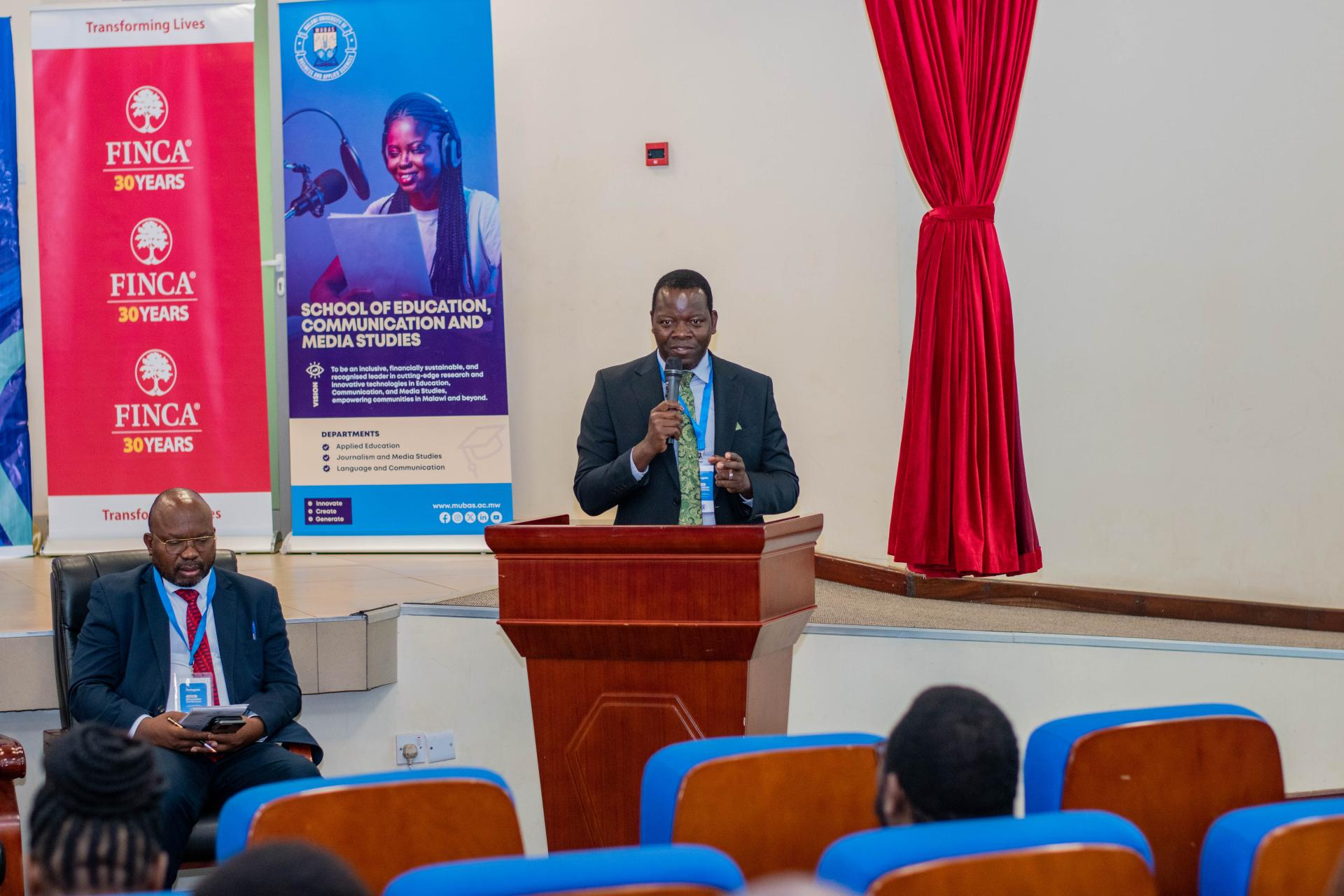
Director of Open, Distance and e-Learning in the Ministry of Education, Professor Joshua Valeta, delivering his speech
MUBAS also contributes to education policy development by creating platforms for engagement between academics, government stakeholders, industry representatives, and development partners thereby supporting SDG 4.
The First MUBAS Education Conference held in 2025, under the theme “Education for Sustainable Development and Wealth Creation,” provided a national platform for discussing emerging issues affecting Malawi’s education sector, including curriculum transformation, skills development, innovation, technology integration, entrepreneurship, and sustainable education systems.
The conference brought together policymakers, education practitioners, researchers, and stakeholders to exchange evidence, identify challenges, and develop approaches that support national education priorities.
Through such policy dialogue platforms, MUBAS contributes academic expertise and research-based perspectives that informs the development and strengthening of Malawi’s national education policies and strategies, particularly in the areas of curriculum reform, skills development, technical and vocational education, digital transformation, entrepreneurship, and education for sustainable development. The conference therefore provides a platform through which evidence and stakeholder perspectives contribute to national education policy development and strategic planning.
Non-Government Regional Collaborations on SDG Policy Development
Through the Sustainable and Healthy Food Systems in Southern Africa (SHEFS-SA) project, a community comprises a consortium of partners and collaborators in universities, research institutes, local/regional government entities, and informal, peri-urban and rural communities, forming a Community of Practice (CoP). which are regional nongovernment organisations for SDG policy development. MUBAS is contributing to regional efforts to transform food systems in Malawi, South Africa and Zimbabwe to ensure regional policy impact. Funded by the Wellcome Trust and led by the University of KwaZulu-Natal in South Africa, the multi-institutional project brings together research expertise to address challenges affecting food systems, human health and communities by addressing directly SDG 2 Zero Hunger, particularly those arising from climate change.
Through this collaboration, MUBAS contributes to research aimed at building healthier, more sustainable and climate-resilient food systems, with particular attention to livestock-based food systems. The research provides evidence that informs discussions and decision-making on food production, nutrition, public health and resilience to climate-related risks.
The regional institutions' collaboration supports knowledge sharing and the development of approaches that help governments and other stakeholders address food insecurity, protect livelihoods and strengthen the sustainability of food systems across Southern Africa.