
Peace, Justice and Strong Institutions
Empowering Student Leadership, Participation and Institutional Accountability
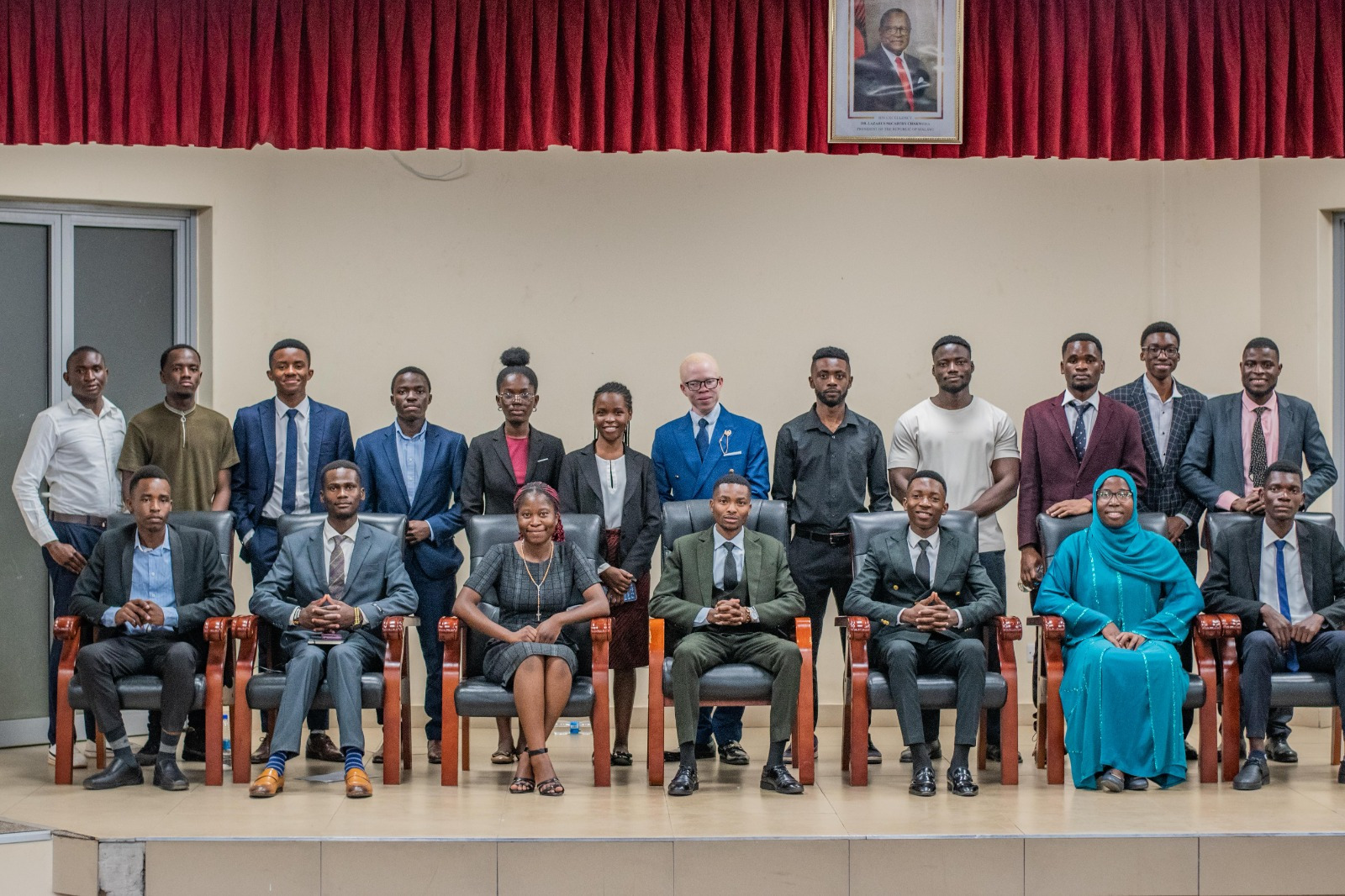
MUBAS 2025 Student Representative Council
The MUBAS Students Representative Council (SRC) serves as a central structure for student engagement, providing a formal link between students and University management. It facilitates continuous dialogue on academic, welfare, and institutional matters, ensuring that student perspectives are integrated into decision-making processes and service delivery improvements.
In 2025, MUBAS reinforced student participation and leadership development by supporting governance frameworks that encourage ethical leadership, responsibility, and civic engagement. The 2025 SRC team includes President Francis Magwaza, Vice President Gracia Kamphinda, General Secretary Ernest Munthali, Director of Finance Damien Chirwa, and Director of Investments Robert Chikalumpha among others. The University also embedded leadership training within academic programmes to build practical governance skills.
MUBAS Enhances Management and Governance Systems
 MUBAS staff participate in team-building exercise
MUBAS continues to advance its institutional strength by investing in governance and leadership development. From 22 to 27 June 2025, the University hosted a Leadership and Governance Workshop at the TFM Centre of Excellence in Blantyre, bringing together academic and non-academic managers to enhance management capacity and align institutional priorities. The training emphasized accountability, operational efficiency, and collective leadership, while industry experts provided practical insights on managing public institutions with a performance-driven approach. Vice-Chancellor Nancy Chitera highlighted that leadership transformation requires mindset and behavioral change to position MUBAS as a leading university nationally and beyond. Participants, including Leonard Gondwe, underscored the importance of collaboration, resource mobilization, and team coordination in advancing institutional goals. By equipping leaders with tools in governance, marketing, and team building, MUBAS continues to strengthen its culture of accountability and strategic management, reinforcing its commitment to institutional excellence.
Strengthening Transparency and Accountability

Building trust and accountability through collective responsibility.
In its continued efforts to strengthen institutional integrity, MUBAS is enhancing transparency and accountability through systems designed to prevent, detect and respond to corruption and fraud within the University.
This is led by the Institutional Integrity Committee (IIC), established in line with Malawi’s National Anti-Corruption Strategy II (2019) and working in collaboration with the Anti-Corruption Bureau.
The committee brings together representatives from academic, administrative and support departments and coordinates key measures including corruption risk assessments, system reviews, an Anti-Corruption Action Plan, and monitoring of procurement and financial management systems.
The University also conducts corruption prevention awareness activities for staff and students and provides confidential channels for reporting suspected malpractice. Through these measures, MUBAS is instilling transparency, ethical conduct and accountability across its operations.
By promoting transparent systems, responsible resource management and ethical conduct, the initiative supports efforts to build accountable institutions and reduce corruption, in line with SDG 16’s commitment to reducing corruption and bribery.
Evidence Documents & Supporting Data
Verified institutional documentation, datasets, and certified audit artifacts for SDG evidence.