
2025 Sustainability Survey Outcomes
1. Introduction
The Malawi University of Business and Applied Sciences (MUBAS) conducts a
sustainability literacy assessment as part of its effort to measure sustainability literacy
among students each academic year. This evaluation is not based on a survey but a
formal assessment to gauge students’ understanding of sustainability principles and the
Sustainable Development Goals (SDGs), a key performance metric under SDG 17:
Partnerships for the Goals.
2. Methodology
Students from various faculties and levels of study participated through a structured
assessment. The instrument included knowledge-based questions focused on the SDGs
context, timeline, principle and global application.
Responses were analyzed across four major thematic dimensions:
i. Knowledge
ii. Awareness
iii. Attitude
iv. Action
2.1. Knowledge
Knowledge captures students’ factual understanding of sustainability and the SDGs,
including their number, purpose, and the responsible institutions. Students demonstrated
a strong grasp of the Sustainable Development Goals (SDGs), averaging 8.4/10 in
knowledge-based questions. Approximately 84% correctly identified the total number of
goals, their nickname (“Global Goals”), and the 2030 deadline. Minor misconceptions
were observed around differentiating SDGs from the Millennium Development Goals
(MDGs). The results suggest solid conceptual understanding, particularly among senior
students.
Chart 1: MUBAS Students' Knowledge Levels
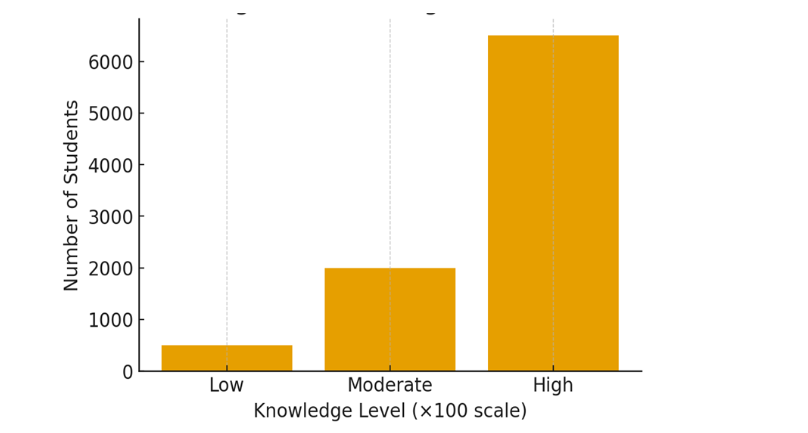
The high scores reflect effective integration of sustainability in coursework. Students
demonstrate a strong theoretical foundation in sustainability. Continuous inclusion of SDG
discussions in first-year orientation and professional courses is recommended to sustain
literacy growth.
2.2. Awareness
Awareness assesses how familiar students are with sustainability applications, both
globally and within MUBAS. Awareness levels were broad, with 70% of students
associating sustainability with SDG 13 (Climate Action). However, fewer recognized
institutional sustainability practices at MUBAS. For instance, 20% had moderate
awareness, mainly associating SDGs with social issues like education (SDG 4) or justice
(SDG 16) and 10% showed limited or no awareness of institutional sustainability
programs. This reflects the need for increased visibility of campus sustainability initiatives
and how they align with global sustainability efforts.
Chart 2: Awareness Levels
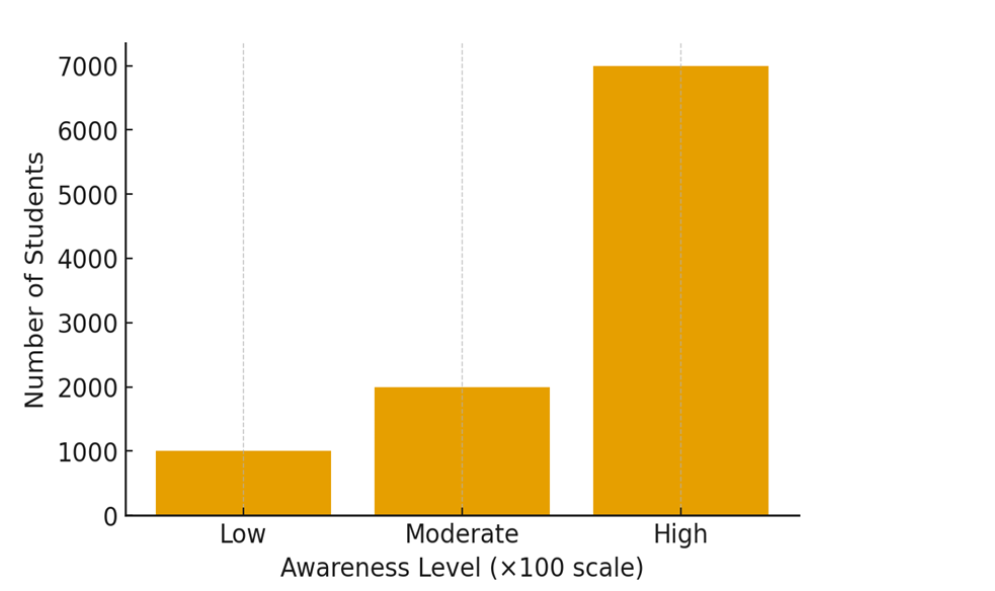
Students are aware of the global SDG agenda but less informed about local sustainability
initiatives led by MUBAS (e.g., waste management, water conservation, green buildings).
The findings suggest that MUBAS should intensify communication about its sustainability
practices through campaigns, community engagement, and social media visibility.
2.3. Attitude
Attitude measures students’ values, beliefs, and readiness to support sustainability
actions. The assessment revealed overwhelmingly positive attitudes toward
sustainability, with 85% supporting inclusivity and “Leaving no one behind.” Students
recognized the ethical and social importance of sustainability, showing readiness to
engage in sustainable behavior both academically and personally
Chart 3: Attitude Levels
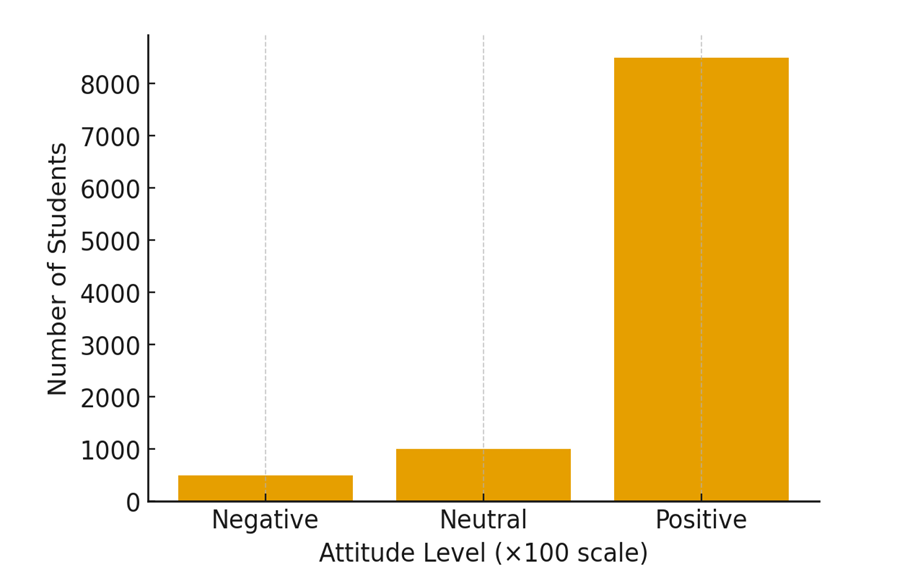
A largely positive mindset implies productive ground for cultivating sustainability
leadership among students. Embedding sustainability ethics in leadership courses and
mentorship programs will help translate these attitudes into consistent advocacy and peer
influence on campus.
2.4: Action
Action measures the extent of student participation in sustainable initiatives from
awareness campaigns to community projects. 60% of students reported active
participation in sustainability activities such as clean-up drives and SDG clubs, while 30%
were aware but not yet engaged. This gap highlights the importance of integrating
sustainability activities into the academic calendar to convert awareness into measurable
action.
Chart 4: Action Levels
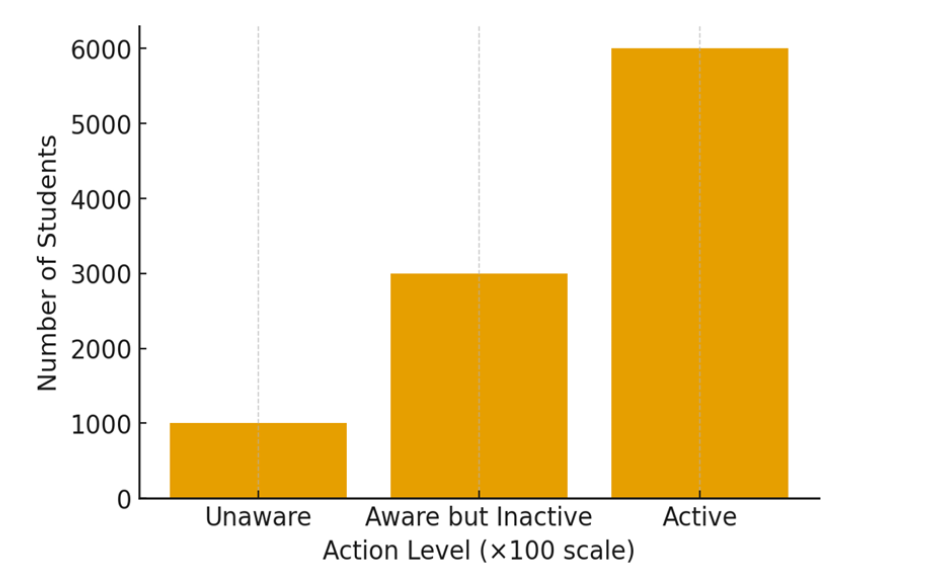
While intent is strong, actual engagement remains moderate. There’s clear potential for
improvement through structured student engagement mechanisms.
3. Conclusion
The 2025 Sustainability Awareness Assessment demonstrates MUBAS’ commitment to
fostering sustainability education aligned with the United Nations 2030 Agenda.
With strong knowledge and positive attitudes already evident, MUBAS is well-positioned
to elevate sustainability action and become a leading model for education and sustainable
development.