
Descent Work and Economic Growth
MUBAS Partners with TEVETA to Strengthen Human Capital 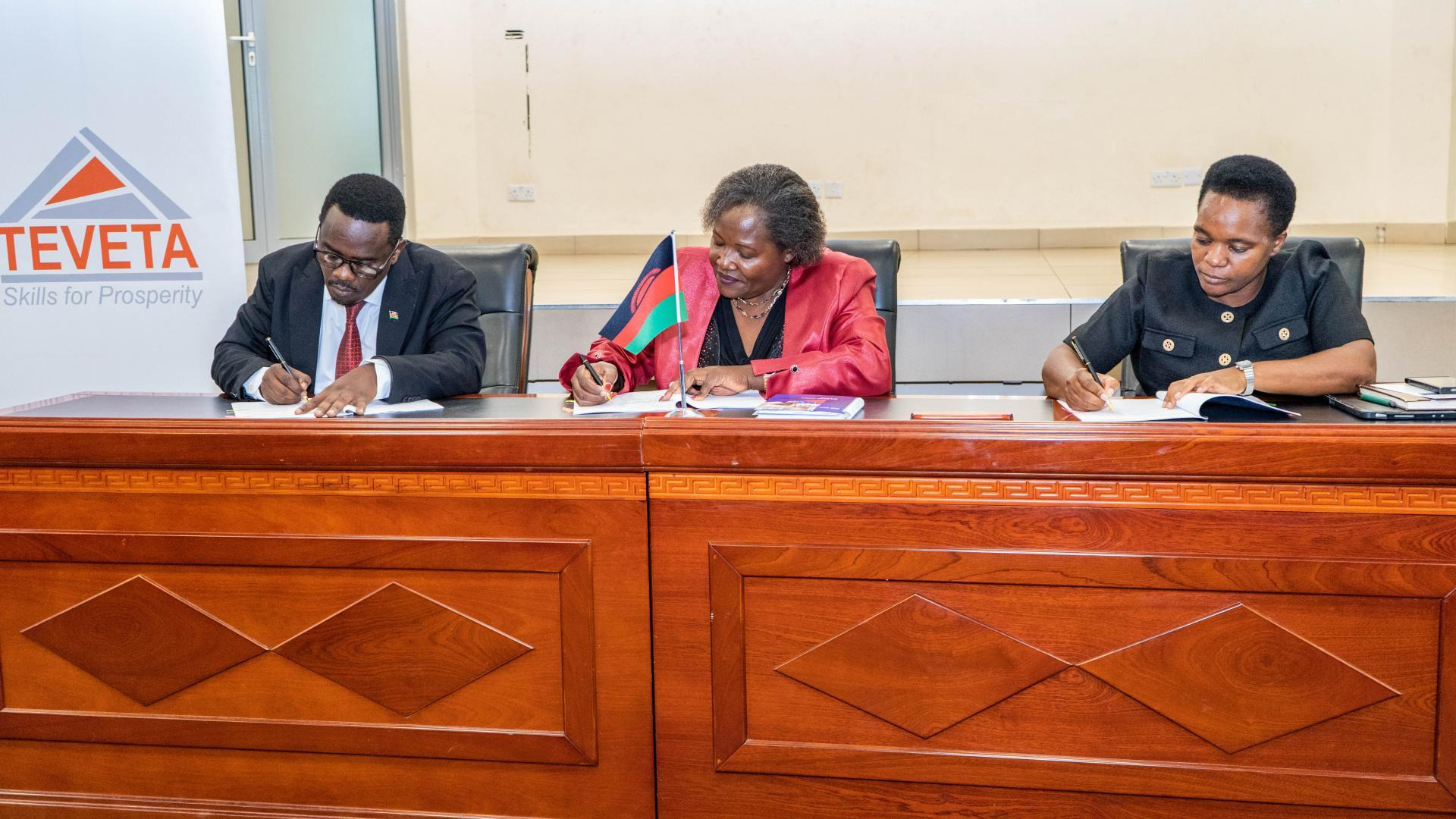
Associate Professor Nancy Chitera (R), Labour PS Chikondano Mussa (C) and TEVETA Board Chairperson Pyoka Tembo sign the MOU.
MUBAS has entered into a strategic partnership with the Technical, Entrepreneurial and Vocational Education and Training Authority (TEVETA) and the Ministry of Labour to strengthen inclusive education, skills development, and human capital formation in Malawi.
The collaboration was formalised through a Memorandum of Understanding (MoU) signed on 4 September 2025 at the MUBAS main campus in Blantyre. The agreement establishes a coordinated framework aimed at expanding access to training and professional development opportunities, while creating flexible academic pathways for learners from technical and vocational institutions across the country.
The initiative is designed to align skills development with national development priorities, particularly in addressing unemployment and improving workforce readiness through inclusive and demand-driven training systems.
Speaking during the signing ceremony, the Principal Secretary for Labour, Ms. Chikondano Mussa, highlighted the importance of coordinated institutional efforts in strengthening human capital development. She noted that the partnership provides a structured platform for recognising diverse learning backgrounds beyond traditional academic routes.
MUBAS Equips Technicians with Modern Automotive Skills to Enhance Workforce Productivity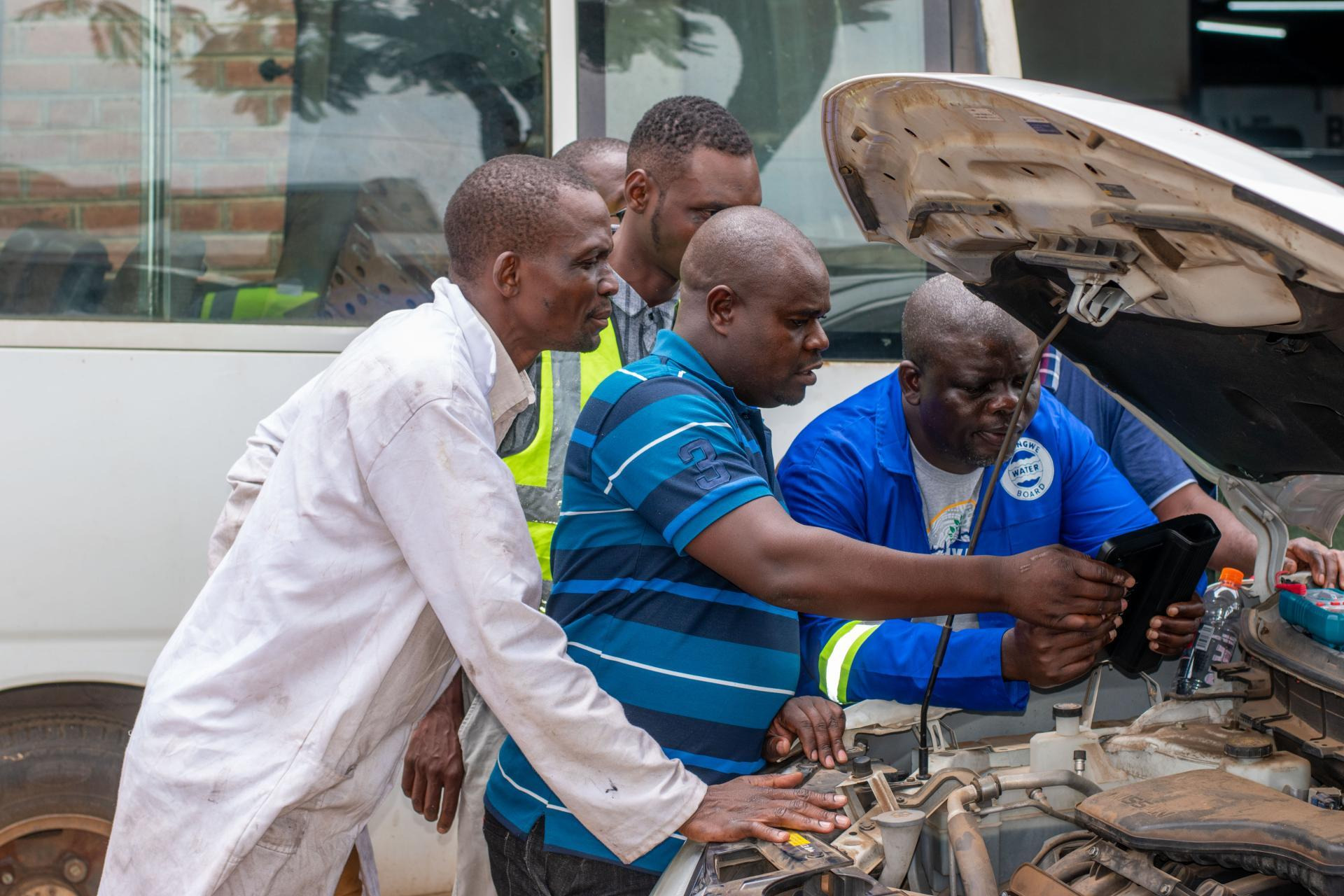
Participants and facilitators engage in hands-on automotive skills training for improved employability and productivity.
The Department of Mechanical Engineering under the School of Engineering trained motor vehicle technicians from the Lilongwe Water Board in modern automotive mechanics, equipping them with practical skills for the evolving automotive industry.
The five day training, held from 10th to 14th November 2025 at the MUBAS main campus in Blantyre, strengthened participants’ technical competencies in emerging automotive technologies, particularly hybrid and electric vehicles.
The training aimed to help technicians remain competitive and meet modern workplace demands. Participants gained hands-on experience in vehicle diagnostics, fault detection, workshop management, and the use of advanced scanning and diagnostic equipment.
Facilitator Mr. Tusha Ngosi said the programme responds to the growing need for a skilled workforce capable of servicing and maintaining modern vehicles. He emphasized that as electric and hybrid vehicles enter the Malawian market, continuous skills development is essential for improving productivity, enhancing employability, creating employment opportunities, and supporting economic growth. The initiative contributes to the promotion of relevant technical skills, workforce competitiveness, and sustainable employment opportunities.
Employment Placement
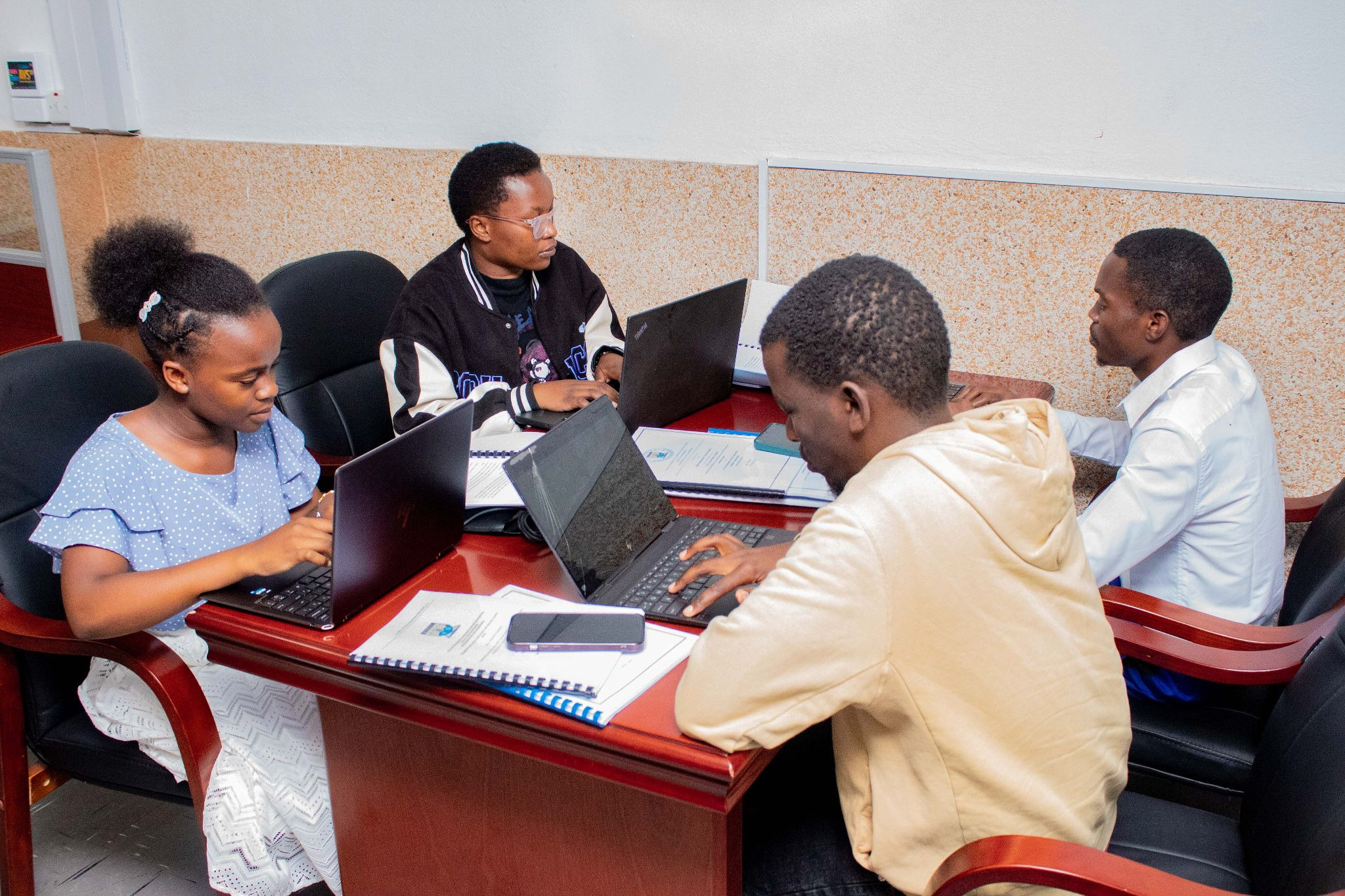
Students undertaking their placement at Research Support Unit
MUBAS integrates mandatory work placements into a range of academic programmes to provide students with direct exposure to the world of work. Through internships, industrial attachments, work placements and teaching practice, students apply knowledge and skills gained in the classroom within environments outside the University. In 2025 MUBAS sent students from 23 academic programs to various industrial attachments to be equipped with transferable knowledge as Engineers, Educators, Accountants, Communicators among others.
These placements strengthen practical and technical competencies while developing communication, teamwork, problem-solving, professional ethics and workplace readiness. They also provide opportunities for students to build professional networks, understand workplace expectations and gain experience relevant to their careers. Work placements are embedded within eligible programmes as an academic requirement and are undertaken at designated stages of study, depending on programme requirements.
Students may be placed in private-sector organisations, government institutions, industries, professional organisations, NGOs, educational institutions, research organisations and appropriate workplaces. MUBAS recognises these experiences as a pathway between education and employment, supporting graduate employability, entrepreneurship, innovation and contribution to socio-economic development. Placements generally extend beyond one month, with the University indicating a three-month placement period.
Evidence Documents & Supporting Data
Verified institutional documentation, datasets, and certified audit artifacts for SDG evidence.