
Industry, Innovation and Infrastructure
MUBAS incubates souring like eagles
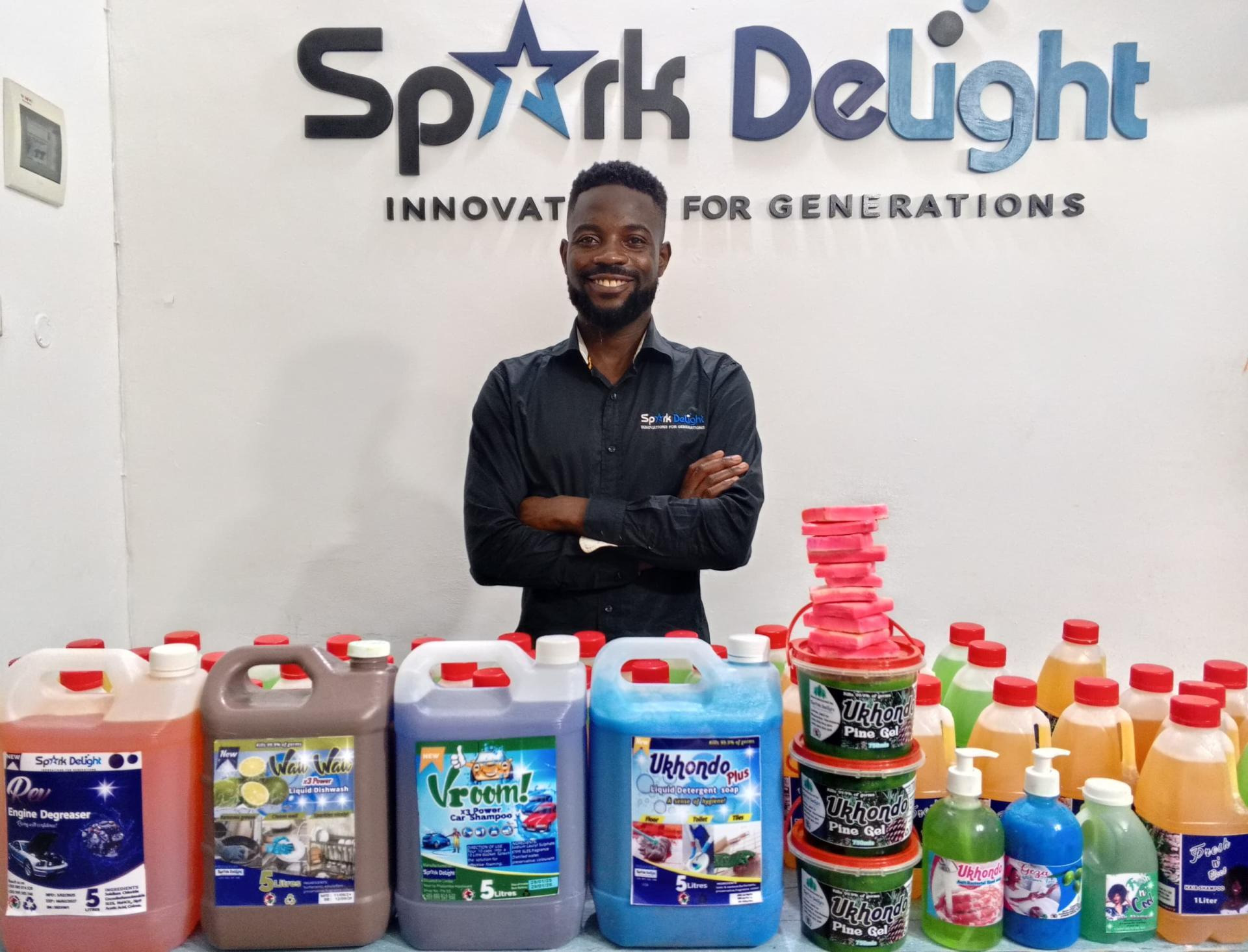
An alumnus of the MUBAS Business Incubation Programme displaying his products
The Business Incubation Programme at MUBAS continues to demonstrate its effectiveness in fostering sustainable enterprises. In 2025, alumni Daniel Kwizombe of Dek Engineering & Electrical Contractors and Victor Daffrece of Spark DeLight were nominated for the National Product of Malawi Awards. Kwizombe’s energy-saving LED bulbs and Daffrece’s eco-friendly soap and detergent products highlight how incubation nurtures businesses that address national priorities in manufacturing and sustainability.
Both innovators credited MUBAS for mentorship, funding, and training that transformed their ideas into impactful ventures. Centre Manager Chisomo Thaulo-M’baya emphasized that these achievements prove the programme’s role in building resilient industries. Their recognition at national and international levels underscores MUBAS’s ongoing contribution to SDG 9 by promoting inclusive innovation, supporting sustainable production, and strengthening Malawi’s industrial development.
Promoting Sustainable Infrastructure: MUBAS Hosts Built Environment Conference
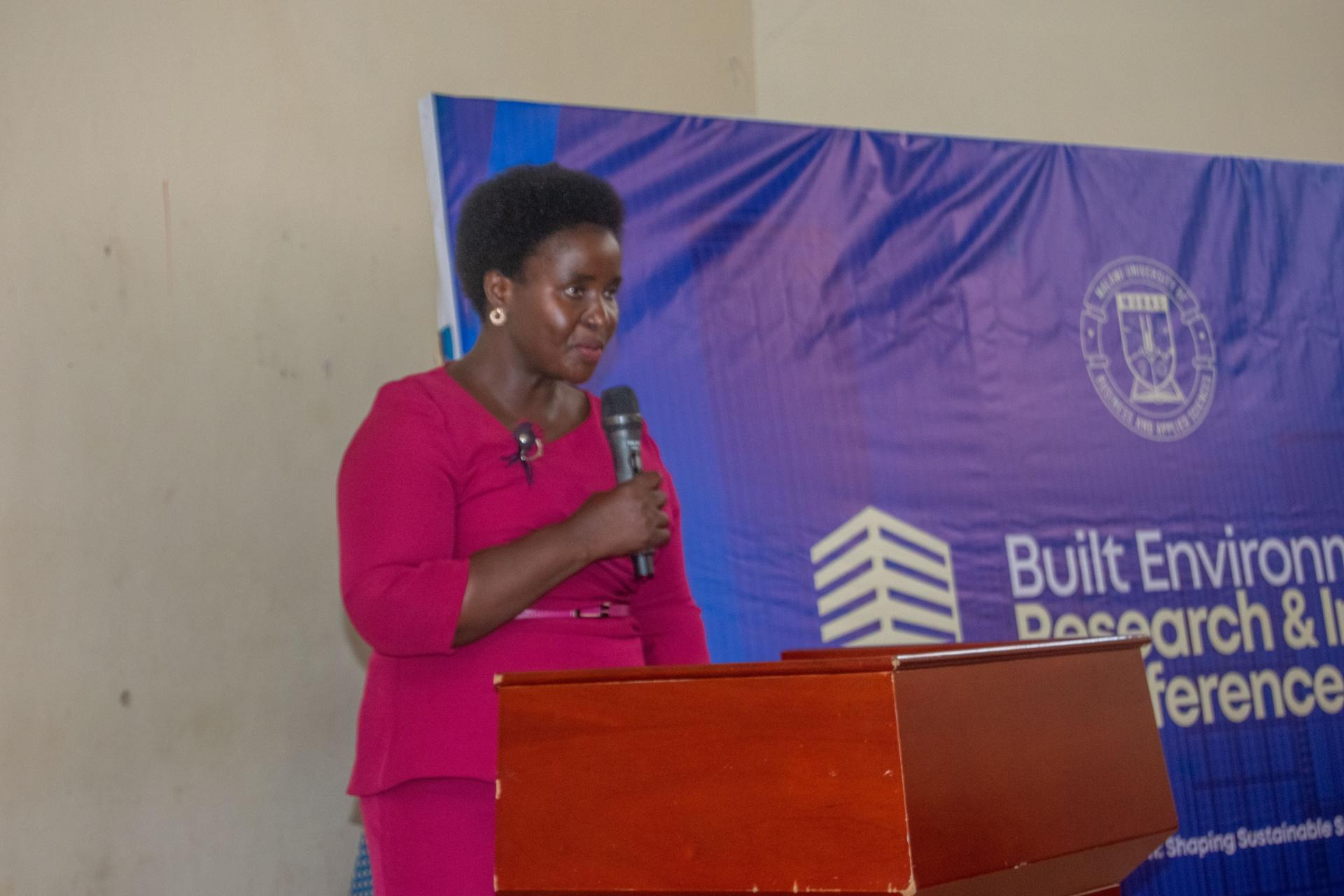 Arch. Nyong'onya officially opening the School of Built Environment Conference
MUBAS strives to demonstrate its commitment to SDG 9; Industry, Innovation, and Infrastructure by hosting the inaugural School of Built Environment Conference at its Blantyre campus. The conference brought together academia, regulators, and industry stakeholders to share research and explore innovative solutions for sustainable and inclusive infrastructure development. Speaking at the opening, Dorthy Nyong’onya of the Construction Industry Regulatory Authority emphasized the importance of investing in research and innovation to advance environmentally sustainable construction practices, aligning with Malawi Vision 2063 priorities. MUBAS reinforced its institutional role by fostering collaboration, disseminating research, and engaging students, who presented innovations and were recognized with industry-sponsored awards. This initiative advanced SDG 9 by promoting resilient infrastructure, encouraging applied innovation, and strengthening partnerships between academia and industry, positioning MUBAS as a catalyst for sustainable national development.
Driving Inclusive Innovation: Malawi-Made AI Expands Digital Access for Persons with Disabilities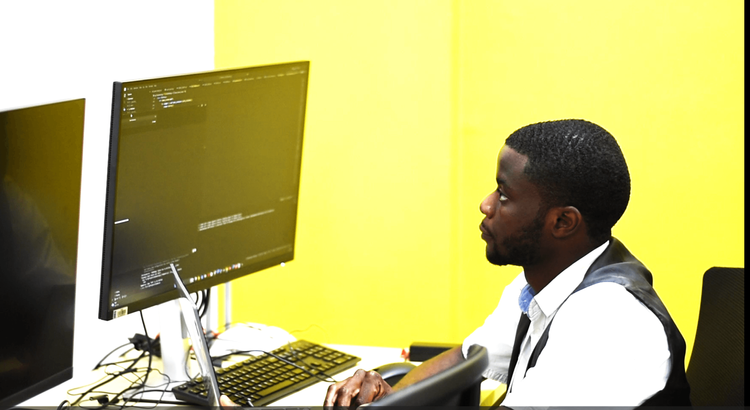
In its initiatives to Break barriers in Malawi’s digital landscape, MUBAS, through UniPod Malawi, supported the creation of a locally engineered AI solution designed to expand computer access for persons with physical disabilities. Innovator Chimwemwe Liwonde developed an affordable assistive technology that adapts everyday devices into accessible interfaces, enabling independent typing, browsing, and communication. Unlike costly imported systems, this innovation is scalable, adaptable, and tailored to Malawi’s context, reducing reliance on caregivers and opening new opportunities for inclusive education.
MUBAS has shown how universities can translate ideas into practical solutions that strengthen both social equity and technological progress. With growing recognition on national innovation platforms, this initiative demonstrates how inclusive innovation can drive resilient infrastructure and digital participation, positioning MUBAS as a catalyst for sustainable national development under Vision 2063.
Evidence Documents & Supporting Data
Verified institutional documentation, datasets, and certified audit artifacts for SDG evidence.