
MUBAS Strengthens International Collaboration in SDG Data Gathering
1. International Data and Artificial Intelligence Collaboration on SDG Monitoring and Sustainable Development Solutions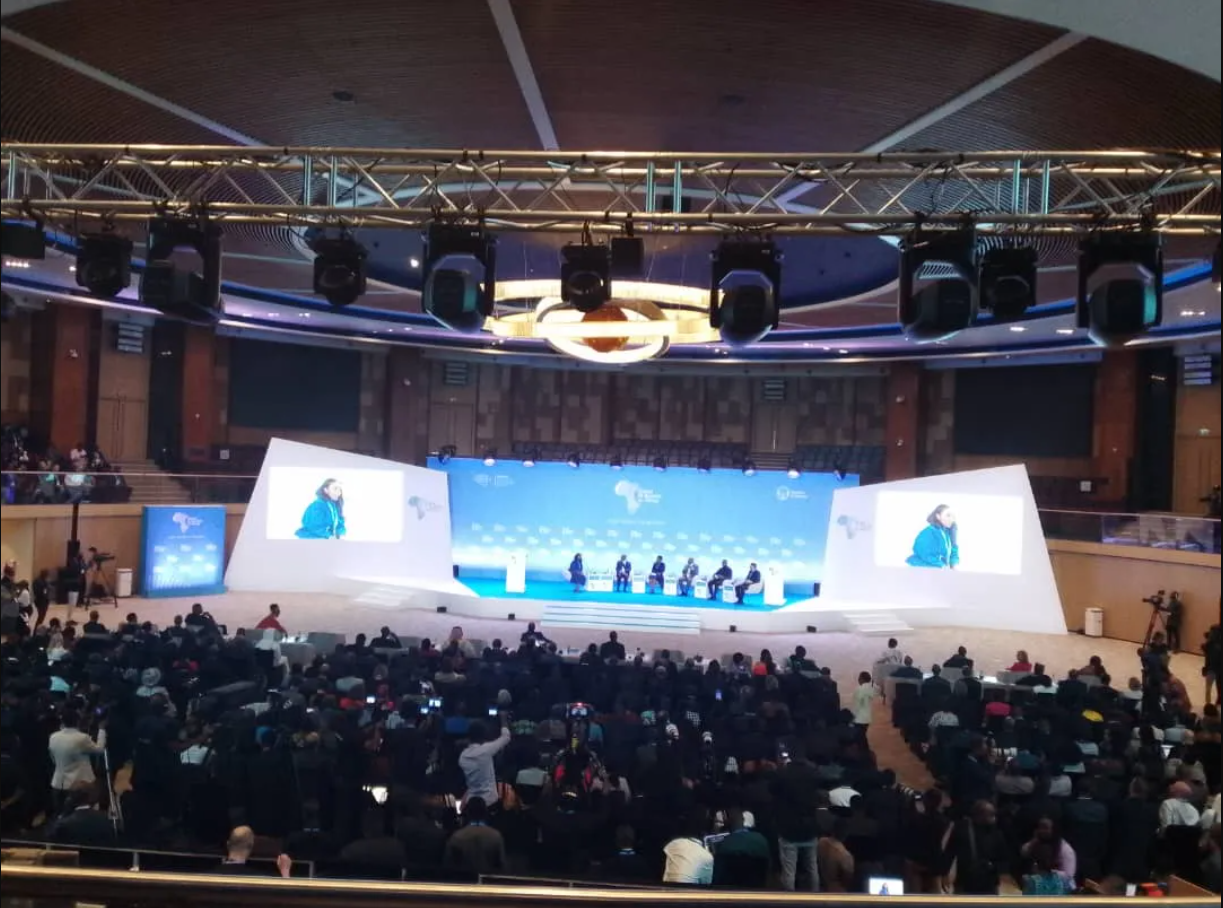
The Malawi University of Business and Applied Sciences (MUBAS), through its Artificial Intelligence Research Laboratory (KAI Lab), participates in international research collaboration focused on the development, gathering, analysis and application of data to address sustainable development challenges. KAI Lab conducts research in artificial intelligence, data science, data governance and generative AI, while developing datasets and data-driven tools that support research, innovation and evidence-based decision-making. The laboratory works with national and international research institutions to strengthen the use of data and emerging technologies in addressing development challenges.
A key example of this international research collaboration is the Intelligent Disease Surveillance Data Feedback System (IntelSurv), developed through collaboration with public health institutions and district health offices in Malawi and supported through the Bill & Melinda Gates Foundation Grand Challenges initiative. The project applies artificial intelligence to disease surveillance data, supporting the collection, processing, interpretation and dissemination of health information. This collaboration demonstrates the use of research and data technologies to strengthen systems for monitoring health conditions and generating evidence for public health decision-making.
IntelSurv contributes to SDG 3: Good Health and Well-being by improving the quality, accessibility and utilisation of disease surveillance data. By applying AI-supported analysis to routinely collected health information, the project helps health professionals and institutions interpret surveillance data, identify emerging health threats and support timely evidence-based responses. The resulting data and analysis contribute to stronger health information systems and provide evidence that can be used to monitor progress towards health-related sustainable development objectives.
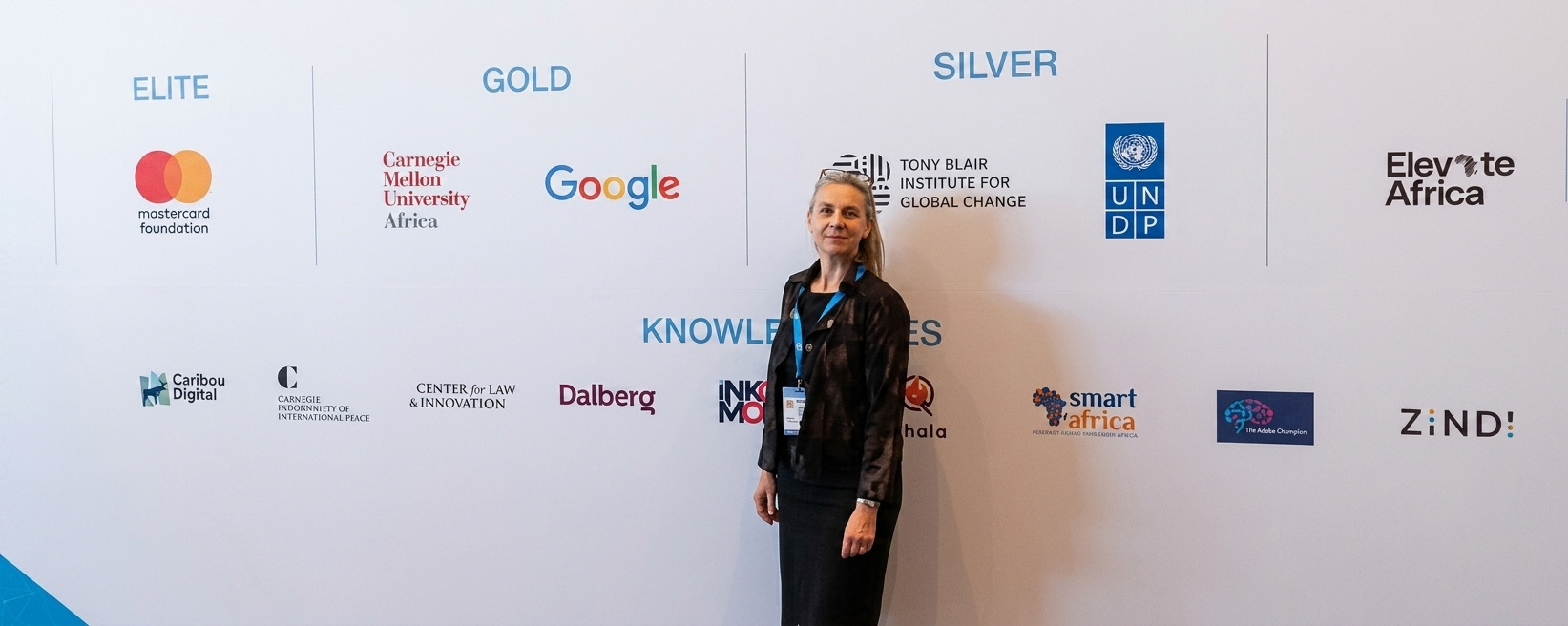 KAI Lab Manager, Dr. Amelia Taylor, Senior Lecturer, School of Science and Technology, MUBAS
The international dimension of MUBAS' research collaboration was further demonstrated through KAI Lab's participation in the Global AI Summit on Africa 2025 in Kigali, Rwanda. The University showcased IntelSurv alongside international researchers, innovators, policymakers and technology leaders. The engagement provided an opportunity to exchange knowledge and research approaches relating to artificial intelligence, health data and sustainable development, while strengthening international networks for the development and application of data-driven solutions.
Through KAI Lab and its research partnerships, MUBAS therefore contributes to international collaboration on the generation, gathering, analysis and application of data relevant to the Sustainable Development Goals. These collaborations strengthen the University's capacity to produce and use evidence for SDG monitoring, support data-driven decision-making and facilitate the exchange of research methods and expertise with international partners. This demonstrates MUBAS institutional contribution to using collaborative research and data systems to measure and advance sustainable development outcomes.
2. EnergyNET Annual General Meeting Strengthens International Collaboration for SDG Data
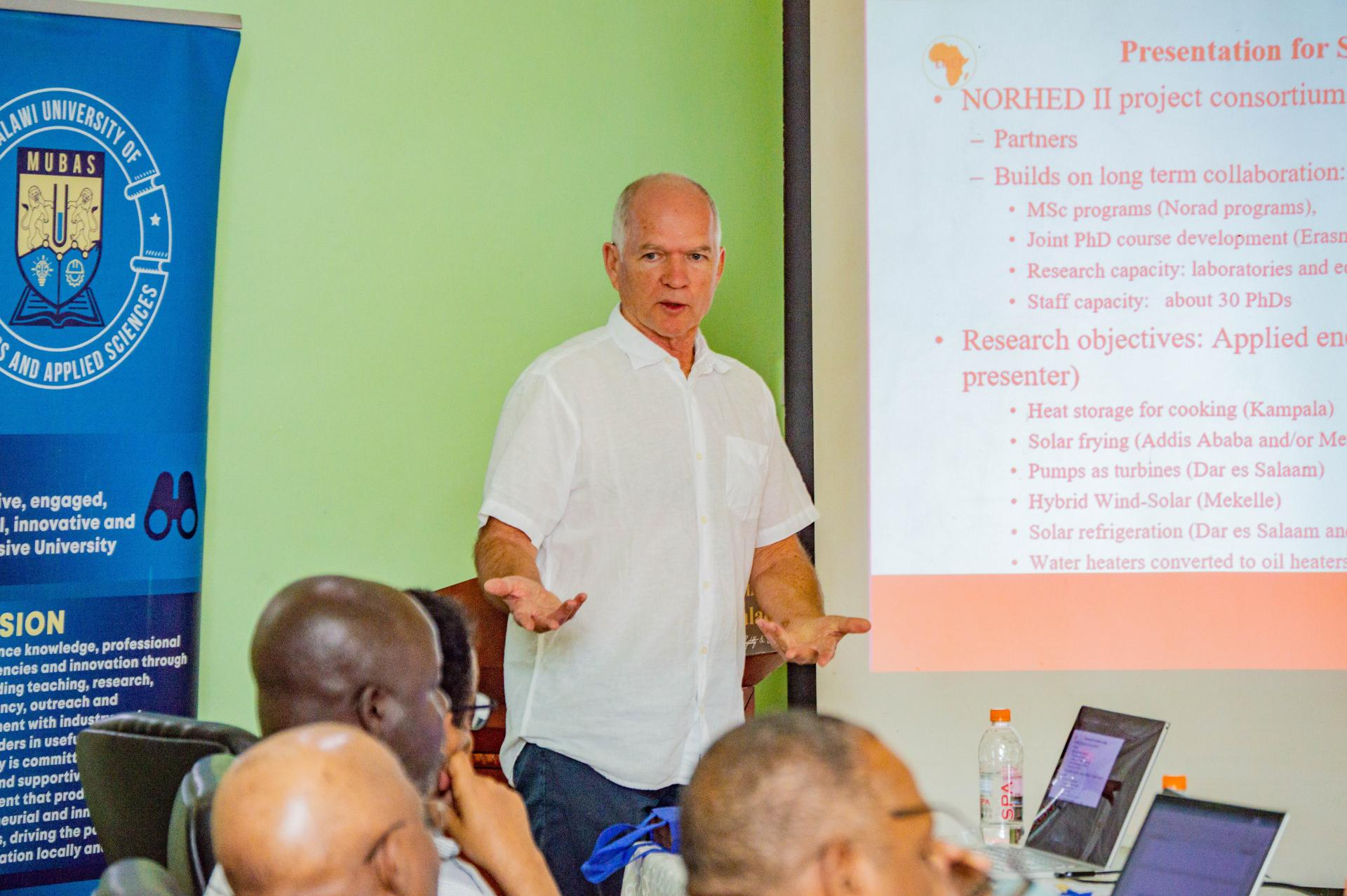
Prof. Ole Jørgen Nydal making a presentation
EnergyNET is a multi-university international research collaboration involving MUBAS and partner universities across Africa and Norway: the University of Dar es Salaam (Tanzania), Makerere University (Uganda), Mekelle University and Addis Ababa University (Ethiopia), Eduardo Mondlane University (Mozambique), the University of Juba (South Sudan), and the Norwegian University of Science and Technology (NTNU).
Funded by the Norwegian Agency for Development Cooperation (NORAD) through the Norwegian Programme for Capacity Development in Higher Education and Research for Development II (NORHED II), the project strengthens collaboration among higher education institutions through joint research, knowledge exchange and capacity development in renewable energy technologies.
MUBAS also influences international partnerships to advance research and innovation in renewable energy, contributing evidence and knowledge to sustainable development efforts. In this context, MUBAS hosted the 2025 Annual General Meeting of the Energy Technology Network (EnergyNET), bringing together researchers, project coordinators, government representatives, and energy-sector stakeholders from Africa and Norway to strengthen international collaboration in renewable energy research.
The meeting provided a platform for members of the EnergyNET consortium to review research progress, share evidence and research outputs, exchange data and experiences, and discuss approaches for applying research findings to renewable energy challenges. Such international collaboration contributes to the generation, sharing and use of evidence relevant to the Sustainable Development Goals (SDGs), particularly SDG 7: Affordable and Clean Energy, while supporting SDG 17: Partnerships for the Goals.
Participants examined Malawi’s renewable energy landscape, national strategies and emerging opportunities for collaborative research. Discussions focused on decentralised renewable energy solutions, particularly technologies suitable for rural and off-grid communities, as well as the development of clean cooking and energy-storage solutions.
The meeting also facilitated engagement between researchers and key stakeholders in Malawi’s energy sector, including officials from the Ministry of Natural Resources, Energy and Mining and energy service providers. Participants shared locally developed and affordable renewable energy technologies and exchanged knowledge on their potential application in addressing energy challenges in Malawi and other African countries.
International Research and Innovation Collaboration
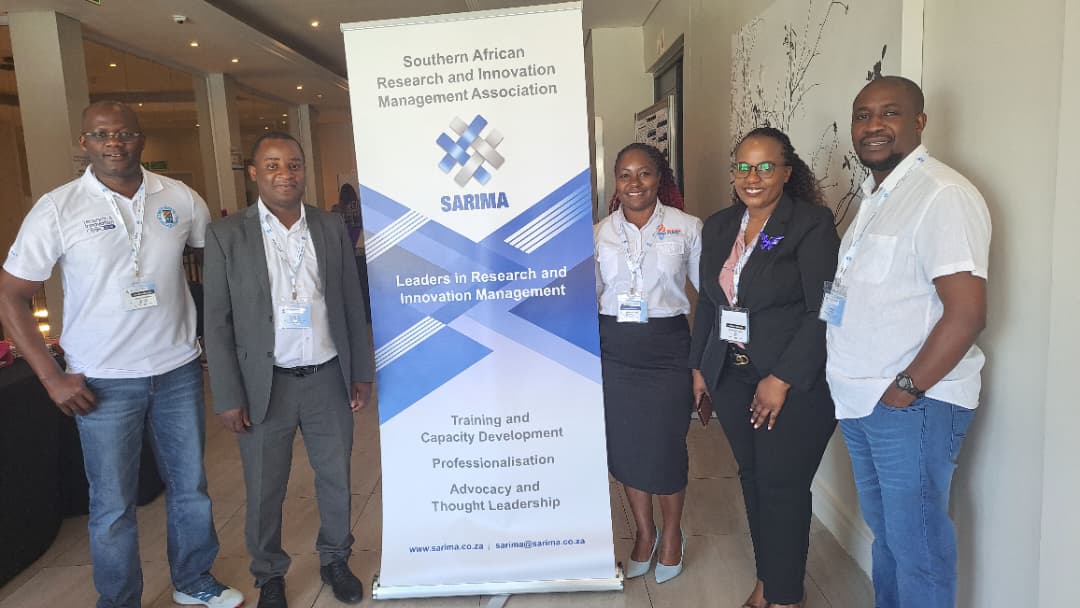
MUBAS Staff at the 2025 SARIMA Conference
MUBAS engages with the Southern African Research and Innovation Management Association (SARIMA), a regional network that promotes collaboration, knowledge exchange and professional development in research and innovation management. SARIMA works with institutions and professionals across Africa to strengthen research systems, encourage innovation and support the sharing of good practices that contribute to sustainable development.
Through its regional initiatives, SARIMA promotes professional development programmes, technology-enabled training, competency frameworks and forums where research managers exchange expertise. It also supports skills development in innovation and technology transfer, the commercialisation of research outputs, and collaboration among professionals and institutions. MUBAS also participates in SARIMA-organised conferences, providing opportunities to engage with other stakeholders, exchange experiences and discuss approaches to strengthening research, innovation and institutional capacity across the region. These engagements encourage knowledge sharing and dialogue that can inform institutional practices and development priorities.
MUBAS’ engagement with SARIMA provides opportunities to strengthen research capacity, learn from regional and international practices, and participate in discussions relevant to sustainable development. Through conferences and professional networks, the University engages with other institutions and stakeholders on shared development challenges. These platforms also provide opportunities to exchange knowledge on research and innovation that support progress towards the Sustainable Development Goals (SDGs).
MUBAS Promotes Collaborative Approaches to Measuring Progress on the SDGs
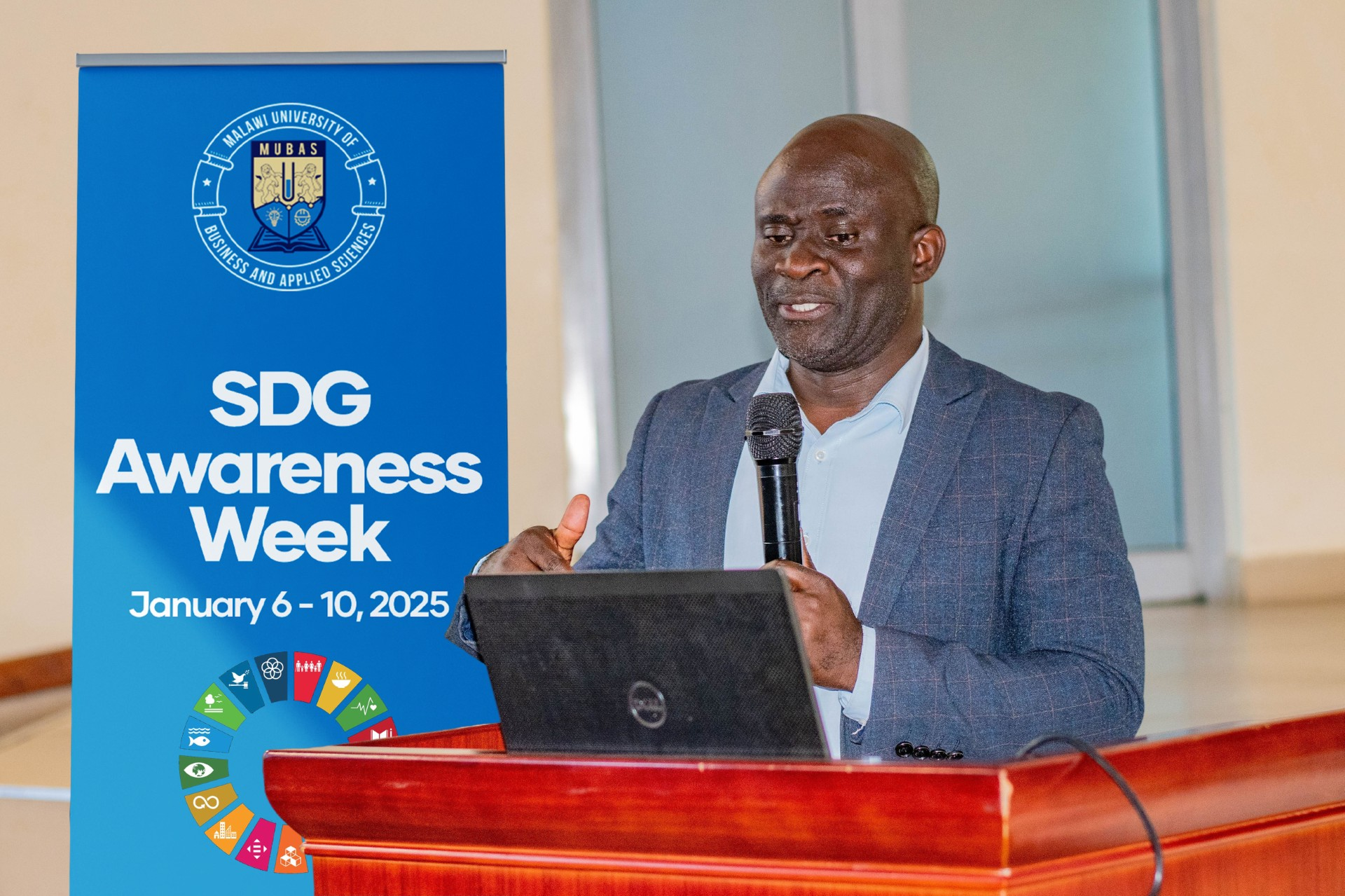
Ranking Lead during SDG Awareness Week
From 6 to 10 January 2025, the Malawi University of Business and Applied Sciences (MUBAS) hosted SDG Awareness Week, bringing together partners and students to engage in discussions on the United Nations Sustainable Development Goals (SDGs). The event provided a platform for sharing knowledge on sustainability and exploring approaches to assessing progress towards sustainable development. During the week, Dr Flemmings Ngwira delivered a presentation addressing sustainability-related issues, including the Sustainability Literacy Test, which assesses individuals’ understanding of sustainability concepts and the SDGs.
The engagement highlighted the importance of measuring sustainability literacy to identify knowledge gaps, strengthen awareness and support evidence-based decision-making. By bringing together university students and partners, MUBAS encouraged knowledge sharing and collective engagement in understanding and assessing progress towards the SDGs. The activity demonstrated the university’s role in convening stakeholders around sustainability measurement and promoting approaches that support the wider SDG agenda.