
Reduced Inequalities
Leaving No Youngster Behind
Cohort 7 Hello Tomorrow Graduates captured with parents and guardians after the graduation ceremony
The MUBAS Innovation Hub at the Malawi University of Business and Applied Sciences (MUBAS) is promoting inclusive digital development by expanding access to practical technology skills for children, young people, and professionals.
Through the Hello Tomorrow Programme, launched in 2022, children aged 6 to 17 are introduced to programming using Scratch and Python. The programme encourages creativity, problem-solving, and computational thinking in an inclusive learning environment.
In August 2025, the Hub partnered with the Kairos Sporting Foundation to provide digital literacy training to 40 children from Chirimba, Blantyre. The interactive session covered basic computer skills and Scratch programming, encouraging learners to explore technology and future career opportunities.
The Hub also conducted two Data Analytics using Python short courses in 2025, benefiting 16 participants. Senior MUBAS students supported these programmes as facilitators and mentors, gaining practical leadership and communication experience.
Through these initiatives, the Hub is helping bridge Malawi’s digital skills gap and ensuring that young people from diverse backgrounds can participate in the growing digital economy.
MUBAS Advances Digital Inclusion Through Nzeru Hub 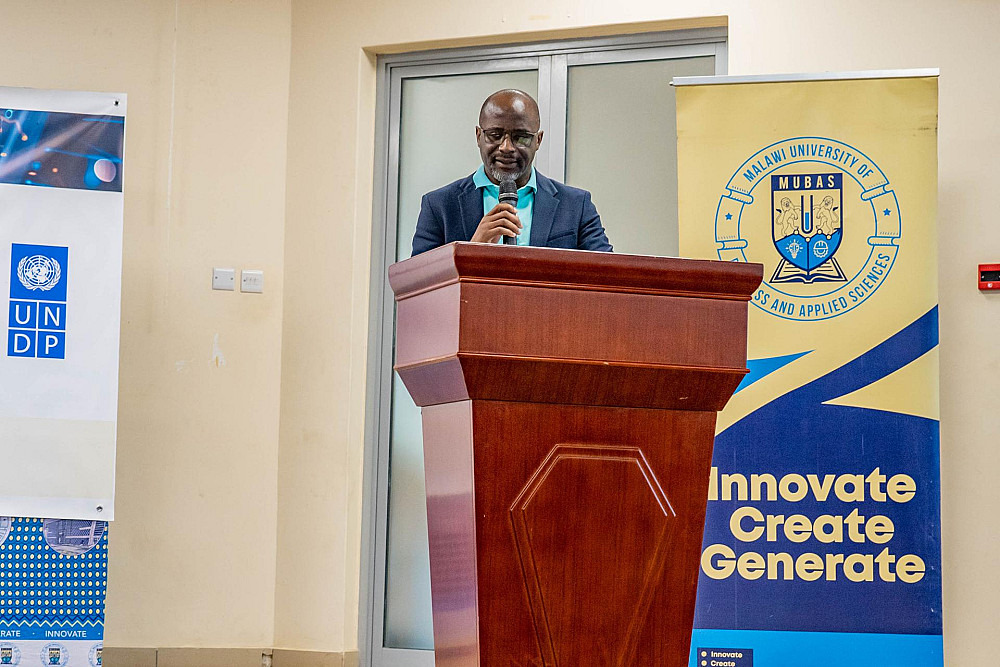
Dr Martin Msendema delivering his speech
The Malawi University of Business and Applied Sciences (MUBAS) is committed to promoting digital inclusion and reducing inequalities by expanding access to digital skills and learning opportunities. Through the Department of Computer Science and Information Systems (CSIS), MUBAS launched Nzeru Hub on 25 July 2025 as a platform supporting students and surrounding communities.
The platform provides foundational digital skills training and open learning resources that support academic development, personal growth, and lifelong learning. It also promotes inclusive digital transformation by reaching people who may have limited access to technology and educational resources.
The initiative supports MUBAS’s commitment to empowering communities through digital knowledge. It trains students as digital advocates who can transfer skills to communities, while placing particular emphasis on improving digital competencies among women and girls.
Supported by the United Nations Development Programme (UNDP) through the Inclusive Digital Transformation for Malawi project, Nzeru Hub demonstrates the value of partnerships in advancing digital equity.
Through this initiative, MUBAS continues to reduce digital inequalities and promote inclusive participation in the digital economy.
Promoting Digital Inclusion Through Community-Based Advocacy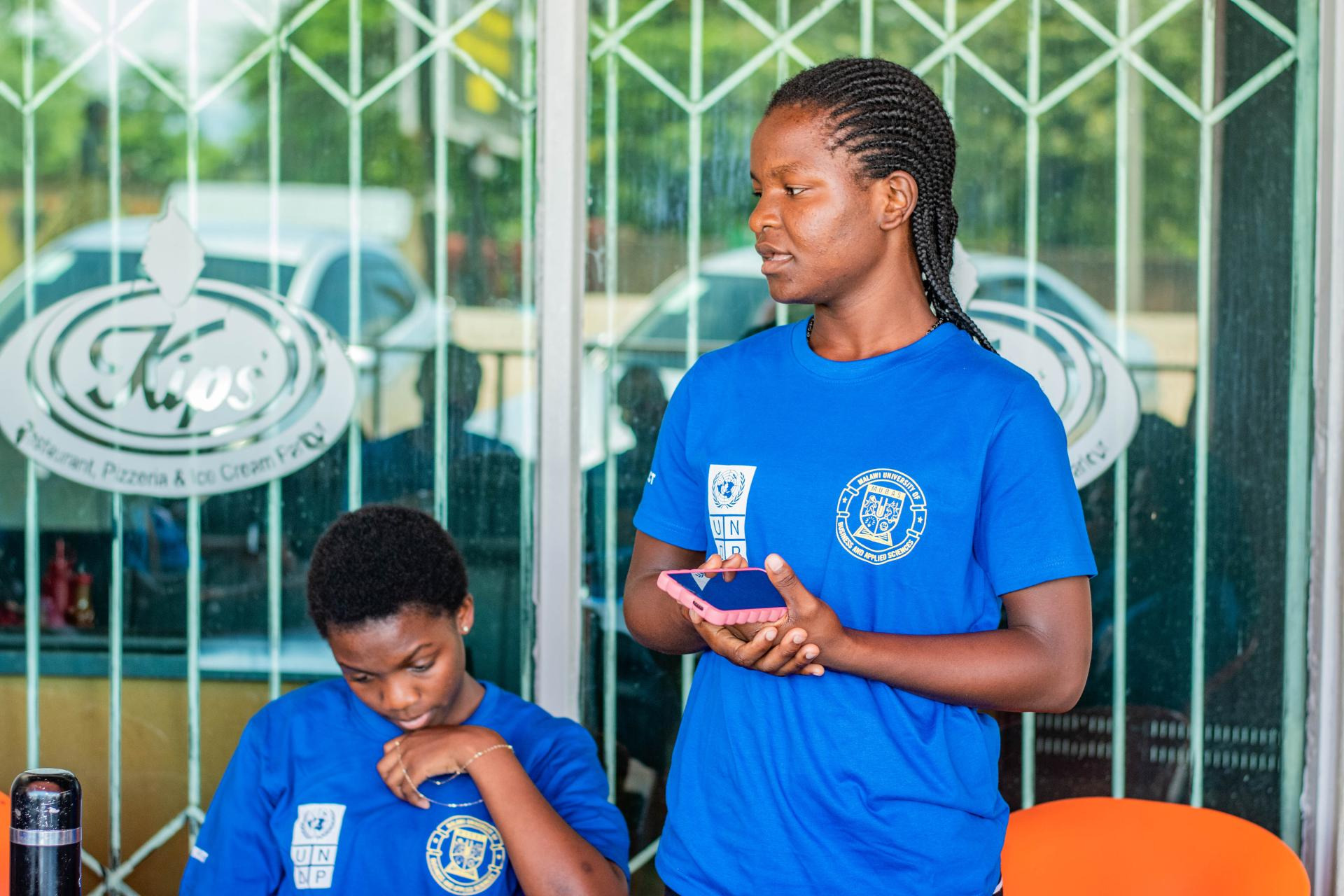
One of the digital advocates reporting how the IDT4M project is benefiting her community
The Malawi University of Business and Applied Sciences (MUBAS) is strengthening digital inclusion through the Inclusive Digital Transformation in Malawi (IDT4M) project, which improves access to technology, information, and digital opportunities in underserved communities.
Through the initiative, MUBAS has established community-based digital advocacy teams that provide practical digital literacy training to marginalized groups. During a monitoring visit to Mwanza on 9 December 2025, the project team engaged digital literacy advocates to assess progress and gather feedback.
Trained student advocates and community representatives serve as resource persons, helping community members confidently and safely use digital platforms. Training covers online services, secure mobile money transactions, e-commerce, and protection against online fraud and scams.
The initiative is producing positive results. Beneficiaries report improved ability to create online accounts, search and apply for jobs, and use social media to promote businesses. Increased awareness of digital security is also helping communities.
Evidence Documents & Supporting Data
Verified institutional documentation, datasets, and certified audit artifacts for SDG evidence.