
Clean Water and Sanitation
MUBAS Students Win Innovation Challenge for Sustainable Sanitation
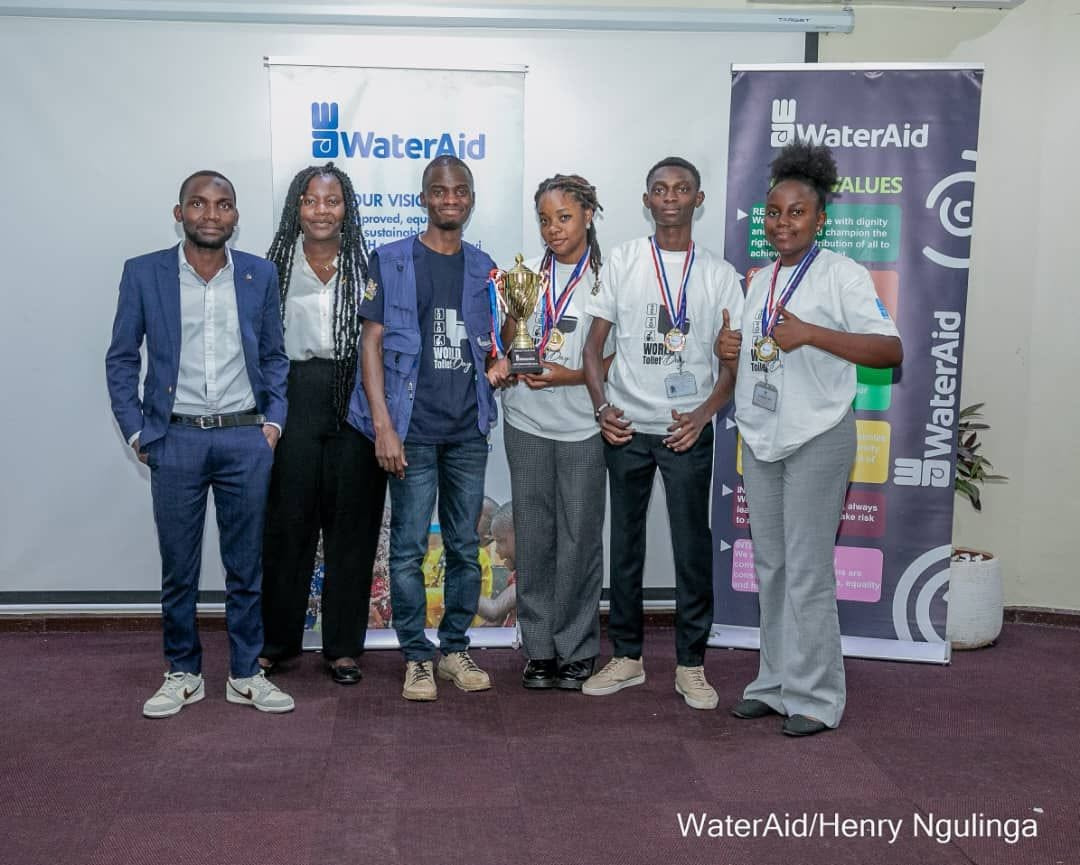
The winning team: Tawonga Chisimba, Esther Mkwamba, and David Kalulu
Students from the MUBAS advanced sustainable sanitation after emerging as winners of the WaterAid Malawi Innovation Challenge, held to commemorate World Toilet Day.
The winning team, comprising Tawonga Chisimba, Esther Mkwamba, and David Kalulu from the MUBAS Environmental Health Society, competed against teams from LUANAR and MUST. Their solutions focused on disability-friendly toilets, environmentally sustainable sanitation facilities, and climate-resilient sanitation systems.
The innovations promote safe and inclusive sanitation while addressing risks and the need for resilient infrastructure. The improved access to sanitation facilities, contributes to better hygiene, public health, and sustainable water resource management.
The achievement directly advances SDG 6 (Clean Water and Sanitation), particularly targets on sanitation and hygiene, water quality, and protection of water-related ecosystems. The challenge enabled students to apply academic knowledge to real-world water and sanitation challenges, demonstrating how higher education can generate solutions for healthier and more sustainable communities.
SURG-Water Transforming Maternal Healthcare Through Sustainable Water Access.
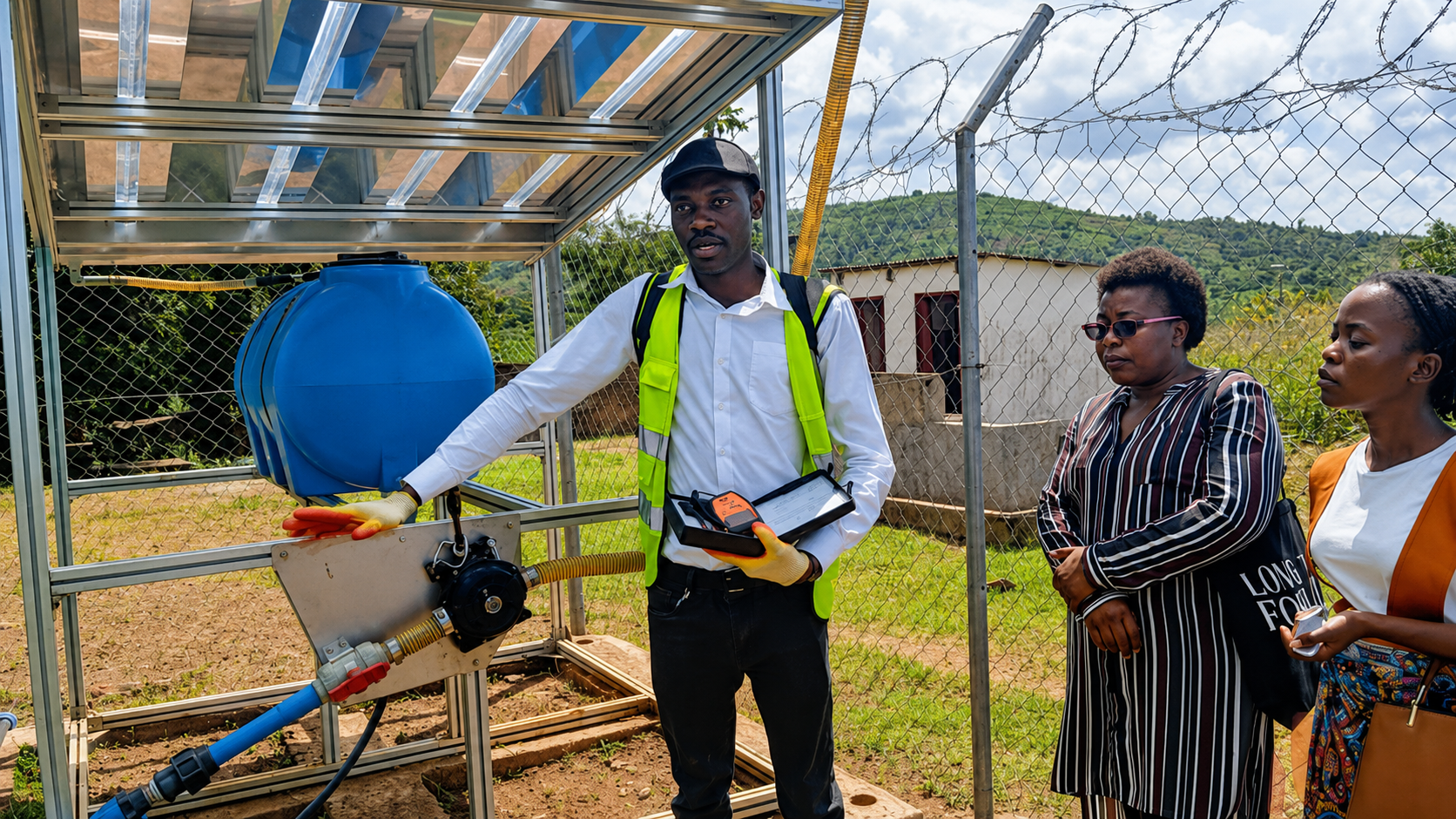
Water springs at Thekerani Health Centre
MUBAS is committed to advancing Sustainable Development Goal 6 (SDG 6), which seeks to achieve universal and equitable access to safe and affordable drinking water for all. A practical example of this commitment is the SURG-Water project. In 2025, the SURG-Water project, a partnership between the MUBAS and the Royal College of Surgeons in Ireland (RCSI), continued to demonstrate how research and innovation can address critical water challenges in rural healthcare. At Thekerani Rural Health Centre in Thyolo District, the project has transformed access to water for maternal and newborn care.
For nearly three years, the facility relied on a community borehole and, at times, river water, placing patients and health workers at risk. Through SURG-Water, installed a sustainable rainwater harvesting and solar-powered UV water treatment system. The system collects rainwater in two 20,000-litre tanks, treats it using low-energy technology and supplies safer water directly to the maternity ward.
The project responds to critical SDG 6 priorities by developing sustainable water treatment solutions that provide reliable access to safer water when conventional water supplies are unavailable or disrupted. The intervention continued supporting hygiene, infection prevention and equipment cleaning while reducing the burden on mothers who previously walked long distances for water, hence contributing to resilient rural healthcare and improved dignity for mothers and newborns.
WASHTED Spearheaded on Evidence-Based Research
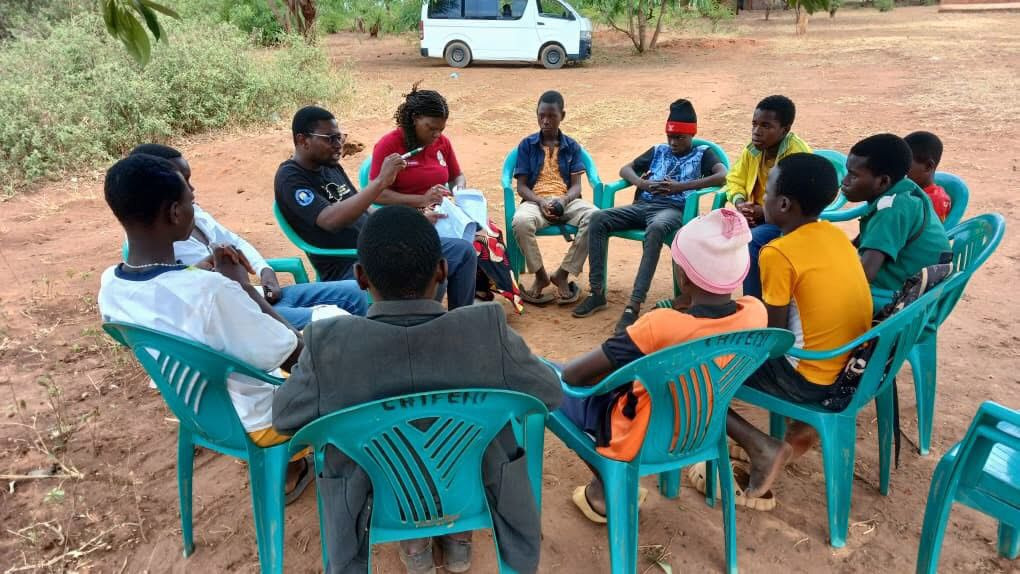
Enumerators and participants during focus group discussions.
MUBAS, through its Centre for Water, Sanitation, Hygiene and Appropriate Technology (WASHTED), is advancing Sustainable Development Goal 6 through research that strengthens access to safe water, sanitation and hygiene in vulnerable communities.
WASHTED is leading a formative study under the Tiwoloka Project, a collaboration with WaterAid Malawi, CARE International and FAWEMA. The study is generating evidence to guide context-specific water, sanitation, hygiene and nutrition interventions in schools, early childhood development centres and surrounding communities.
Ten enumerators were trained to collect qualitative and quantitative data across Mulanje, Thyolo, Chiradzulu, Ntcheu and Lilongwe. Through interviews, focus group discussions, observations and checklists, the research examined conditions affecting learners, households and institutions.
Using a Behaviour-Centred Design framework, the findings will identify barriers and opportunities for improved hygiene practices, sanitation services and safe water access. The evidence will support interventions that promote healthier environments, reduce risks associated with inadequate sanitation and strengthen community capacity for sustainable water and hygiene management.
Through Tiwoloka, MUBAS demonstrates how university-led research can generate practical evidence for improving water, sanitation and hygiene outcomes and supporting sustainable development.
Evidence Documents & Supporting Data
Verified institutional documentation, datasets, and certified audit artifacts for SDG evidence.