
Climate Action
MUBAS Leads Tree Planting Initiative Across Campuses
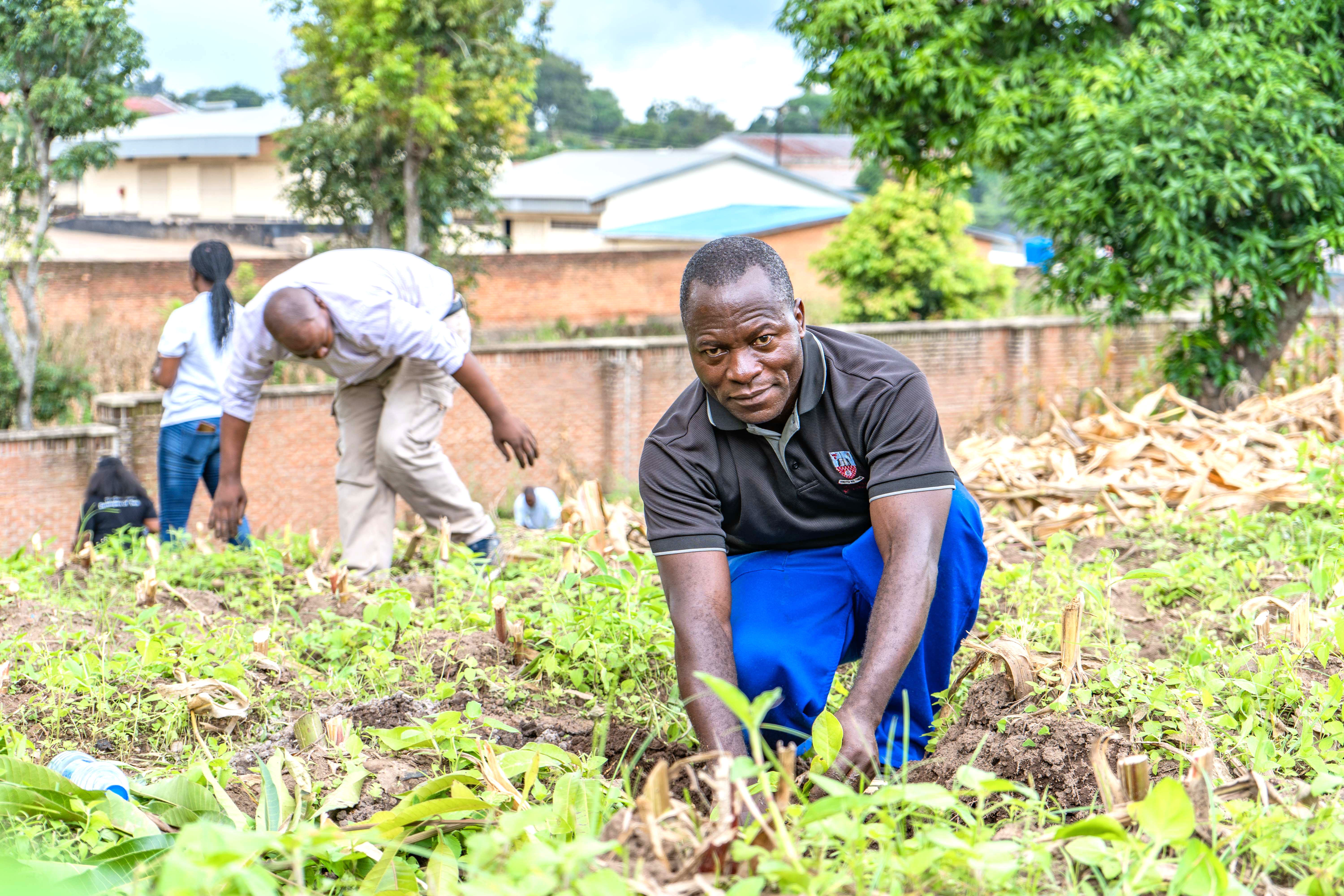
MUBAS staff plant trees at Blantyre Campus during the 2025 tree planting exercise
MUBAS continues its commitment to environmental sustainability through a large-scale tree planting initiative across its Blantyre and Lilongwe campuses. In March 2025, students, staff, and surrounding communities joined forces to plant over 1,400 trees, including indigenous species such as m’bawa, restoring degraded areas, enhancing biodiversity, and strengthening natural protection against floods and cyclones. The initiative not only contributes to carbon sequestration but also promotes experiential learning, community ownership, and collaboration with development partners and local leadership. By integrating climate resilience into its institutional activities and fostering collective responsibility, MUBAS demonstrates tangible impact in environmental stewardship and long-term sustainability.
Strengthening Climate-Resilient WASH Systems: WASHTED Engages in Global Water and Health Dialogue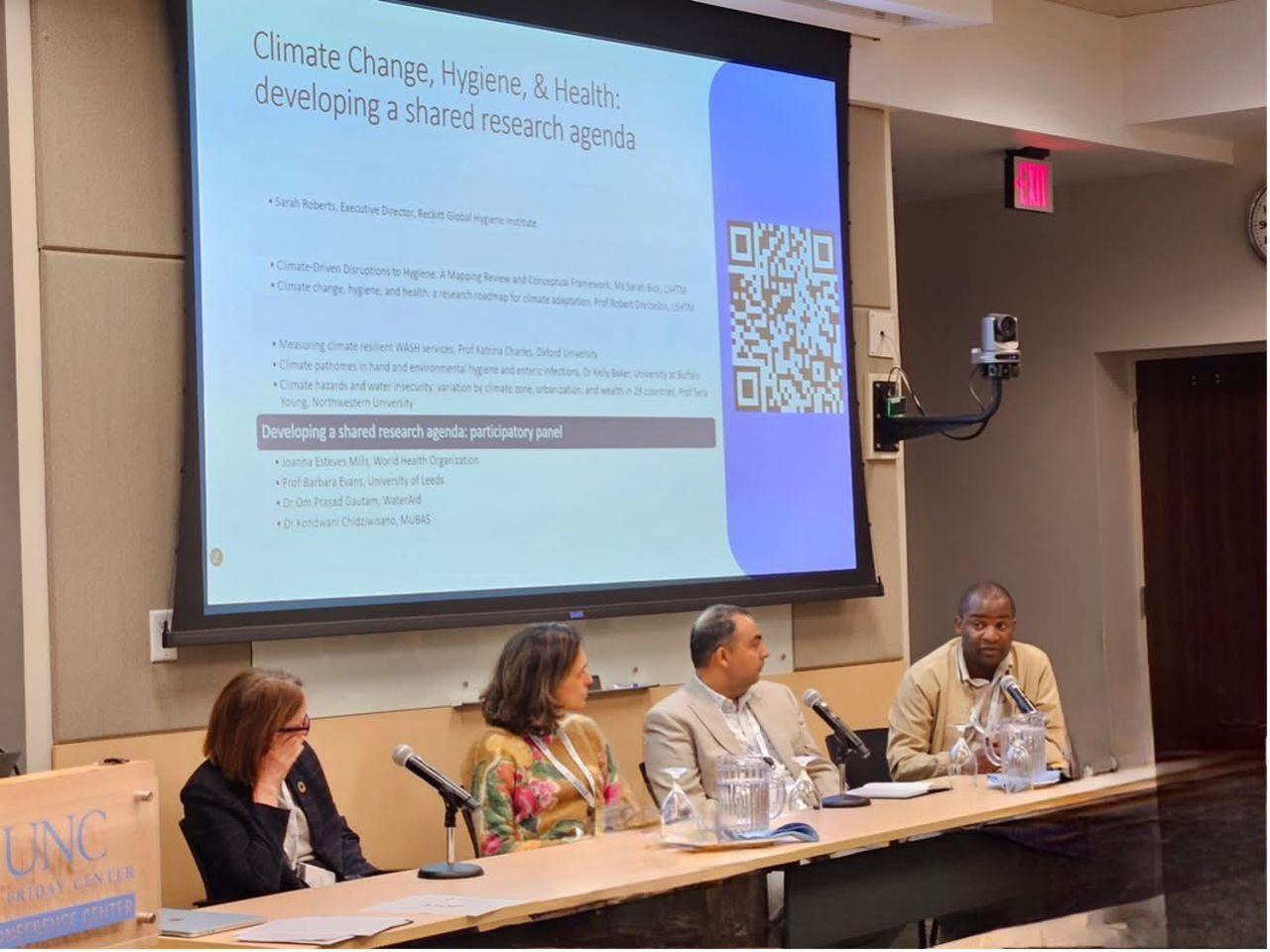
Dr. Chidziwisano of MUBAS WASHTED (right) with global partners at the 2025 UNC Water and Health Conference, advancing climate-resilient WASH systems.
MUBAS, through its Centre for Water, Sanitation, Hygiene and Appropriate Technology Development (WASHTED), is strengthening climate-resilient WASH systems by actively engaging in global research and policy dialogue. At the 2025 UNC Water and Health Conference, WASHTED joined leading institutions including the World Health Organization, WaterAid, and the London School of Hygiene and Tropical Medicine to address how climate change disrupts water, sanitation, and hygiene infrastructure worldwide. Drawing on evidence from Malawi, Dr. Chidziwisano emphasized how cyclones and climate shocks have damaged sanitation systems and reversed progress in hygiene interventions, underscoring the urgent need for adaptive solutions. By contributing research, sharing lessons, and advocating for resilient WASH systems, MUBAS demonstrates its institutional impact in safeguarding public health, advancing sustainable development, and positioning itself as a key voice in global climate and health discourse.
Addressing Plastic Pollution Through Research and Community Action 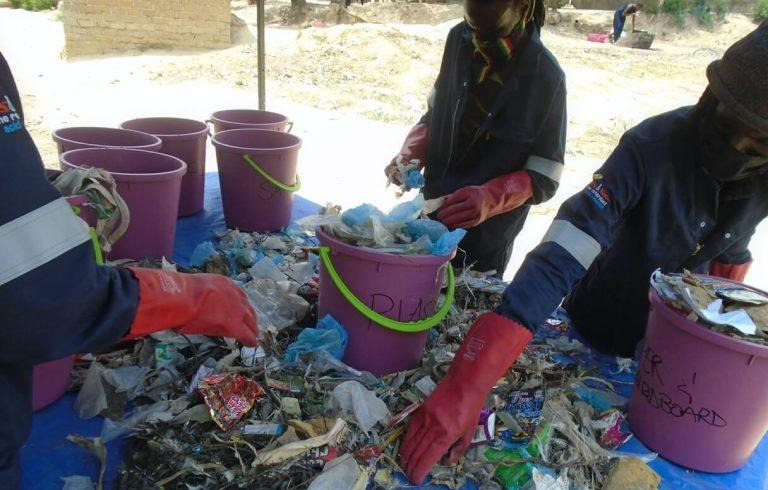
Community-based plastic waste sorting and audit process.
MUBAS, through its Centre for Water, Sanitation, Health and Appropriate Technology Development (WASHTED), is continuing to advance environmental sustainability by leading the SPACES project (2021–2025), which tackles plastic pollution in Malawi’s urban communities. This initiative combines research, international collaboration, and community engagement to address both environmental and public health challenges. In Blantyre’s Ndirande area, researchers quantify plastic waste, monitor mosquito breeding linked to discarded plastics, and explore connections between polluted environments, bacterial survival, and antimicrobial resistance. Beyond data collection, SPACES emphasizes behavioral change, working with communities to design practical solutions for reducing plastic use and improving disposal practices. Supported by global partners and funded by the Natural Environment Research Council, the project strengthens evidence for policy, promotes sustainable urban management, and enhances community wellbeing, thereby proving MUBAS’ continuing role in building resilience through research and action.
Evidence Documents & Supporting Data
Verified institutional documentation, datasets, and certified audit artifacts for SDG evidence.