
Participation in Policy Making to Alleviate poverty
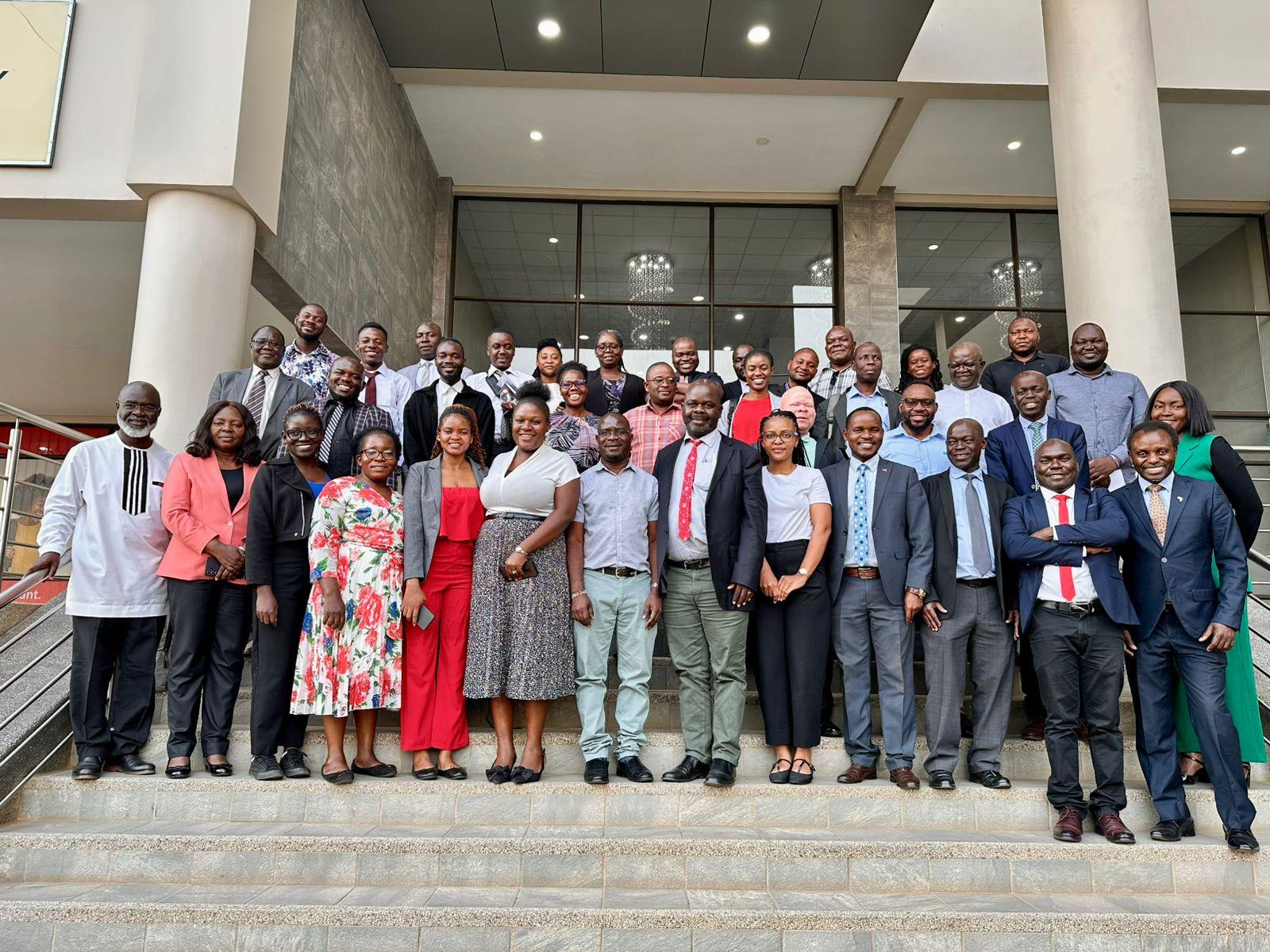
Policy Dialogue-Policy Brief Training Session, 28th - 29th August, 2025 at MERA Complex Auditorium, Lilongwe, Malawi.
MUBAS has demonstrated its commitment to addressing poverty in all its dimensions through its participation in evidence-based policymaking through research initiatives such as the Sustainable and Healthy Food Systems Southern Africa (SHEFS-SA) programme. Through these initiatives, the University is generating evidence to address policy gaps and strengthen coordination among sectors responsible for water, energy, agriculture, environment, and health.
The policy dialogue held on 28th and 29th August, 2025, revealed key challenges affecting poverty reduction in Malawi, including high poverty levels, climate change, low agricultural productivity, high production costs, limited access to technology, and insufficient evidence to inform policy decisions. These challenges directly affect economic opportunities, food security, and human development outcomes.
Through capacity building and policy engagement, MUBAS is strengthening education and human capital development by equipping students, researchers, and policymakers with skills in policy analysis, evidence generation, and policy brief development. This enhances the ability of institutions to make informed decisions and implement effective poverty reduction strategies.
The Policy dialogue promoted the use of research evidence in policy formulation, thereby helping to advance economic and income security through policies that support agricultural commercialisation, market development, climate resilience, and sustainable livelihood creation. This contributed to increased productivity, improved household incomes, and enhanced resilience among vulnerable populations.
MUBAS Strengthens National Policy Dialogue on Water, Sanitation and Poverty Reduction
The Malawi University of Business and Applied Sciences (MUBAS), through its Centre for Water, Sanitation, Hygiene and Appropriate Technology (WASHTED), continues to strengthen national policy dialogue by providing research evidence and technical expertise that inform policies and programmes aimed at reducing poverty and improving access to essential services in Malawi.
During the commemoration of WASHTED's 20th anniversary on 13 June 2025, the University's role in supporting evidence-based policymaking was reaffirmed by the Government of Malawi. Speaking at the event, the Director of Science, Technology and Innovation in the Ministry of Education, Associate Professor Chomora Mikeka, emphasized that universities have a critical responsibility to generate context-specific research that supports policy formulation and national development.
He noted that evidence-based research is essential for achieving Malawi 2063 and encouraged stronger collaboration between government, universities, and development partners to develop practical solutions to challenges affecting local communities, including access to safe water, sanitation, and public health services.
As a national research institution, MUBAS contributes technical expertise through WASHTED by conducting applied research, developing appropriate technologies, and engaging with government institutions and stakeholders to address challenges that disproportionately affect vulnerable and low-income communities. These interventions support national efforts to reduce multidimensional poverty by improving access to safe water and sanitation, reducing water-borne diseases, strengthening community resilience, and enhancing public health outcomes.
The University's research has resulted in the development of technologies currently providing safe water to maternal health centres in Thekerani and Chingazi in Thyolo District, as well as clean water solutions for communities in Chikwawa District. These community-based innovations generate evidence that supports government planning and policy implementation in the water, sanitation and hygiene sector.
MUBAS also works collaboratively with government ministries, local communities, development partners, and international research institutions to ensure that scientific evidence informs decision-making and contributes to sustainable development policies. Through these partnerships, the University continues to support the implementation of programmes that improve livelihoods and address key drivers of poverty across Malawi.