
Supporting Local Start-up in the Community
Business Incubation and Entrepreneurship Training

The MUBAS Business Incubation Centre (BIC) is a key institutional mechanism for supporting local entrepreneurs. Established in October 2020, the Centre provides entrepreneurship training, mentorship and business-development support to youth and MSMEs beyond the University. Its training equips participants with technical, managerial and innovation skills needed to develop viable business models, strengthen operations and improve their ability to secure external financing. The Centre trains more than 500 entrepreneurs nationwide across different business sectors.
The Centre also provides entrepreneurs with practical business infrastructure, including affordable office space, co-working areas, meeting rooms and administrative support. This gives emerging businesses access to resources that may otherwise be difficult or costly for early-stage entrepreneurs to obtain, enabling them to concentrate on developing and growing their enterprises.
Innovation Hub and Access to University Facilities
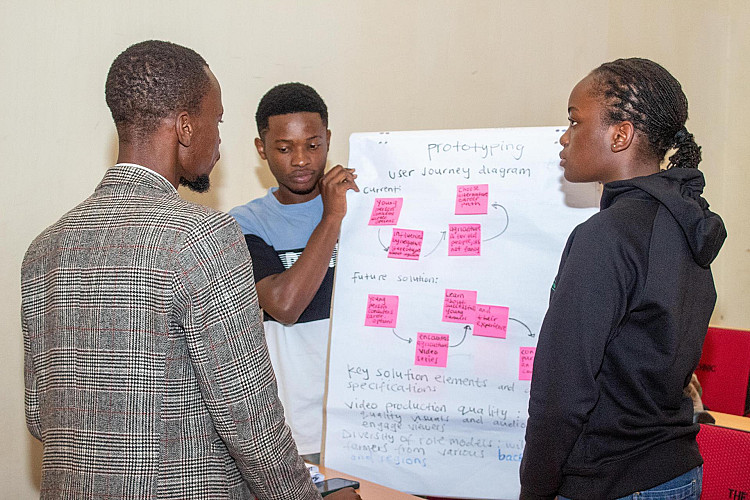
The MUBAS Innovation Hub further expands this support by providing a platform for creativity, digital innovation and entrepreneurship that serves both the University and the broader community. The Hub provides digital-skills training, mentorship programmes and co-working spaces for aspiring young technologists and emerging entrepreneurs. Its professional training includes practical data-analytics skills using Python, while its mentorship and collaborative spaces provide opportunities for participants to develop ideas, acquire technical capabilities and work with others on innovative solutions.
Through UniPod, MUBAS also provides access to state-of-the-art innovation facilities, technical support and expertise across areas including product development, fabrication, consultancy, diagnostics and repairs. UniPod brings together students, researchers and entrepreneurs in a collaborative environment intended to transform ideas into practical products, services and enterprises. This provides local innovators with access to university facilities and technical capabilities that support the development and refinement of business ideas.
Innovation Education, Networking and Mentorship
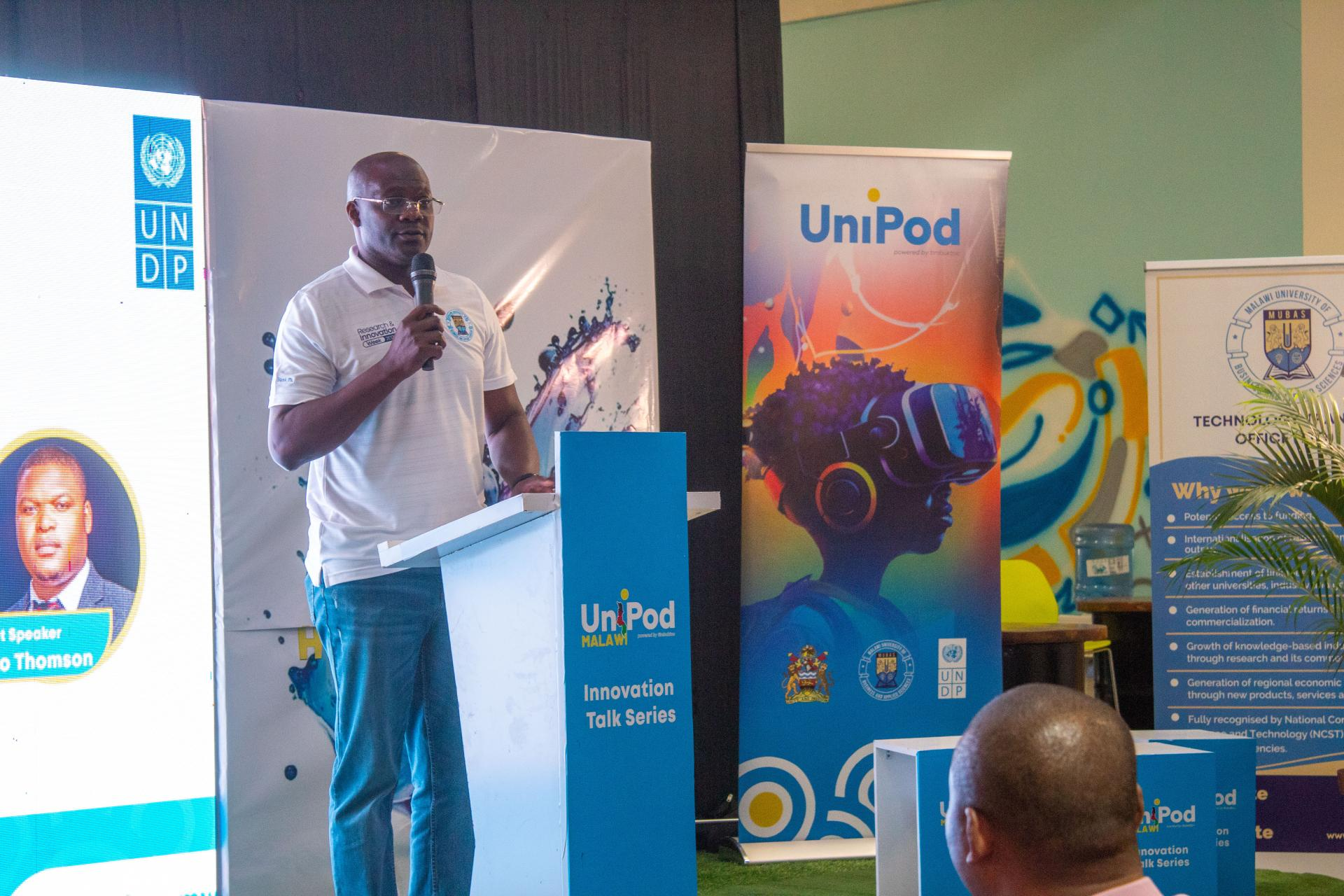
Dr Madalitso Tsakama delivers his opening remarks during the launch of MUBAS Innovation Talk series
MUBAS also uses innovation and entrepreneurship-focused knowledge-sharing platforms to strengthen the capacity of entrepreneurs and innovators. On 29 August 2025, MUBAS, in partnership with the United Nations Development Programme (UNDP), launched the Innovation Talk Series at the University Innovation Pod in Blantyre.
The series brings together students, industry leaders, innovators and entrepreneurs to exchange ideas, experiences and opportunities and to cultivate an innovation and entrepreneurship mindset. Each session addresses a specific theme, exposing participants to relevant knowledge, industry perspectives and practical possibilities that support the development of innovative and economically relevant solutions.
The University's Innovation Hub similarly hosts Emerging Tech Talks, bringing students, faculty and industry experts together to explore emerging technologies, generate research and innovation ideas, and provide career and industry insights. Together with the Hub's mentorship programme and co-working environment, these activities create an ecosystem in which aspiring entrepreneurs access knowledge, networks and guidance necessary to develop their ideas.
MUBAS Trains women in Financial Literacy
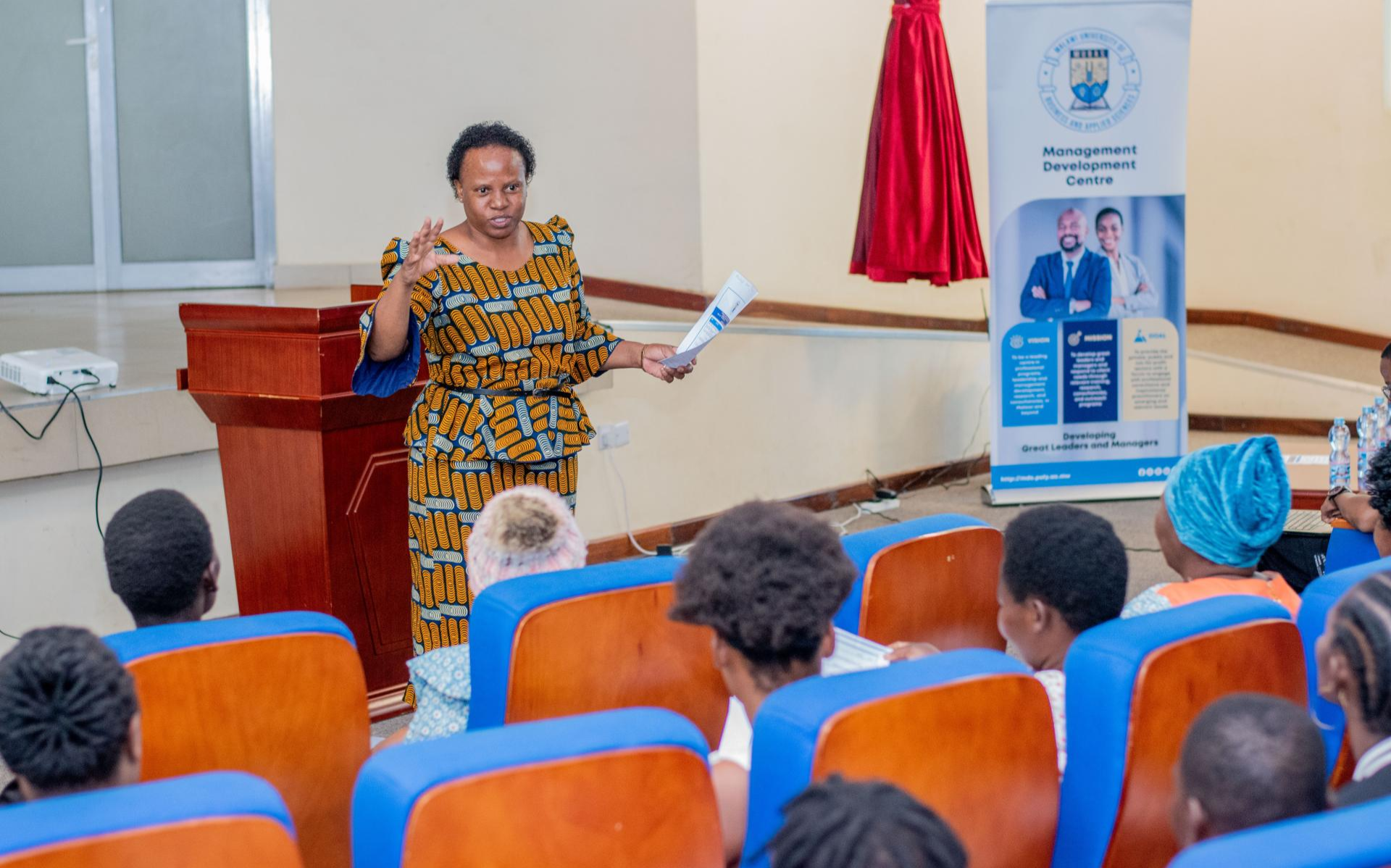
Dr. Ella Kangaude - MDC Manager, speaking during the training
As part of its efforts to provide assistance in the local community supporting the start-up of financially and socially sustainable businesses through relevant education, the Malawi University of Business and Applied Sciences (MUBAS), through the Management and Development Centre (MDC) under the School of Business and Economic Sciences, conducted a financial literacy training on October 23, 2025, at the MUBAS Main Campus in Blantyre, to promote entrepreneurship and community empowerment.
The training was designed to help women in business make informed financial decisions and manage their businesses successfully.
Speaking during the training, MDC Manager, Dr. Ella Kangaude, said the training was part of MUBAS’ corporate social responsibility aimed at empowering communities through knowledge sharing.
The Executive Dean for the School of Business and Economic Sciences, Dr. Rabiya Hanif, encouraged participants to apply the knowledge they have acquired to improve their operations and avoid common financial management mistakes.
“When running a business, there are many financial decisions to make, and each requires proper analysis. It is important to manage your business finances wisely for long-term success,” she advised.
One of the participants, Fallesi Msamala, described the training as an eye-opener.
“Before this training, we were running our businesses without proper financial knowledge,” Msamala said.
“Now we understand how to manage our finances, keep records, and make better decisions,” she added.
The training was attended by 43 women entrepreneurs from Nanjiriri Group in Area 6, Machinjiri who are engaged in various small-and medium-scale businesses such as catering, kaunjika sales, peanut butter processing, and restaurant management.
References & Evidence Sources
- [1] Business Incubation center
- [2] Innovation Hub
- [3] Innovation Talk
- [4] Financial Literacy