
Empowering Community through Local start up Finincial Assistance at MUBAS
Zantchito Entrepreneurship And Access to Finance Project and MUBAS Incubation centre
A major example is the Zantchito Entrepreneurship and Access to Finance Project, implemented through the MUBAS Business Incubation Centre. The programme targets idea-stage entrepreneurs and provides support to enable them to establish, scale and develop sustainable enterprises. Through the programme, MUBAS supports 30 idea-stage entrepreneurs annually. The businesses supported have subsequently created employment opportunities for other young people, demonstrating the wider community and poverty-reduction effects of the financial assistance.
The programme combines finance with business development support rather than providing capital in isolation. Its incubation model provides business-plan development, marketing and sales support, prototyping and product-development resources, with the cost of incubation services and associated support covered through the Zantchito grant. This helps entrepreneurs use the financial assistance to establish stronger and more sustainable enterprises.
Faculty Student Programs
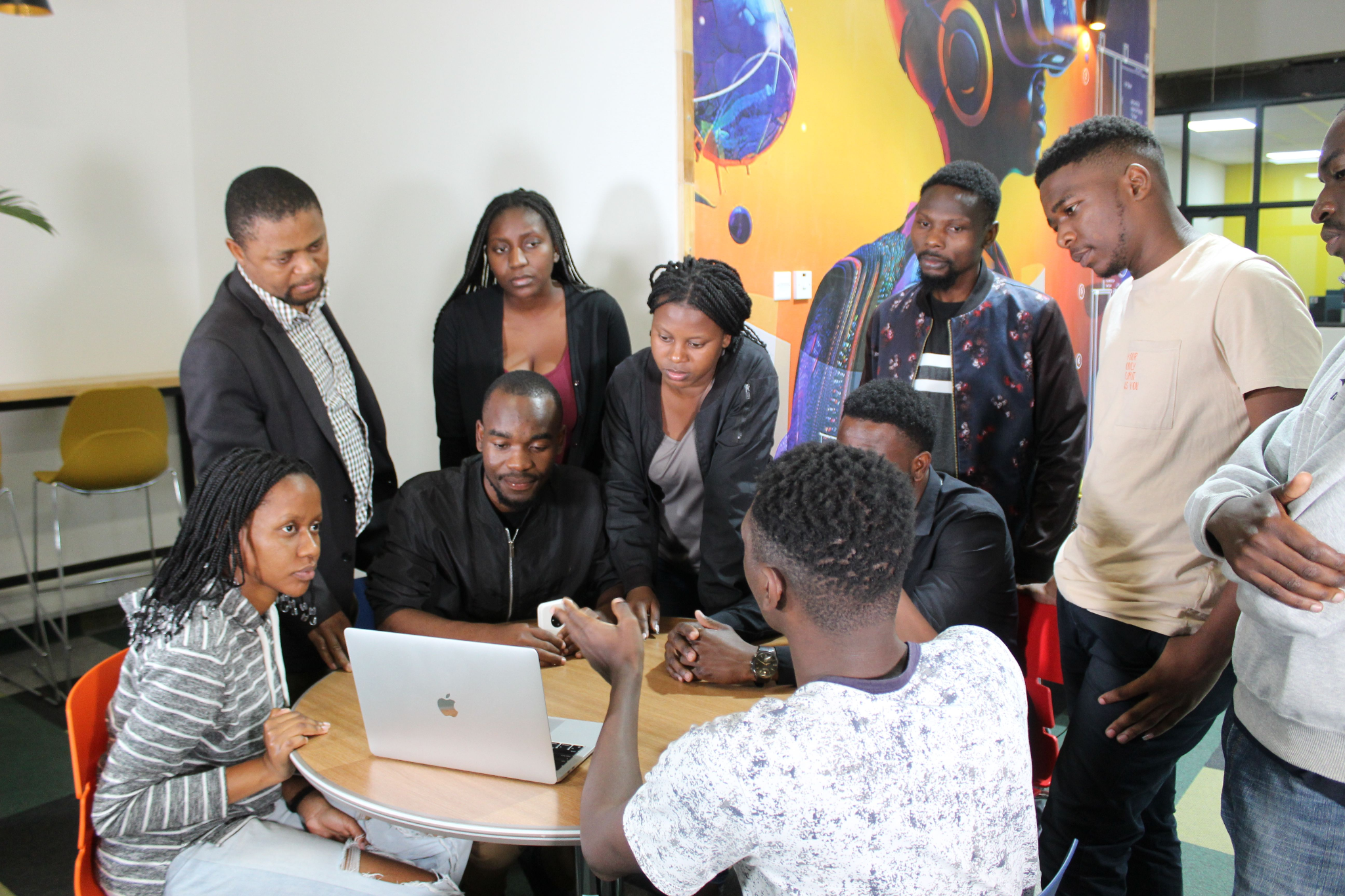
A key institutional mechanism is the Faculty-Student Programme (FSP) implemented through the University Innovation Pod (UniPod). The programme is designed to translate research and innovations into viable products and provides financial grants to innovators to improve and advance their solutions. These grants demonstrate MUBAS' role in providing actual financial capital for locally developed solutions with commercial and social applications, rather than limiting its support to training or technical advice. MUBAS states that UniPod was established to bridge the challenges faced by innovators across Malawi and that the FSP is intended to translate research and innovation into viable products. The University further describes the UniPod as a facility open to innovators from across the country, thereby extending the University's innovation-support role beyond its immediate campus community.
Sustainable Renewable Energy Technology Programme

MUBAS also provides financial assistance through its collaboration with the National Commission of Science and Technology (NCST) under the Sustainable Renewable Energy Technologies (RETs) Programme. On 4 July 2025, MUBAS and NCST awarded grants to two Malawian innovators developing renewable-energy solutions. Innocent Phakhalekhale and Alex Chipeta each received MK40 million, with support from UniPod, to upscale their innovations. Chipeta's solar-powered rope and washer pump is intended to improve irrigation for farmers, while Phakhalekhale's solar-powered food preserver addresses food preservation challenges.
The 2025 NCST–MUBAS grants provide particularly strong evidence for this subindicator because they show a direct pathway from financial support to the scaling of locally developed innovations. The recipients were Malawian innovators, the funding was specifically intended to upscale their solutions, and the innovations address practical community and economic needs in agriculture and food preservation. MUBAS's Vice-Chancellor further reaffirmed the University's commitment to funding high-impact research and innovation and providing a platform where innovators test and potentially scale their ideas.
MUBAS' Research Support and Funding framework further institutionalises this financial-assistance approach. The University describes its research and innovation system as providing access to funding opportunities, mentorship and strategic partnerships to enable students and staff to develop impactful solutions, foster entrepreneurship and contribute to sustainable national development.
FDH Graduate Startup Programme

One of the University's established financing mechanisms is the FDH Graduate Startup Programme, implemented through a partnership between MUBAS and FDH Bank. Under the programme, groups of 4–7 students are sponsored each year with seed funding to implement entrepreneurial projects after graduation. MUBAS explicitly identifies the initiative as a mechanism for enabling needy students to access capital to finance innovative solutions to societal problems and commercialise their entrepreneurial ideas. The programme also aims to create an alternative career pathway through job-creating ventures, with benefits extending to residents in the wider communities in which the businesses operate.
Through financial support from FDH Bank Plc under the MUBAS/FDH Bank Graduate Start-Up Programme, MUBAS graduates’ established Rise and Shine Private School in Mulanje, which achieved a 100% pass rate and 85% selection rate in the 2024/2025 PSLCE examinations. The school has created employment for 12 teachers and 7 support staff, providing income-generating opportunities for local families.
Beyond its academic success, the school is improving livelihoods by creating jobs and enabling families to meet their needs. One employee, Susan Bokosi, has been able to send her daughter back to secondary school using her salary after she dropped out in Form Two.
The initiative demonstrates how entrepreneurship is creating employment, strengthening household incomes and improving access to education while helping families build better futures.
MUBAS further facilitates access to finance through its collaboration with the National Economic Empowerment Fund (NEEF). The partnership connects students and recent graduates with tailored financial products that are intended to be affordable and sustainable over the long term. MUBAS reports that these opportunities are available to students within two years of graduation and are intended to support students from low-income households to establish businesses and income-generating activities, while creating employment opportunities for members of the wider community. The collaboration also includes mentorship and internship opportunities linked to the enterprises established by beneficiaries.