
MUBAS supports off-campus water conservation through community-based water and sanitation initiatives
One of the University's major off-campus initiatives is the SURG-Water Project, implemented by MUBAS in partnership with the Royal College of Surgeons in Ireland (RCSI) in Thyolo District. The project began in February 2023 and is supported through international research funding. Its purpose is to develop a sustainable, low-energy solution to inadequate water access in rural healthcare facilities, with particular attention to maternal and newborn healthcare.
1. Rainwater harvesting and solar water treatment
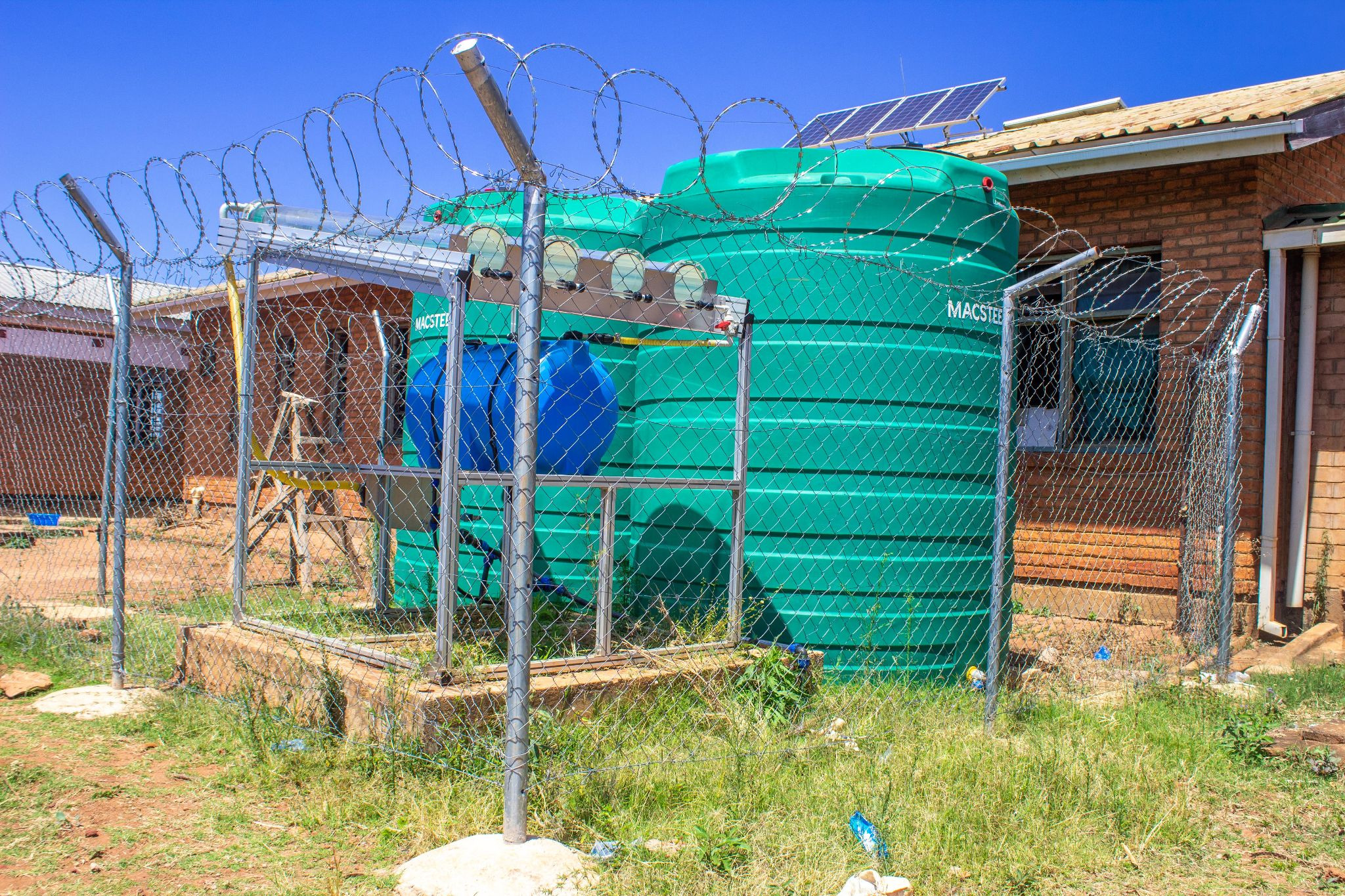
Water-treatment reactors designed to treat harvested rainwater
SURG-Water represents a structured institutional intervention rather than an isolated community activity. The project assesses water requirements at rural healthcare facilities and develops systems that harvest rainwater and use solar-powered disinfection technology to produce safer water. The approach provides an alternative and backup source of water when existing supplies are unreliable, thereby reducing pressure on conventional sources such as boreholes.
The project has been implemented at Chimvu Health Centre and Thekerani Rural Hospital in Thyolo District. At these facilities, communities previously depended heavily on nearby boreholes, with healthcare workers, patients and family members having to collect water in buckets. SURG-Water introduced water-treatment reactors designed to treat harvested rainwater and provide a more reliable supply for maternal healthcare.
At Thekerani Rural Health Centre, the intervention has resulted in a rainwater-harvesting system consisting of two 20,000-litre tanks, with collected rainwater treated using solar energy and supplied through taps to the maternity ward. The system was installed under SURG-Water, which has reduced the burden on women and families who previously had to travel long distances to collect water and has improved the availability of water for cleaning, hygiene and maternity care.
The SURG-Water intervention serves communities surrounding the participating rural healthcare facilities. Thekerani Rural Health Centre alone serves a population of more than 40,000 people from Group Village Head Khozombe and surrounding villages. The facility delivers approximately five babies per day, making reliable water particularly important for maternal and newborn care.
The project also deliberately incorporates community participation. Research undertaken through SURG-Water engaged the communities served by Chimvu Health Centre and Thekerani Rural Hospital, including mothers and guardians who had direct experience of water insecurity. Eight women-four mothers and four guardians-were selected as community co-researchers in one participatory study, demonstrating that the intervention incorporates community knowledge and lived experiences into water-management research.
The intervention responds directly to water scarcity. Before the project, the two health facilities faced significant water-access challenges, with neither facility having reliable onsite water and communities relying on boreholes and manual water collection. The SURG-Water approach therefore seeks to diversify water sources by capturing rainwater that would otherwise be lost and treating it using renewable solar energy.
This has two conservation benefits;rainwater is captured and reused, reducing dependence on groundwater and other conventional sources and Solar energy is used for water treatment, providing a low-energy approach that is more environmentally sustainable than energy-intensive treatment alternatives.Research from the project has subsequently identified the combination of rainwater harvesting and solar water disinfection as a cost-effective approach for providing safe water in rural healthcare facilities in Malawi.
2. Community outreach
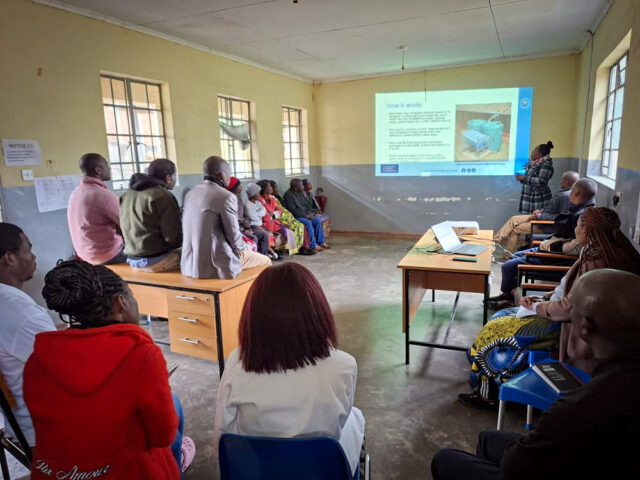
SURG-Water team with community from new sites
As part of its expansion to new intervention sites, the SURG-Water team undertook direct engagement with communities living around the selected healthcare facilities. This community outreach formed an important part of the project's implementation approach because it enabled the research and technical team to understand the communities' existing experiences with water access, their water needs, and the challenges associated with unreliable water supplies.
The engagement also provided an opportunity for communities to interact directly with the SURG-Water team and understand the purpose of the intervention. Rather than introducing water infrastructure without consultation, the project used community meetings to create awareness of the proposed water systems and establish a relationship between the project team, healthcare facilities and the surrounding communities.
This is particularly important in the context of water conservation and sustainable water management, because long-term sustainability depends not only on infrastructure but also on whether communities understand, accept and participate in the management of the intervention.
The community meetings can therefore be presented as a participatory water-Conservation intervention, through which MUBAS and its SURG-Water partners:
- engaged communities before implementation at new sites;
- created awareness about the project's water-management approach;
- listened to community experiences and concerns about water access;
- introduced communities to the planned rainwater-harvesting and water-treatment interventions;
- promoted community ownership of the intervention; and
- strengthened communication between communities, healthcare facilities and the project team.
MUBAS' institutional role is particularly significant because SURG-Water is formally a partnership between MUBAS and the Royal College of Surgeons in Ireland (RCSI), with funding from Science Foundation Ireland. MUBAS identifies the project as beginning in February 2023 and describes its objective as evaluating solar water-disinfection technology for treating harvested rainwater and providing a backup water supply where existing supplies are interrupted.
3. Donation of water-storage tanks to support communities
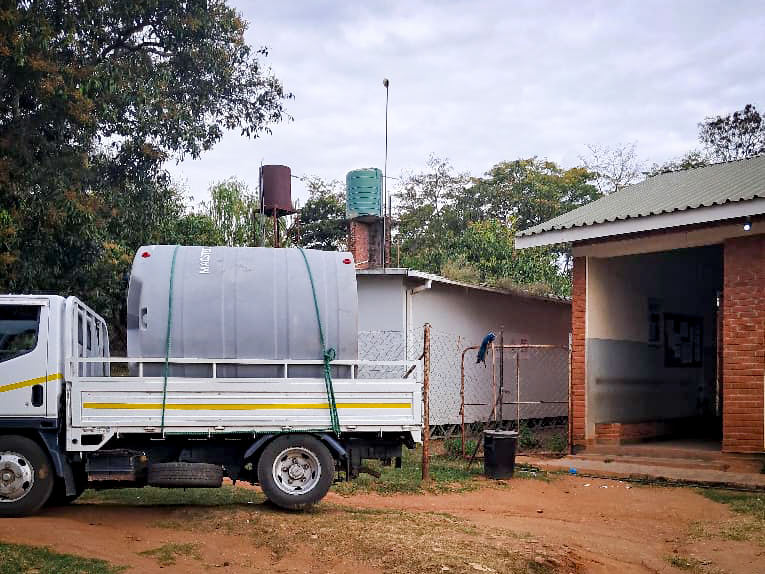 Tanks donated to health centres in Thekerani and Chimaliro
The donation of water tanks represents the practical infrastructure component of the community outreach programme. The tanks are important because they provide the physical capacity required to capture and store rainwater for subsequent treatment and use. The donation is one component of the wider SURG-Water intervention. The project combines community engagement, water-storage infrastructure, rainwater harvesting, solar water disinfection, research and monitoring into an integrated water-security model.
The donated tanks therefore contribute to water conservation in two important ways. First, they facilitate rainwater harvesting. Rainwater that would otherwise run off is captured and stored for later use. This creates an additional water source for communities and healthcare facilities and reduces reliance on conventional sources during periods when those sources are unavailable or unreliable.
Second, they provide the storage component required for the project's water-treatment approach. SURG-Water uses solar water disinfection to treat harvested rainwater and provide a backup supply during interruptions to existing water supplies.
4. Educational opportunities for local communities to learn about good water management
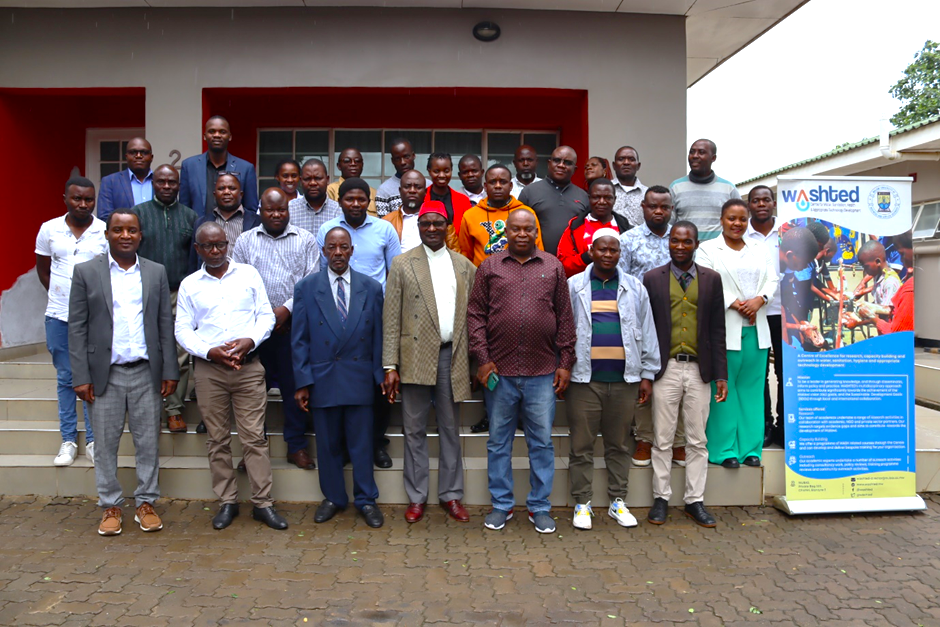
MUBAS also facilitates research dissemination workshops that translate scientific findings into practical knowledge for local decision-makers. For example, through the WASH for Everyone (W4E) project, WASHTED organised a dissemination workshop with the Chiradzulu District Council, traditional authorities, Area Development Committees, and WASH implementing partners. Conducted largely in the local language (Chichewa), the workshop shared research findings on sanitation, climate change impacts, Community-Led Total Sanitation (CLTS), and sanitation marketing, enabling local stakeholders to make informed decisions on improving water conservation and sanitation management within their communities.
In addition, WASHTED's Early Childhood Development (ECD) WASH Project identifies challenges in drinking water management, sanitation and hygiene before engaging caregivers, education officials, community representatives and government stakeholders in educational workshops to co-design interventions. Recommended actions include regular WASH education sessions, caregiver training, community mobilisation, strengthened sanitation by-laws and partnerships that improve water and hygiene practices in Early Childhood Development Centres.
Beyond individual projects, community education is embedded within WASHTED's long-term strategic mission. The Centre explicitly prioritises capacity building, research dissemination, community outreach and influencing policy, while its technical expertise covers household water treatment, sanitation, hygiene behaviour change, community health, solar water supply systems and other appropriate water technologies that directly benefit local communities.