
Executive education programmes
Vocational Training at Business Incubation Centre

The MUBAS Business Incubation Center was officially launched on the 29th October 2020 whose aim is to equip the youth with professional entrepreneurship expertise, regardless of their educational background.
The Business Incubation center facilitates the growth of startups through providing access to essential resources, from affordable office spaces and co-working areas to meeting rooms and administrative support. We ensure that entrepreneurs have the infrastructure they need to focus on what matters most – their business.
The Center is sponsored by the Malawi Government through the Ministry of Labour, Youth, Sports and Manpower Development with the funding from the African Development Bank.
The Centre which focuses on capacity building initiatives targeting out-of-school youths and Micro, Small and Medium Enterprises (MSMEs) beyond the University, offering comprehensive entrepreneurship training, mentorship and business development support.Business Incubation Centre trains over 500 entrepreneurs annually in various business sectors. These interventions equip entrepreneurs with the technical, managerial, and innovation skills needed to develop viable business models and attract financing from external partners.
In addition, the Centre collaborates with various stakeholders to facilitate access to finance and markets for incubates. Through these partnerships, the university indirectly contributes to the financial empowerment and sustainability of community-based enterprises.
Through the Zantchito Entrepreneurship and Access to Finance project, the Centre financed 30 idea-staged entrepreneurs to start, scale and establish their businesses. These businesses have created jobs for other youths thereby contributing to the reduction in poverty in Malawi.
Financial Literacy Training
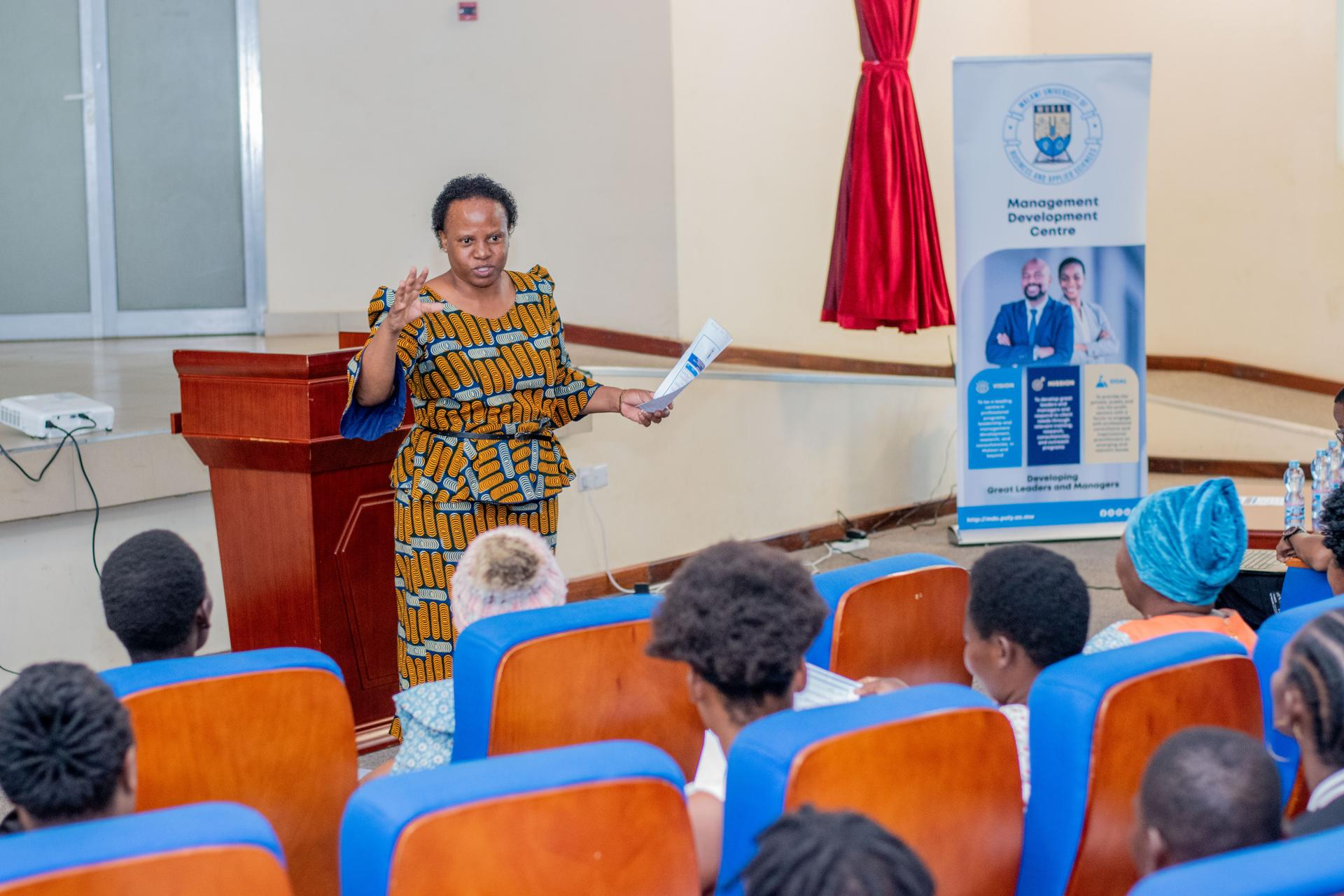 Dr. Ella Kangaude - MDC Manager
The Financial training was designed to help women in business make informed financial decisions and manage their businesses successfully. Speaking during the training, MDC Manager, Dr. Ella Kangaude said the training was part of MUBAS’s corporate social responsibility aimed at empowering communities through knowledge sharing.
The Executive Dean for the School of Business and Economic Sciences, Dr. Rabiya Hanif, encouraged participants to apply the knowledge they have acquired to improve their operations and avoid common financial management mistakes.
“When running a business, there are many financial decisions to make, and each requires proper analysis. It is important to manage your business finances wisely for long-term success,” she advised. One of the participants, Fallesi Msamala, described the training as an eye-opener.
“Before this training, we were running our businesses without proper financial knowledge,” Msamala said. “Now we understand how to manage our finances, keep records, and make better decisions,” she added.
The training was attended by 43 women entrepreneurs from Nanjiriri Group in Area 6, Machinjiri who are engaged in various small- and medium-scale businesses such as catering, kaunjika sales, peanut butter processing, and restaurant management.
Basic Motor Vehicle Mechanics Training

Participants attending a practical session during the training
MUBAS provides professional and technical training that equips members of the workforce with skills relevant to sustainable transportation and emerging automotive technologies. Through its Department of Mechanical Engineering, the University provides training in Basic Motor Vehicle Mechanics Training.
The training supports lifelong learning by enabling professionals and technical personnel outside the University’s regular degree programmes to upgrade their knowledge and adapt to changes in the automotive industry. By promoting skills related to cleaner and more efficient vehicle technologies, MUBAS contributes to the development of a workforce capable of supporting the transition towards more sustainable transportation systems.
This initiative demonstrates MUBAS’s commitment to continuing professional education, sustainable mobility and industry-relevant skills development as part of its contribution to sustainable development.
Innovation Commercialisation and Engineering Design Programme
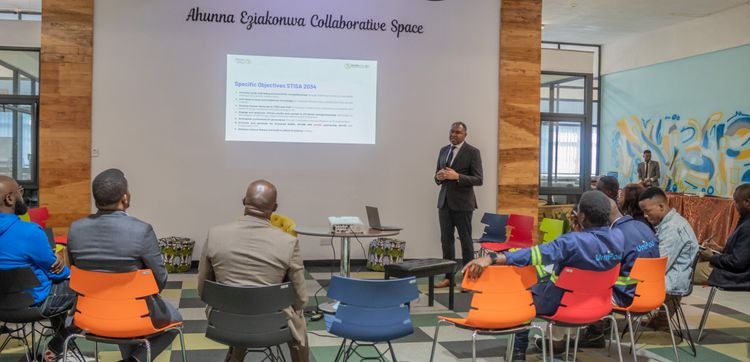 Participants at MUBAS’s UniPod programme, led by Prof. Brando Okolo
MUBAS, through UniPod Malawi, provides opportunities for professional learning in innovation, engineering design and technology commercialisation. Through an innovation commercialisation and engineering design session led by Professor Brando Okolo, participants gained knowledge on transforming engineering ideas and research outputs into practical solutions.
From 3rd July 2025, UniPod had the honour of hosting Professor Brando Okolo, AUDA-NEPAD's Advisor on Science, Technology and Innovation (STI). His visit marked a significant milestone in UniPod’s efforts to strengthen the innovation ecosystem and bridge the gap between research and real-world impact.
During his time at UniPod, Professor Okolo engaged with a range of high-level stakeholders including representatives from the National Commission for Science and Technology (NCST), Malawi University of Business and Applied Sciences (MUBAS) Vice Chancellor Professor Nancy Chitera, the United Nations Development Programme (UNDP) Resident Representative Fenella Frost, and several members of the academic and innovation community.
As part of his visit, Professor Okolo delivered a compelling and interactive session to UniPod staff and MUBAS faculty on two critical themes: the commercialization of innovation and the engineering design process. Drawing from his extensive experience across Africa’s innovation and policy landscape, he shared strategic insights on how institutions can build viable pathways from prototype to product, and emphasized the importance of applying structured engineering design frameworks in developing scalable solutions.
The programme sparked productive discussions and left staff members with a deeper understanding of the commercialization business model, including how to assess market potential, protect intellectual property, and attract early-stage investment. The insights provided will prove instrumental as UniPod continues to support innovators, startups and community members in turning their ideas into impactful, sustainable enterprises.
UniPod extends its sincere appreciation to Professor Okolo for his time, insights, and encouragement. His visit reinforced the importance of collaboration between policymakers, academic institutions, and innovation hubs in building a robust and inclusive STI ecosystem for Malawi and the continent.
Executive Management and Leadership Programme
In 2025, MUBAS strengthened its commitment to expanding access to knowledge, promoting digital inclusion and providing lifelong learning opportunities for professionals, community members, entrepreneurs and other learners beyond its enrolled student population.
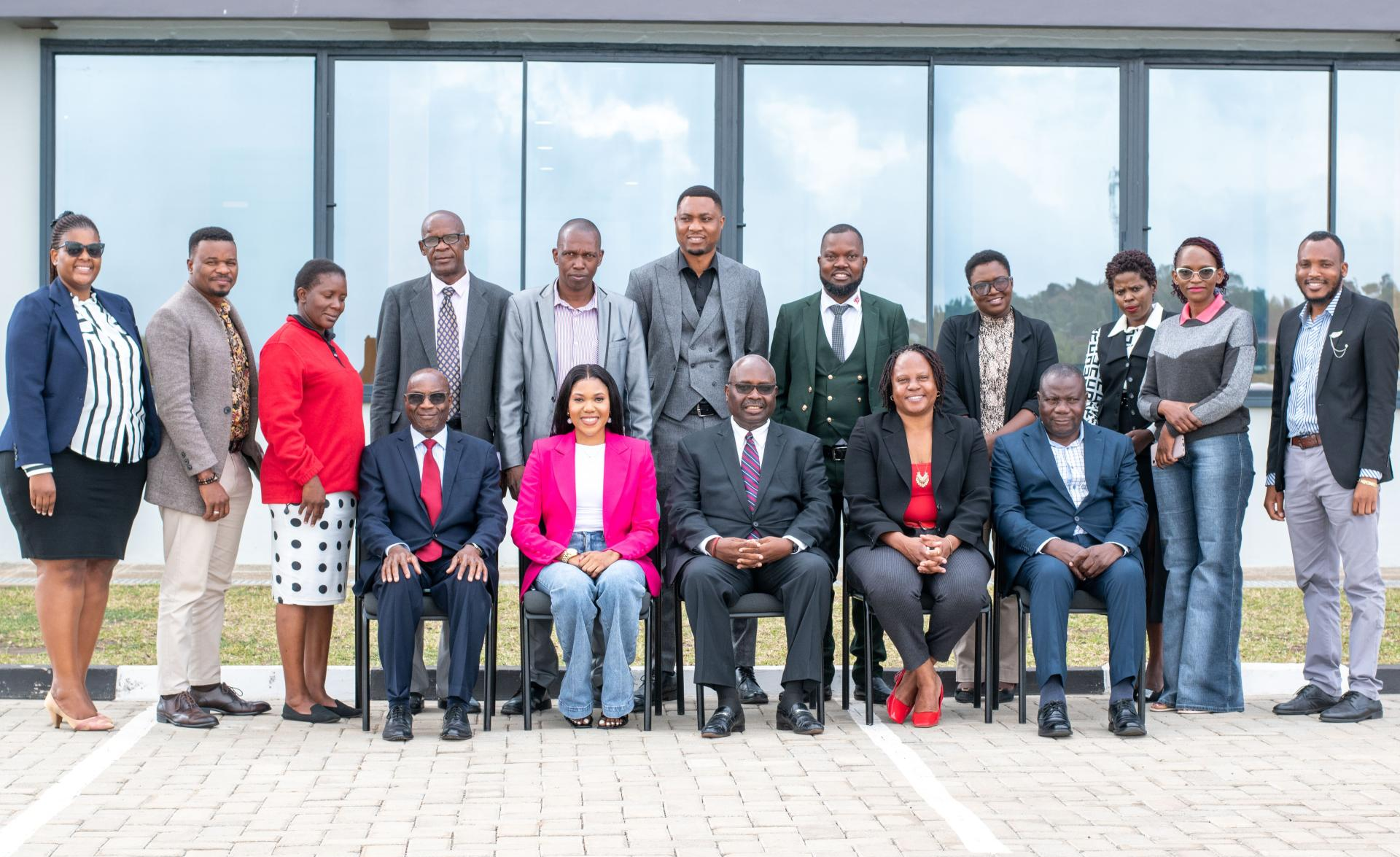
Executive Management and Leadership Programme Launch
In June 2025, through its Management Development Centre (MDC), MUBAS launched the Executive Management and Leadership Programme (EMLP), a six-month executive education programme designed to strengthen leadership and management skills among professionals in the public, private and non-profit sectors.
The programme was offered free of charge and was open to both MUBAS staff and members of the public, extending learning opportunities beyond the University community. It provided professionals from different sectors with an opportunity to develop their leadership and management competencies without enrolling in traditional degree programmes.
The programme addressed Malawi’s need for ethical, visionary and transformational leadership through practical learning tailored to the local context. By making executive education freely accessible to both internal and external participants, MUBAS promoted lifelong learning, expanded access to professional development and contributed to building leadership capacity in the country.