
MUBAS Commitment to Lifelong Learning and Free Access to Educational Resources
Executive Management and Leadership Programme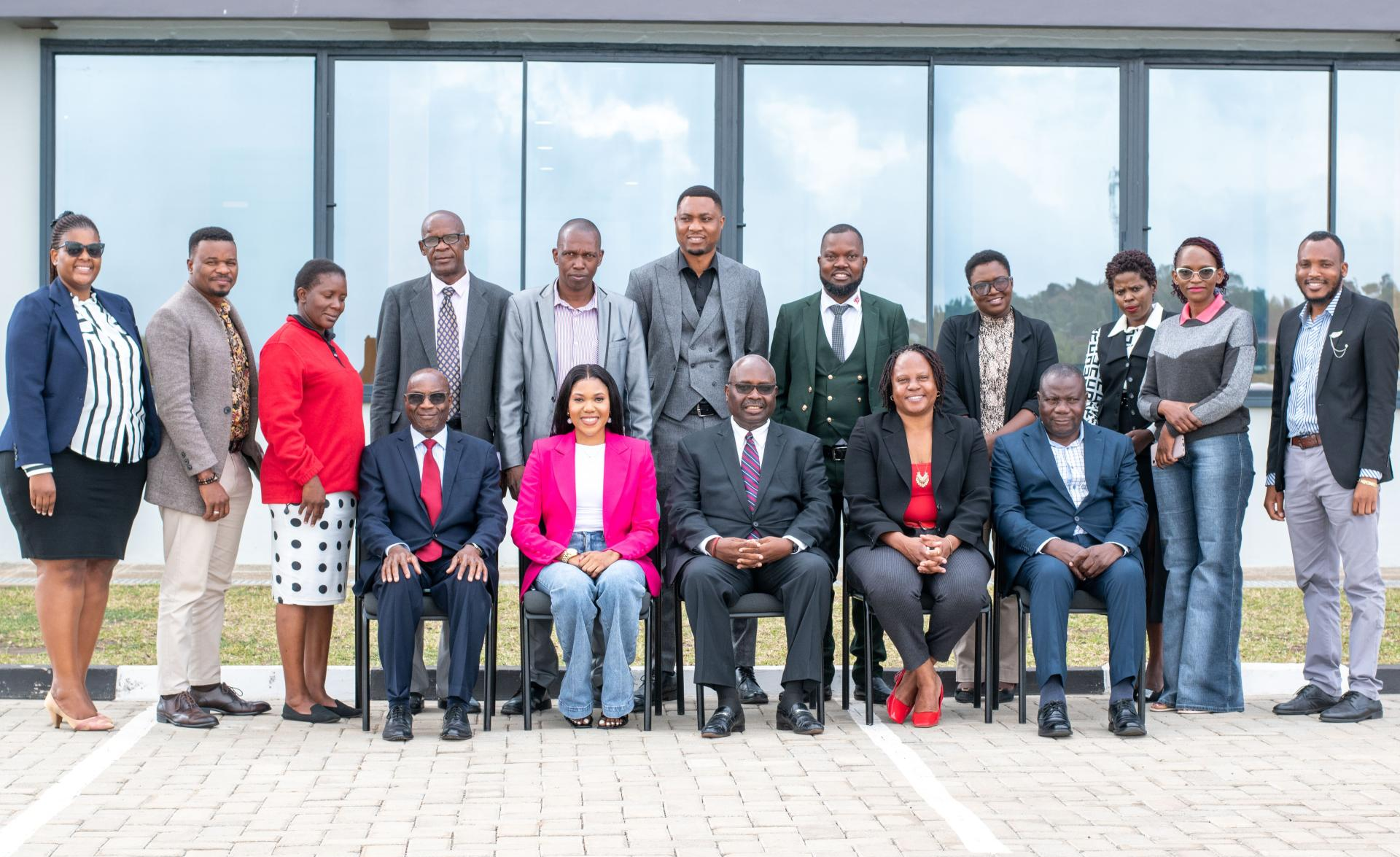
Executive Management and Leadership Programme Launch
In June 2025, through its Management Development Centre (MDC), MUBAS launched the Executive Management and Leadership Programme (EMLP), a six-month executive education programme designed to strengthen leadership and management skills among professionals in the public, private and non-profit sectors.
The programme was offered free of charge and was open to both MUBAS staff and members of the public, extending learning opportunities beyond the University community. It provided professionals from different sectors with an opportunity to develop their leadership and management competencies without enrolling in traditional degree programmes.
The programme addressed Malawi’s need for ethical, visionary and transformational leadership through practical learning tailored to the local context. By making executive education freely accessible to both internal and external participants, MUBAS promoted lifelong learning, expanded access to professional development and contributed to building leadership capacity in the country.
Promoting Continuous Professional Development to secondary school teachers
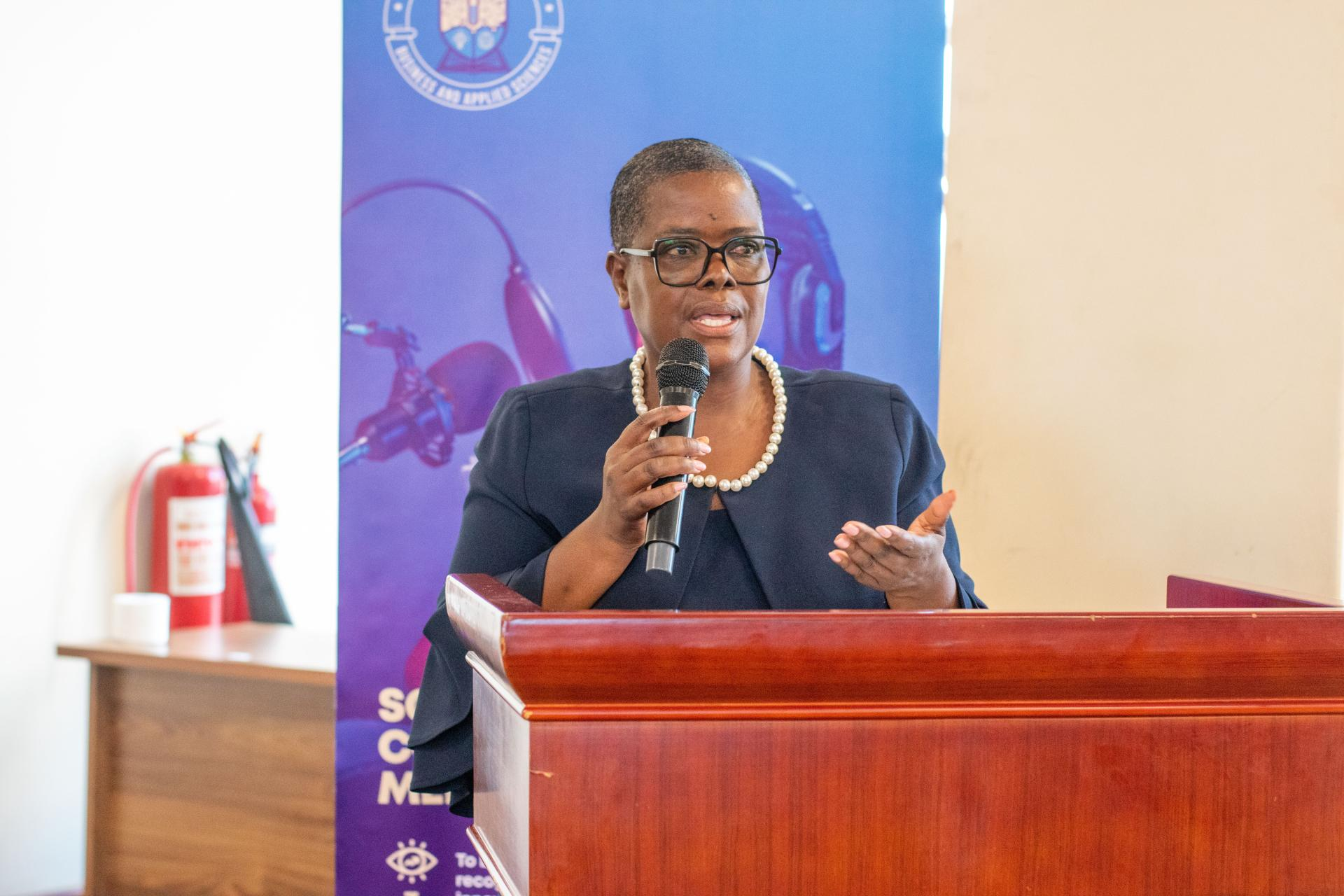
The Director of Secondary Education (DSE) in the Ministry of Education, Science and Technology, Ruth Samati delivering her speech
The Malawi University of Business and Applied Sciences (MUBAS) demonstrates its commitment to extending educational opportunities beyond its enrolled student population by providing professional development and training opportunities to external learners, including teachers from secondary schools across Malawi for free. This demonstrates that the University functions not only as a provider of education to its registered students but also as a resource for lifelong learning and capacity development within the wider community.
A clear example is the Improving Secondary Education in Malawi (ISEM II) training programme, which was facilitated by MUBAS through its Applied Education Department. The programme brought together technical and vocational education teachers from various secondary schools across the country, meaning that the participants were external professionals rather than students enrolled at MUBAS. The training was specifically designed to strengthen teachers' knowledge and skills and enable them to deliver more relevant and effective lessons to learners.
MUBAS provided its institutional and academic capacity to facilitate this training, effectively opening its educational resources, expertise and learning environment to professionals outside the University's regular student population. The programme served as a form of continuous professional development, allowing participating teachers to refresh their existing knowledge, acquire new skills and improve their teaching practice. One participant specifically described the training as a refresher course that would help teachers recover knowledge they may have missed during their previous training and improve their ability to teach.
The initiative also demonstrates MUBAS' broader institutional commitment to lifelong learning and knowledge sharing. The University's Vice Chancellor emphasized that continuous professional development is essential for maintaining a strong education system and confirmed MUBAS' commitment to partnering with the government in building a skilled and innovative nation. The training therefore represents a concrete mechanism through which MUBAS extends its educational expertise and learning opportunities to members of the public who are not studying for a degree at the University.
Technical and Vocational Education
The University further supports SDG 4.3 through technical and vocational education programmes that develop practical industry skills.
These include internationally recognised City & Guilds Technician Programmes, vocational technical training and skills development initiatives that prepare learners for employment and entrepreneurship. Such programmes expand access to technical education for individuals who may not pursue traditional university degrees while responding to labour market demands.
In addition to formal certification programmes, MUBAS periodically offers specialised vocational training initiatives that equip participants with practical technical skills required in industry.
One example is the Basic Motor Vehicle Mechanics Training, which provides hands-on technical instruction for learners seeking practical competencies in automotive maintenance and repair.
Such programmes broaden access to vocational education and strengthen employability through industry-oriented skills development.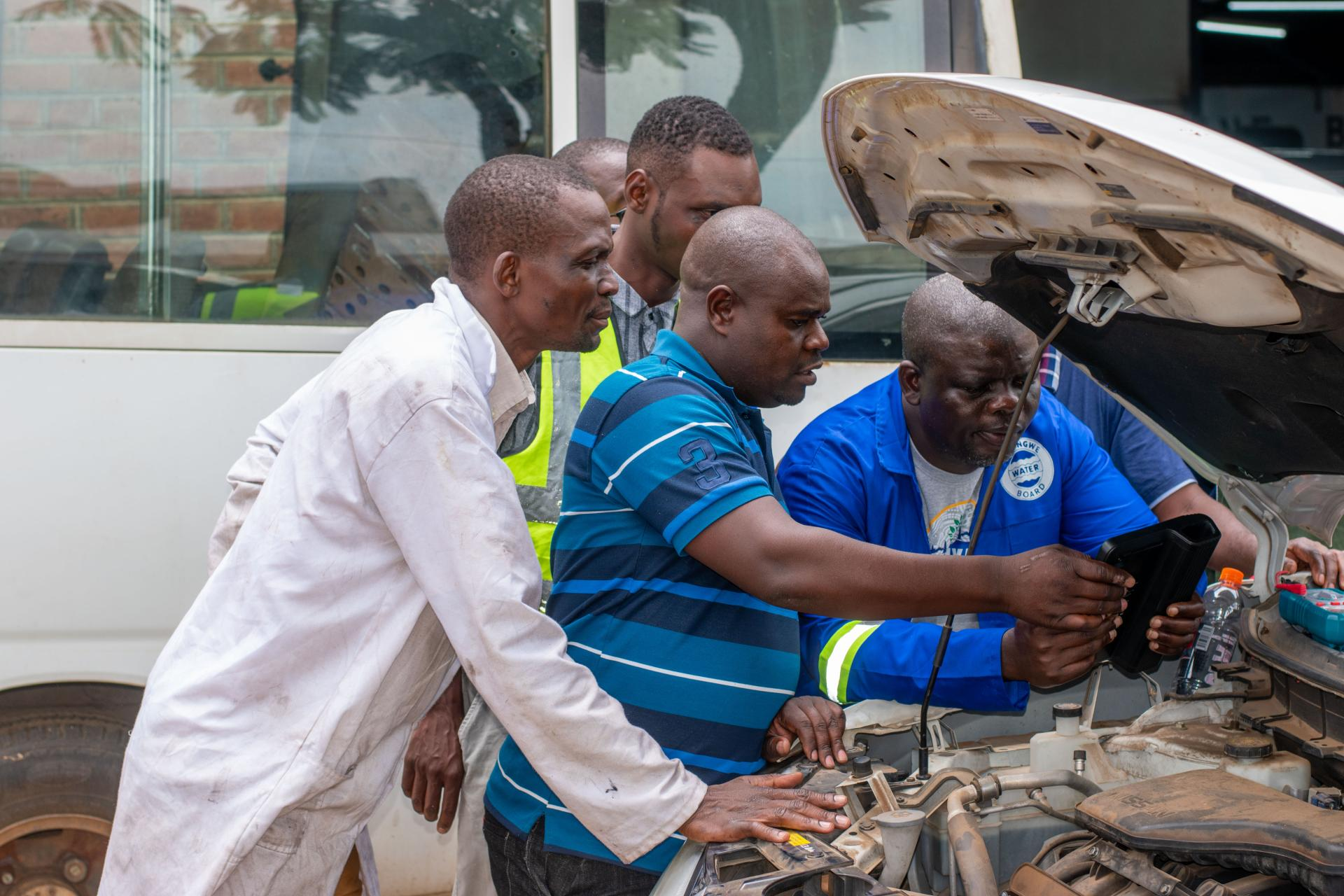
Partcipants attending a practical session during the training
In November 2025, MUBAS trained motor vehicle technicians from the Lilongwe Water Board in modern automotive technologies, with particular emphasis on hybrid and electric vehicles. The five-day training, conducted at the MUBAS main campus, provided participants who were not MUBAS students with access to the University's technical expertise, practical learning environment, equipment and specialised knowledge.
Importantly, the training was not limited to conventional classroom instruction. Participants engaged in practical sessions covering workshop management, vehicle scanning, fault diagnosis and repair, and received hands-on exposure to scanners and diagnostic machines. This demonstrates that MUBAS makes its institutional knowledge, specialised facilities and technical learning resources available to external learners for skills development.
The initiative further demonstrates that MUBAS's educational resources are not exclusively reserved for students formally enrolled in its academic programmes. The University explicitly states that the training is open to individuals and institutions interested in upgrading their skills in modern motor vehicle technologies, creating an avenue through which professionals, technicians and members of the wider community can benefit from MUBAS's educational expertise.
Nzeru Hub: Free Digital Learning Resources for the Public
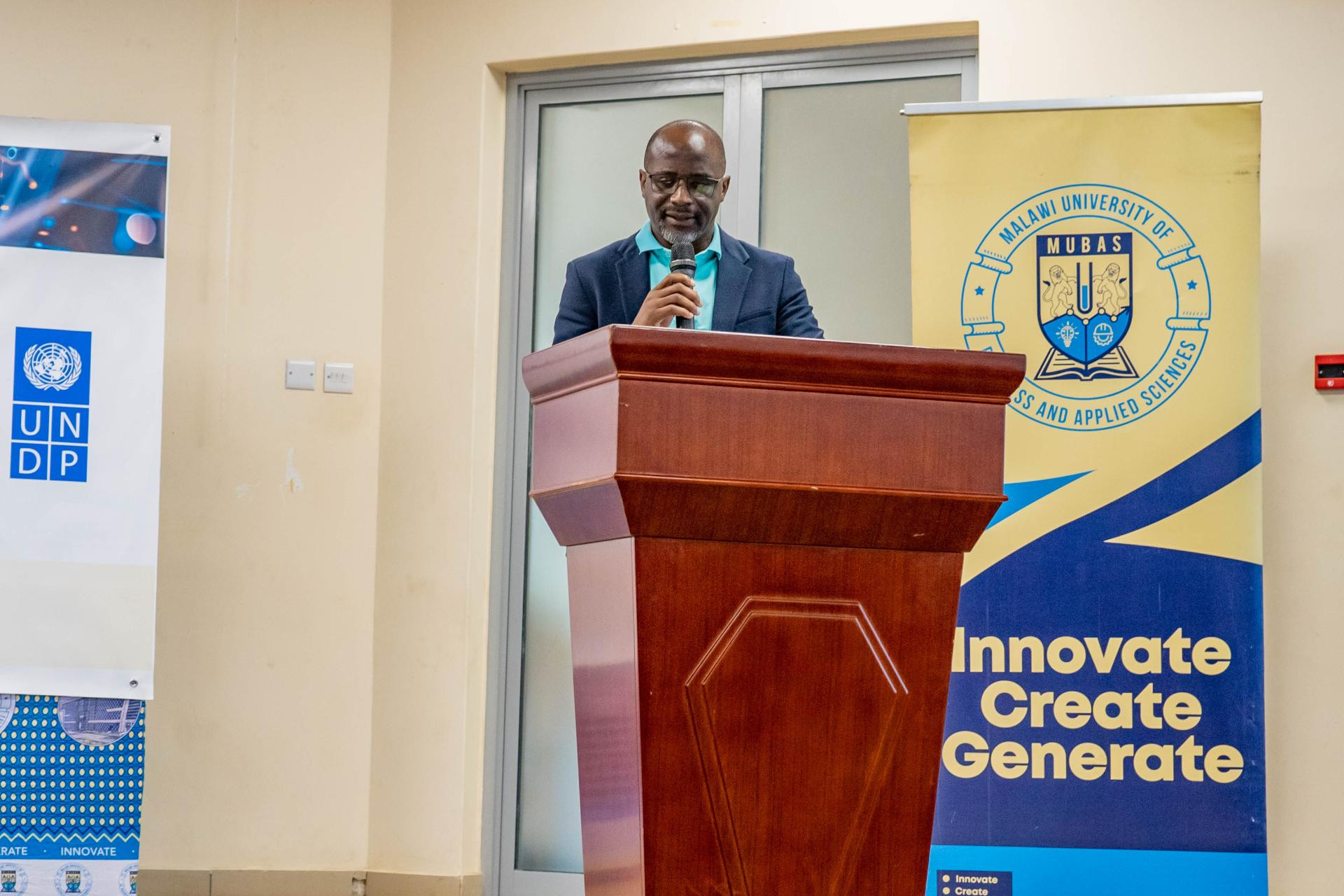
Dr. Martin Msendema delivering his speech during Nzeru Hub Launch
A significant milestone in 2025 was the launch of Nzeru Hub, a digital learning platform established by the Department of Computer Science and Information Systems under the Inclusive Digital Transformation for Malawi (IDT4M) Project.
Launched on 25 July 2025, Nzeru Hub provides free access to digital learning resources, digital literacy training and educational materials for both the university community and members of the public. The platform enables users to access learning resources that may not otherwise be readily available and promotes self-directed learning beyond formal academic programmes.
Importantly, MUBAS explicitly states that Nzeru Hub is intended to benefit the public at large, not only enrolled students. Through the platform, community members gain access to basic digital literacy, online educational resources and information that enhances employability, entrepreneurship and participation in the digital economy.
This initiative provides strong evidence of free access to educational resources beyond the University's student population, directly aligning with the requirements of SDG Indicator 4.3.1.
Public Access to Educational Events
The Malawi University of Business and Applied Sciences (MUBAS) recognises the importance of making knowledge, research and expertise accessible beyond its enrolled student population. In support of Sustainable Development Goal (SDG) 4.3.2, the University regularly hosts educational events that are open to members of the public, professionals, government representatives, researchers, industry stakeholders and learners from other institutions. During 2025, MUBAS hosted at least nine public educational events comprising public lectures, seminars, conferences, research dissemination activities and capacity-building workshops. These events provided opportunities for individuals beyond the University's enrolled student population to access academic expertise, research findings, innovation knowledge and professional learning opportunities. The events engaged the general public of the wider community, academics, government representatives, industry professionals, researchers, and students from different institutions.
Public Lectures
During 2025, MUBAS hosted four (4) public lectures that provided open educational opportunities beyond its enrolled student population. These lectures covered diverse themes including environmental sustainability, public health, nuclear science, artificial intelligence and public policy. Through these events, the University created platforms where researchers, professionals, students, government stakeholders and members of the wider community could access expert knowledge and engage in discussions addressing national and global development challenges.
The public lectures demonstrate MUBAS' role as a knowledge-sharing institution that extends education beyond formal degree programmes by making academic expertise and research insights accessible to society
These public lectures include;
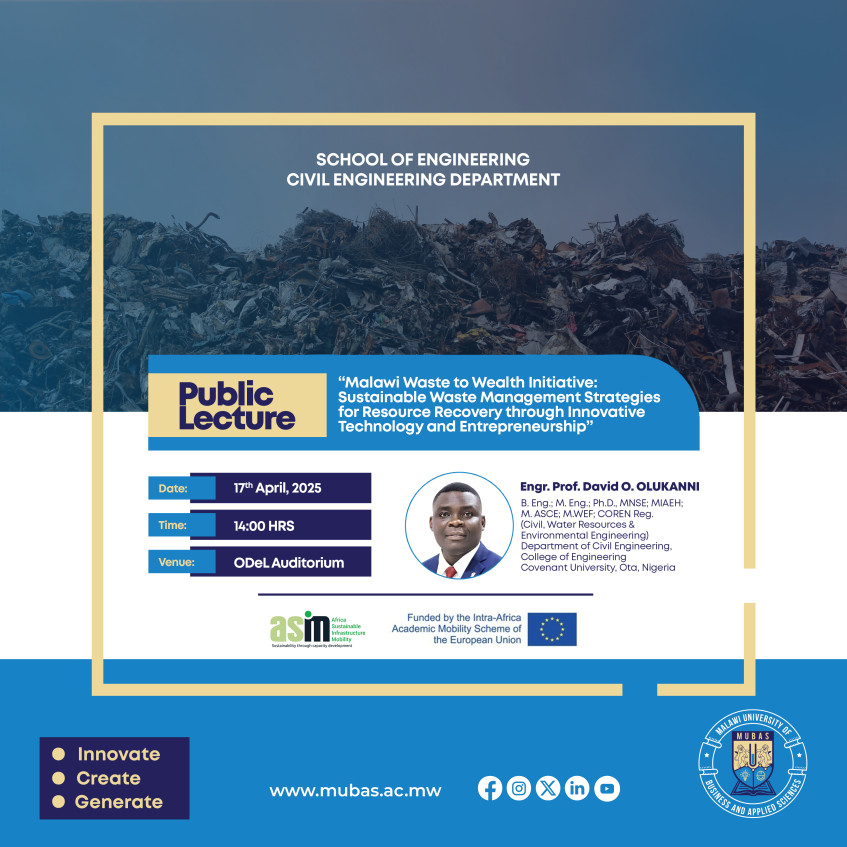
1. Malawi Waste to Wealth Initiative-17 April 2025
The School of Engineering, Civil Engineering Department hosted a public lecture on “Malawi Waste to Wealth Initiative: Sustainable Waste Management Strategies for Resource Recovery through Innovative Technology and Entrepreneurship.” The lecture was held at the ODeL Auditorium and was also made accessible online. It focused on waste management, resource recovery, circular economy, waste-to-energy and environmental sustainability.
This contributed to Indicator 4.3.2 by creating an opportunity for members of the general public to access university-hosted knowledge on sustainable waste management and entrepreneurship, helping translate academic and research expertise into practical knowledge relevant to communities and businesses.
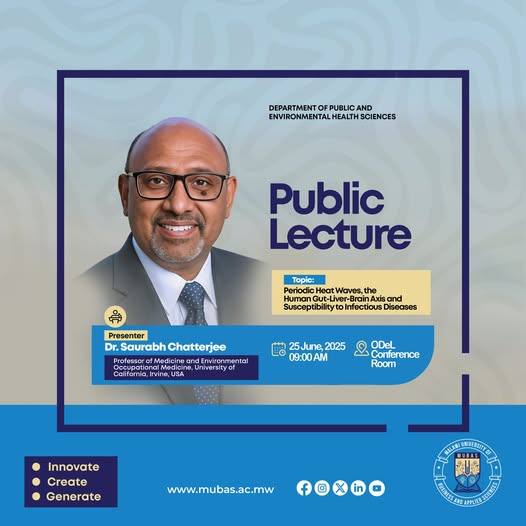
2. Periodic Heat Waves and Infectious Diseases – 25 June 2025
The School of Science and Technology, Department of Public and Environmental Health Sciences hosted a public lecture titled “Periodic Heat Waves, the Human Gut-Liver-Brain Axis and Susceptibility to Infectious Diseases.” The event was held at the ODeL Auditorium and provided an online attendance option. It addressed the health implications of climate-related heat waves, including their relationship with infectious diseases such as malaria and cholera, as well as prevention measures and policy responses.
The lecture contributed to Indicator 4.3.2 by opening university-based scientific and public-health knowledge to the wider public, particularly on climate change, environmental health and disease prevention issues that directly affect communities in Malawi and other parts of Sub-Saharan Africa.
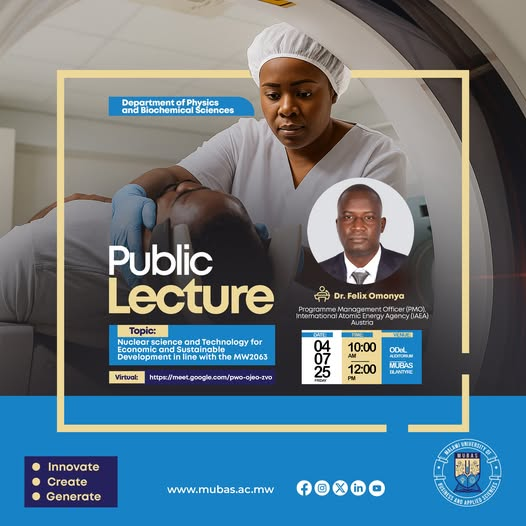
3. Nuclear Science and Technology for Sustainable Development – 4 July 2025
The School of Science and Technology, Department of Physics and Biochemical Sciences hosted a public lecture on “Nuclear Science and Technology for Economic and Sustainable Development in line with the MW2063.” The event took place at the MUBAS ODeL Auditorium on 4 July 2025.
This event contributed to Indicator 4.3.2 by providing a public platform for knowledge dissemination on nuclear science and technology, particularly its potential contribution to Malawi's economic transformation and sustainable development aspirations under MW2063. By hosting the lecture at the University as a public event, MUBAS enabled knowledge on a specialised scientific field to reach audiences beyond its formally enrolled students.
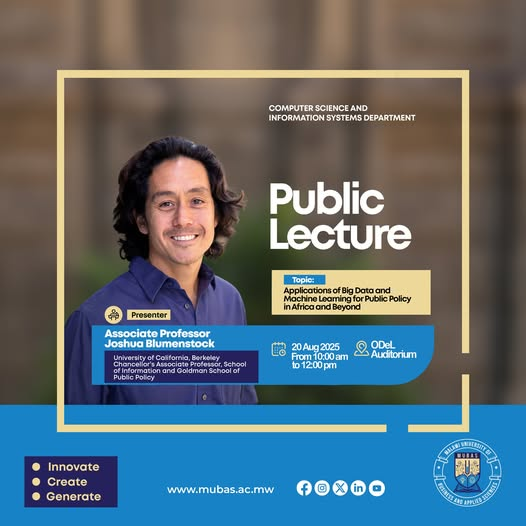
4. Big Data and Machine Learning for Public Policy – 20 August 2025
The Computer Science and Information Systems Department hosted a public lecture titled “Applications of Big Data and Machine Learning for Public Policy in Africa and Beyond.” Held at the ODeL Auditorium, the lecture featured Professor Joshua Blumenstock of the University of California, Berkeley, whose research focuses on using data and technology to address social and development challenges, including the needs of vulnerable populations.
The lecture contributed to Indicator 4.3.2 by making specialised knowledge on emerging digital technologies, big data and machine learning available through a university-hosted public event. It also connected academic knowledge with broader public-policy and development challenges in Africa.
Seminars
On 10 October 2025, MUBAS, through the School of Engineering in partnership with the Japan International Cooperation Agency (JICA), hosted the JICA Chair Seminar focusing on “Sharing Mining Experiences in Malawi and Abroad.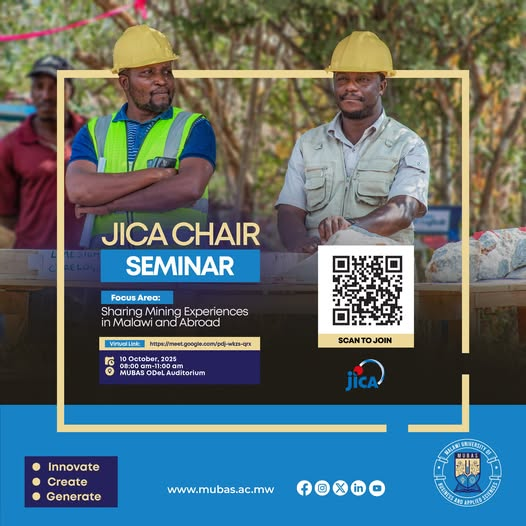
The seminar created an open learning platform bringing together mining experts, academics, government representatives, researchers and students from different institutions to discuss opportunities and challenges within Malawi's mining sector. Participants from institutions including the University of Malawi, Malawi University of Science and Technology and Lilongwe University of Agriculture and Natural Resources joined the knowledge-sharing engagement.
The seminar promoted access to specialised knowledge outside the normal classroom environment and strengthened collaboration between academia, industry and public stakeholders.
Another Research Seminar: Introduction to the Discovery Research Support Hub (DRSH) 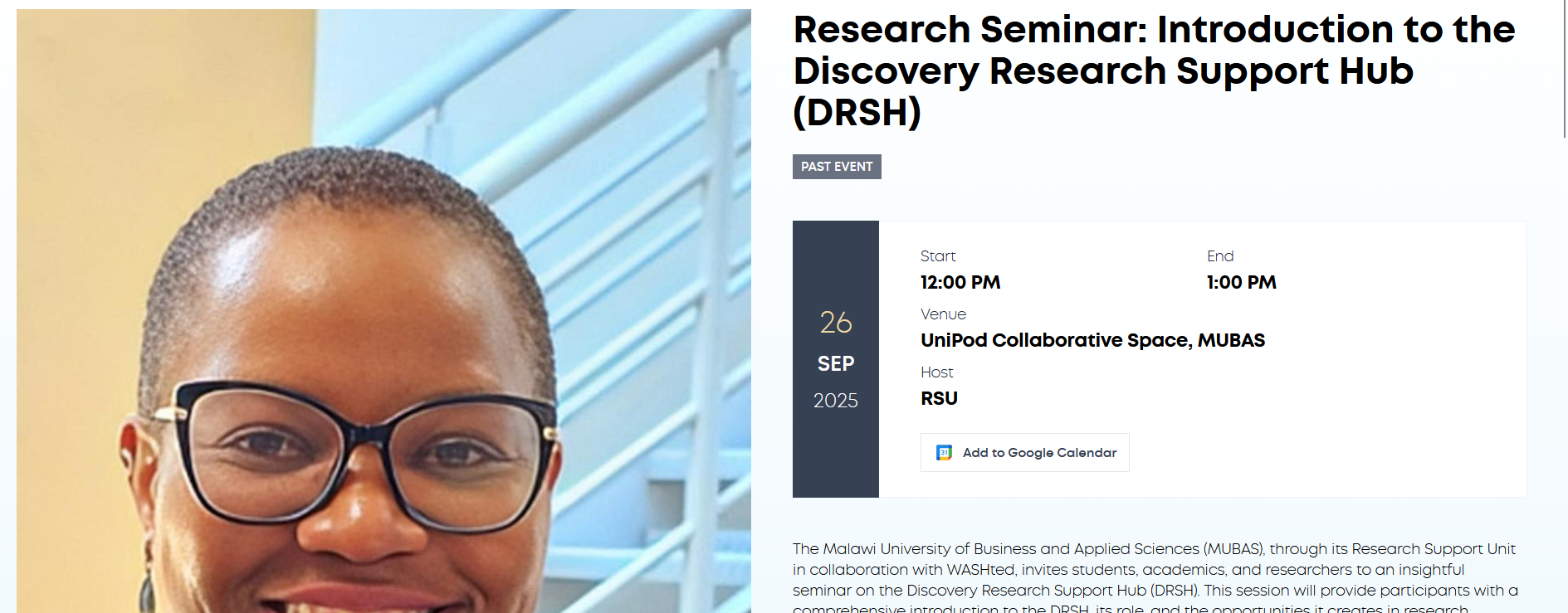
MUBAS Research and Innovation Week 2025
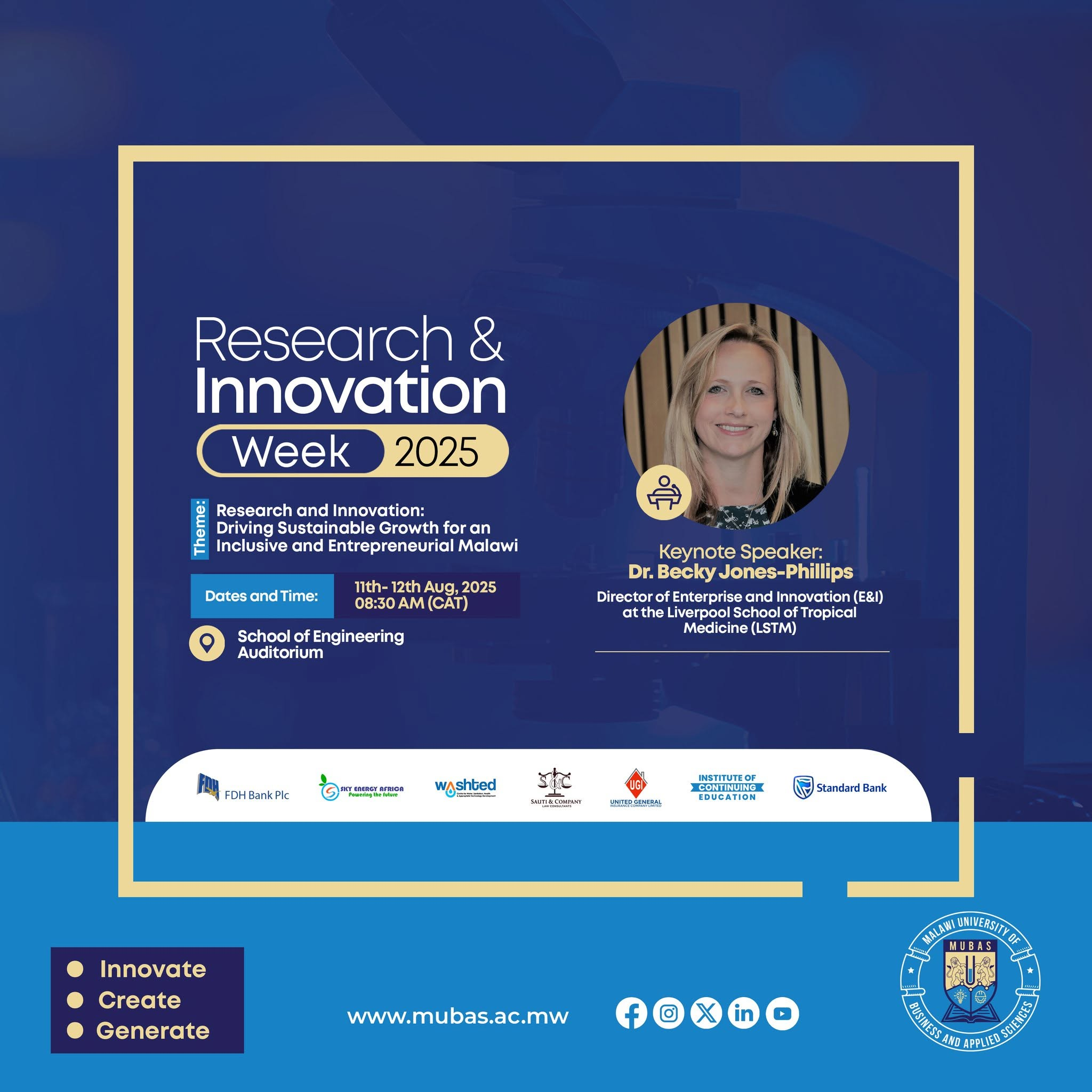
MUBAS hosted the annual Research and Innovation Week 2025 from 11–13 August 2025 under the theme: “Driving Sustainable Growth for an Inclusive and Entrepreneurial Malawi.” The event served as an open knowledge-sharing platform where researchers, students, industry partners, government representatives and innovators presented research findings, demonstrated innovations and discussed solutions to national challenges. Activities included;Innovation exhibitions, Research presentations, Knowledge-sharing sessions, Innovation pitches, Panel discussions and demonstrations of technological solutions.
The exhibition component provided an opportunity for external stakeholders and visitors to interact with emerging innovations developed at MUBAS, including projects addressing areas such as smart farming, digital solutions and entrepreneurship. (mubas.ac.mw)
This event aligns strongly with SDG 4.3.2 because it extends educational engagement beyond formal university teaching and provides public access to research knowledge and innovation.
First MUBAS Education Conference
From 25–26 September 2025, MUBAS, through the School of Education, Communication and Media Studies hosted its inaugural Education Conference under the theme: “Education for Sustainable Development and Wealth Creation.” 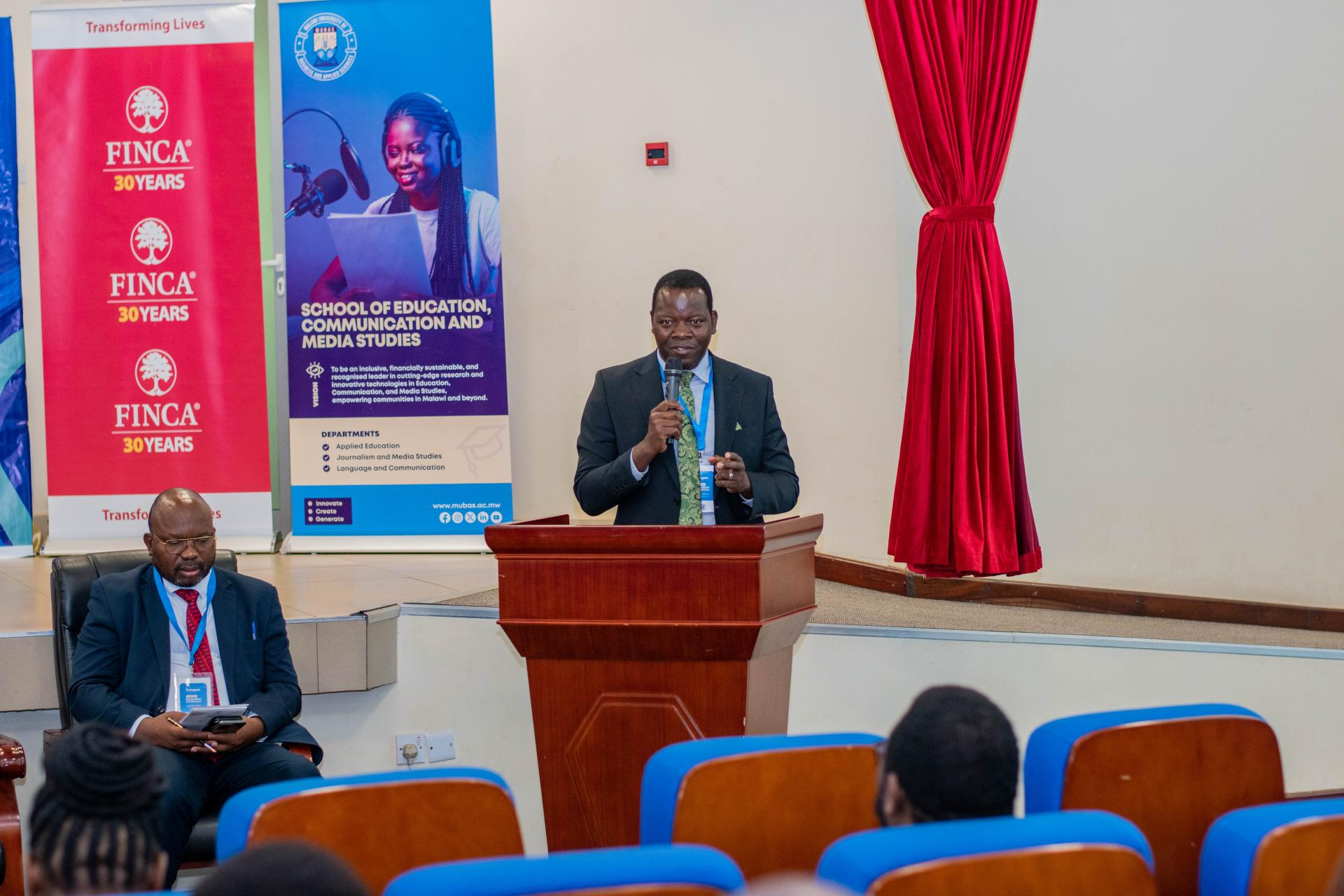
The conference provided an open educational platform bringing together educators, researchers, policymakers and other education stakeholders to discuss issues affecting Malawi's education sector. Key discussion areas included:
- Curriculum reform;
- Open, Distance and e-Learning;
- Technical and vocational education;
- Education policy;
- Emerging technologies in education; and
- Entrepreneurship through education.
By bringing together education professionals and stakeholders beyond the University's immediate student community, the conference strengthened public access to educational dialogue and knowledge exchange.
Fundamentals of Grant Proposal Writing Workshop
On 2 December 2025, MUBAS through the Research Support Unit hosted the Fundamentals of Grant Proposal Writing Workshop at the UniPod Collaborative Space, with virtual participation available through Zoom.
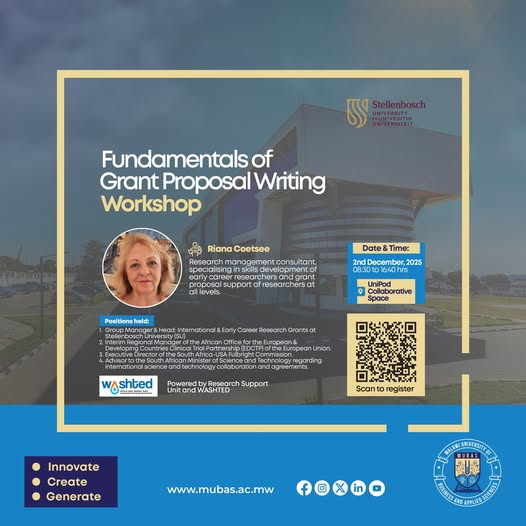
The workshop provided an educational platform focused on strengthening research capacity, particularly in areas such as:
- Developing competitive grant proposals;
- Understanding research impact;
- Strengthening researcher profiles;
- Budget development; and
- Understanding funding opportunities.
Although primarily targeted at researchers and postgraduate students, the workshop represents MUBAS' broader knowledge-sharing role by providing access to specialised academic and research skills beyond regular classroom teaching.
References & Evidence Sources
- [1] Executive Management and Leadership Programm
- [2] Secondary Education in Malawi (ISEM II)
- [3] Motor Vehicle Mechanics
- [4] Nzeru Hub
- [5] Malawi Waste to Wealth Initiative-17 April 2025
- [6] Periodic Heat Waves and Infectious Diseases – 25 June 2025
- [7] Nuclear Science and Technology for Sustainable Development – 4 July 2025
- [8] JICA Chair Seminar
- [9] DRSH Research Seminar
- [10] Research and Innovation Week 2025
- [11] Education Conference
- [12] Fundamentals of Grant Proposal Writing Workshop