
Neutral Platform for Dialogue on National Development Issues
a. Neutral Platform for Innovation Policy Dialogue and Knowledge Exchange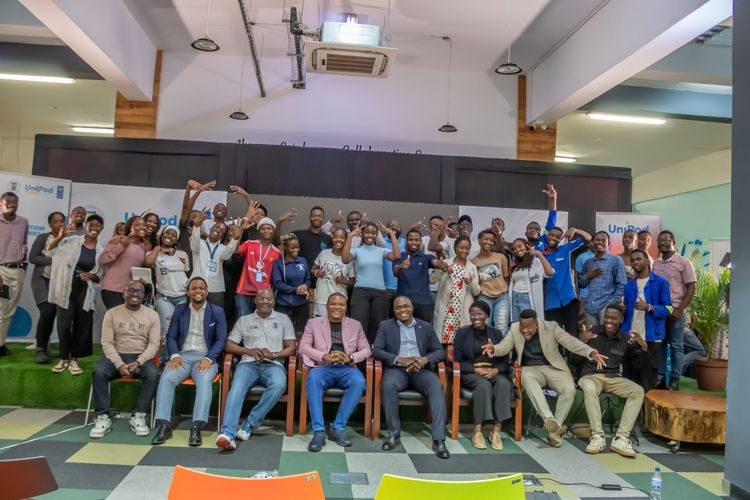
MUBAS Provides a Safe Platform for Industry, Academia and Innovators to Exchange Ideas on Entrepreneurship and Innovation
On 29 August 2025, the Malawi University of Business and Applied Sciences (MUBAS), in partnership with the United Nations Development Programme (UNDP), launched the Innovation Talk Series at the University Innovation Pod (UniPod) in Blantyre. The initiative established a neutral and inclusive platform where policymakers, industry leaders, researchers, entrepreneurs, innovators, and students could openly engage in discussions on innovation, entrepreneurship, technology, and national development. By bringing together participants from different sectors, MUBAS reinforced its role as an independent institution that facilitates constructive dialogue on issues affecting Malawi’s innovation ecosystem.
Speaking during the launch, the Head of Research and Innovation at MUBAS, Dr. Madalitso Tsakama, explained that the Innovation Talk Series was created to stimulate discussions on innovations capable of driving economic development while encouraging collaboration among diverse stakeholders. He noted that the series would provide regular opportunities for participants to exchange ideas, experiences, and practical lessons that strengthen innovation and entrepreneurship across Malawi. Each monthly session would focus on a different theme, ensuring that discussions remain relevant to emerging national priorities and encourage diverse perspectives.
Dr. Tsakama further highlighted that the series would facilitate dialogue on a broad range of topics, including technological advancement, entrepreneurship, business development, intellectual property, and innovation policy. By integrating policy discussions with practical innovation experiences, the platform enables participants from academia, industry, government, and the private sector to jointly explore evidence-based solutions to challenges affecting the country's innovation landscape.
UniPod Manager Francis Masi described UniPod as a national hub for innovation that provides mentorship, product development, prototyping, and intellectual property support. He encouraged innovators from across Malawi to utilise the facility to transform ideas into market-ready products while benefiting from collaborative learning and expert guidance. His remarks reinforced UniPod's role as an open platform where innovators from different backgrounds can access resources and engage with experts in a supportive environment.
The inaugural Innovation Talk, themed "How They Built It," MUBAS featured Dr. Wisely Phiri, Managing Director of Sparc Systems Limited, a leading multi-product and multi-division multinational IT systems integration company headquartered in Blantyre, Malawi and President of the Malawi Confederation of Chambers of Commerce and Industry (MCCCI), the apex business association representing all sectors of the economy in Malawi together with entrepreneur Schizzo Thomson. Through interactive discussions, the speakers shared experiences on entrepreneurship, resilience, ethical leadership, and business growth while responding to questions from participants. The open exchange of ideas encouraged meaningful dialogue between experienced entrepreneurs, aspiring innovators, students, and academics.
By launching the Innovation Talk Series, MUBAS has institutionalised a recurring forum that promotes open discussion, collaboration, and evidence-based dialogue on innovation and entrepreneurship. The initiative demonstrates the University's commitment to providing a neutral platform where stakeholders from academia, industry, government, and the innovation ecosystem can collectively discuss challenges, exchange knowledge, and identify practical solutions that contribute to Malawi's sustainable economic development.
b. MUBAS UniPod Talk Series Provides a Safe Platform for Innovation Policy and Entrepreneurship Dialogue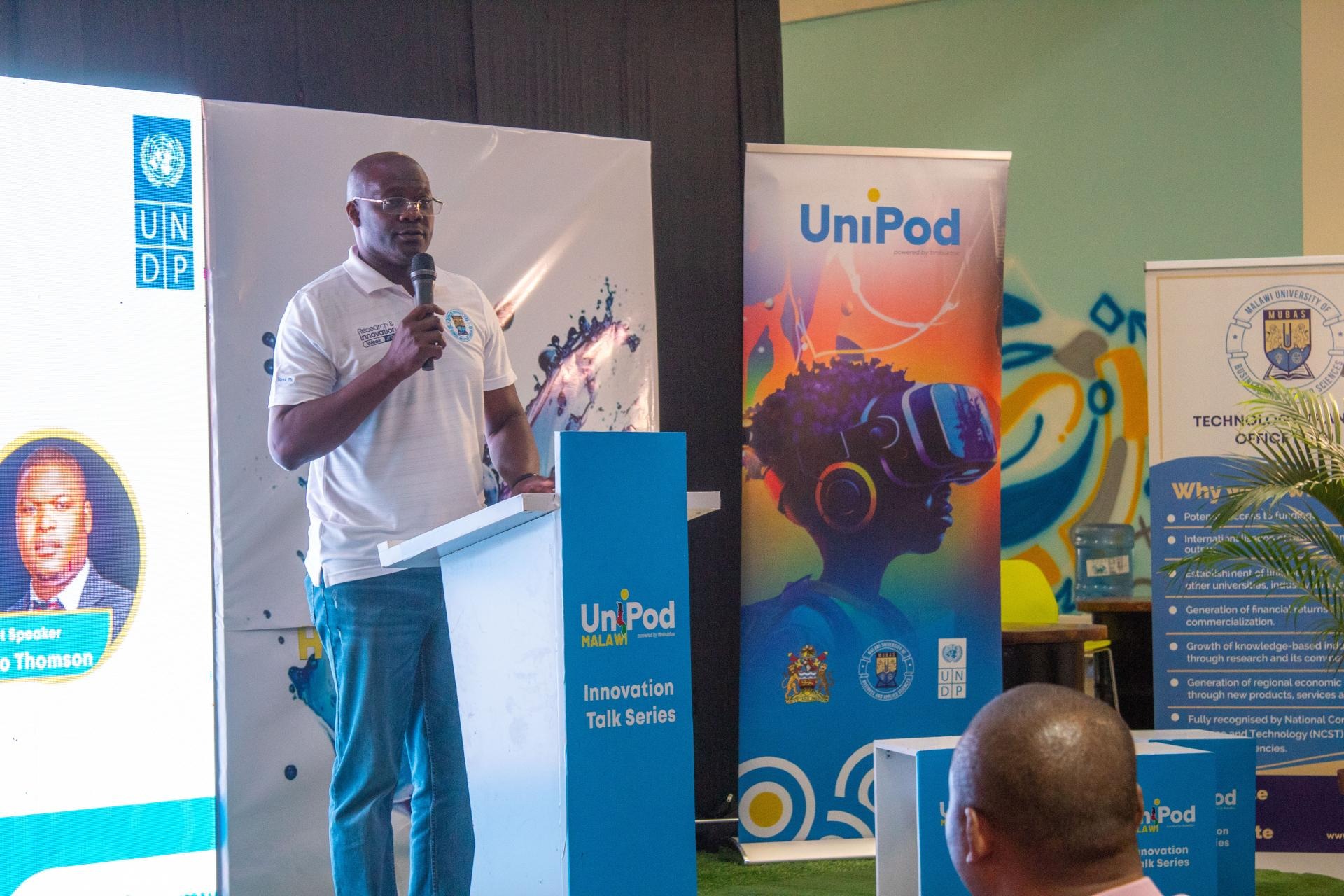
Dr Madalitso Tsakama delivers his opening remarks during the launch of the MUBAS Innovation Talk series.
The Malawi University of Business and Applied Sciences (MUBAS), through UniPod Malawi, continues to provide a neutral platform for open dialogue by hosting the UniPod Talk Series, an initiative that brings together entrepreneurs, industry leaders, researchers, students, and innovation practitioners to openly discuss challenges and opportunities affecting entrepreneurship, innovation, and national development. The event provides a safe environment where participants with different experiences and perspectives engage in constructive discussions that contribute to Malawi's innovation ecosystem.
Held on 29 August 2025 under the theme How They Built It, the Talk Series brought together successful entrepreneurs, industry professionals, university researchers, students, and aspiring innovators to exchange practical experiences and explore solutions to challenges facing startups and innovation-driven businesses. Through fireside discussions and interactive dialogue, participants openly debated issues such as access to finance, innovation under resource constraints, sustainable business development, inclusive entrepreneurship, leadership, and team building.
The participation of MUBAS' Head of Research and Innovation, Dr. Madalitso Tsakama, alongside experienced entrepreneurs Wisely Phiri and Schizzo Thomson, created an environment where academic knowledge and industry experience complemented each other. Their discussions encouraged evidence-based thinking and demonstrated how universities can serve as trusted spaces for meaningful engagement between academia, industry, and future innovators.
A significant feature of the event was the interactive question-and-answer session, which enabled students, entrepreneurs, and professionals to engage directly with speakers. Participants freely raised questions, shared perspectives, and discussed practical challenges facing Malawi's entrepreneurial ecosystem. This open dialogue strengthened knowledge exchange and encouraged collaborative thinking without favouring any particular institutional or commercial interest.
By creating opportunities for respectful dialogue between academia, industry, innovators, and young entrepreneurs, MUBAS demonstrates its role as an independent institution that promotes inclusive stakeholder engagement, knowledge sharing, and collaborative approaches to addressing innovation and economic development challenges in Malawi.
c. Neutral Platform for Renewable Energy Policy and Research Collaboration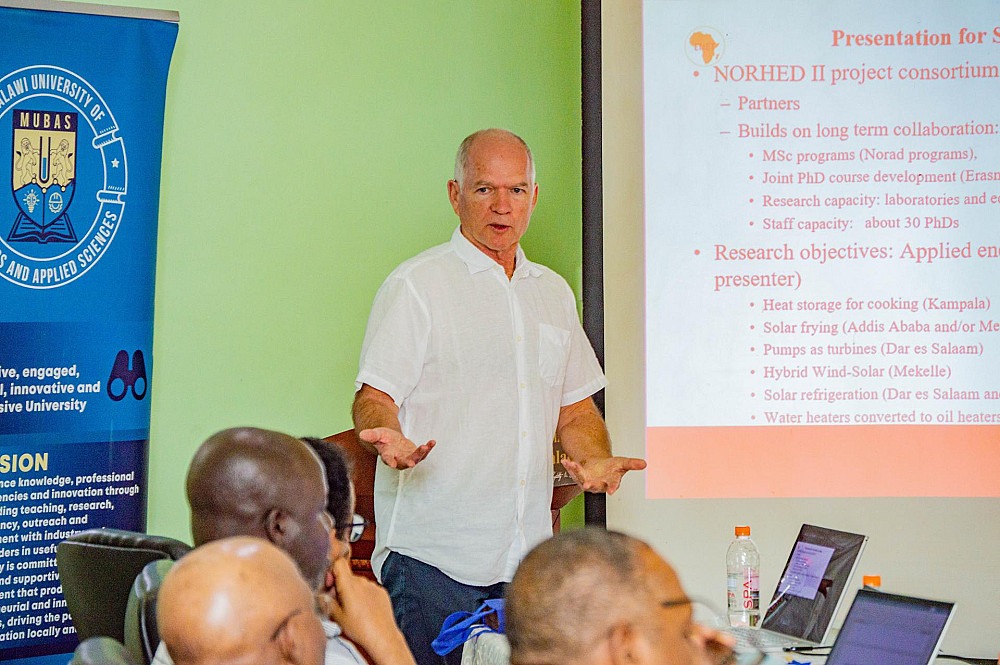
Prof. Ole Jørgen Nydal from Norwegian University of Science and Technology (NTNU) in Norway making a presentation.
The Malawi University of Business and Applied Sciences (MUBAS) demonstrated its commitment to promoting inclusive dialogue on national development by hosting the 2025 Energy Technology Network (EnergyNET) Annual General Meeting from 10–14 November 2025 at Wamkulu Palace in Lilongwe. The meeting provided a neutral platform where government representatives, researchers, academics, development partners, industry experts, and international universities came together to openly discuss Malawi's energy challenges and identify collaborative solutions for advancing renewable energy technologies.
The forum enabled participants to review research progress, share technological innovations, evaluate research outputs, and discuss strategies for strengthening renewable energy adoption across Malawi and Africa. Stakeholders also examined Malawi's renewable energy landscape, national energy strategies, and opportunities for collaborative research, creating an environment that encouraged evidence-based dialogue and knowledge exchange among participants with different institutional perspectives.
Opening the meeting, MUBAS Deputy Vice-Chancellor Professor Ishmael Kosamu emphasised the importance of collective engagement in addressing Malawi's ongoing energy crisis. He noted that the gathering provided an opportunity for renewable energy experts to think together and develop sustainable solutions that respond to national priorities. He further highlighted that the EnergyNET initiative supports Malawi Vision 2063, the National Research Agenda, the National Education Sector Investment Plan (2020–2030), and the Sustainable Development Goals, demonstrating the value of collaboration between higher education institutions, government, and development partners.
Professor Ole Jørgen Nydal from the Norwegian University of Science and Technology (NTNU) presented the consortium's work on decentralised renewable energy systems and clean cooking technologies suitable for rural communities. His presentation stimulated discussion among researchers, policymakers, and practitioners on practical approaches for expanding energy access while addressing environmental and socio-economic challenges.
The meeting also brought together officials from the Ministry of Natural Resources, Energy and Mining, energy service providers, researchers, project coordinators, and representatives from universities across Africa and Norway. Participants showcased locally developed renewable energy technologies, exchanged research findings, and explored opportunities for strengthening regional collaboration. A technical visit to the Mthembanji Solar Mini-Grid further enabled delegates to discuss practical lessons from Malawi's renewable energy initiatives and their potential for wider replication.
By hosting the EnergyNET Annual General Meeting, MUBAS reinforced its role as an independent institution that provides a safe and neutral forum for constructive dialogue between government, academia, industry, and international partners. The meeting promoted evidence-based discussion, collaborative research, and shared problem-solving on renewable energy policy and sustainable development, demonstrating how universities can facilitate multi-stakeholder engagement in addressing complex national and regional challenges.
d. MUBAS Provides a Neutral Platform for Policy Dialogue through the First Education Conference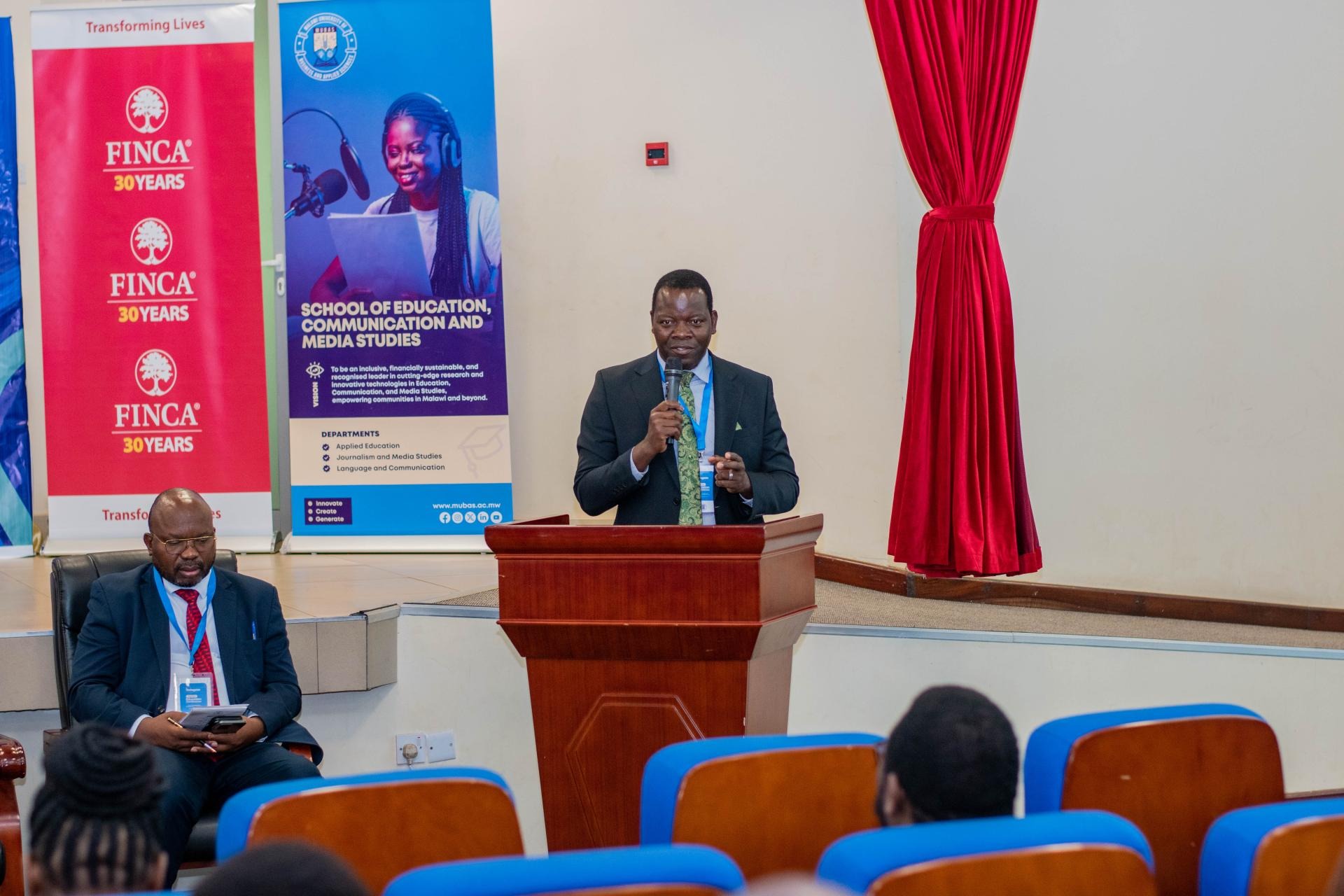
Director of Open, Distance and e-Learning in the Ministry of Education, Professor Joshua Valeta delivering his speech
The Malawi University of Business and Applied Sciences (MUBAS), through the School of Education, Communication and Media Studies (SECOMS), demonstrated its commitment to providing a neutral and inclusive platform for dialogue by hosting its inaugural Education Conference on 25–26 September 2025 under the theme Education for Sustainable Development and Wealth Creation. The conference event created a safe academic environment where policymakers, government representatives, researchers, education practitioners, academics, students, and other stakeholders freely exchanged ideas on strengthening Malawi’s education sector.
Rather than promoting a single institutional or political viewpoint, MUBAS convened stakeholders with diverse backgrounds to openly discuss national education challenges and opportunities. Discussions focused on education policy implementation, innovation in teaching and learning, lifelong learning, skills development, and the contribution of education towards achieving the aspirations of Malawi 2063 and the Malawi Implementation Plan (MIP-1). By bringing together participants from different institutions, the University fostered constructive and evidence-based dialogue on issues of national importance.
Representing the Ministry of Education, Professor Joshua Valeta, Director of Open, Distance and e-Learning, highlighted the importance of creating a forum where researchers, practitioners, and education leaders could collectively reflect on research findings, assess existing challenges, and identify practical solutions that support national development priorities. His participation demonstrated the conference's role in facilitating direct engagement between government policymakers and the academic community.
The Executive Dean of SECOMS, Dr. Kizito Kanyoma, reaffirmed MUBAS' role as an impartial convenor by emphasizing that the conference was designed to provide a platform where academics, scholars, policymakers, and stakeholders could openly deliberate on how education can contribute to building an inclusive, sustainable, and prosperous Malawi. The event encouraged respectful exchange of ideas and collaborative problem-solving among participants representing different sectors.
By hosting multidisciplinary policy discussions that integrate government, academia, professional bodies, and students, MUBAS reinforces its role as an independent institution that promotes evidence-based debate, stakeholder engagement, and collaborative approaches to addressing national challenges through higher education.