
MUBAS Strengthens Community Engagement Through Inclusive Governance and Collaboration
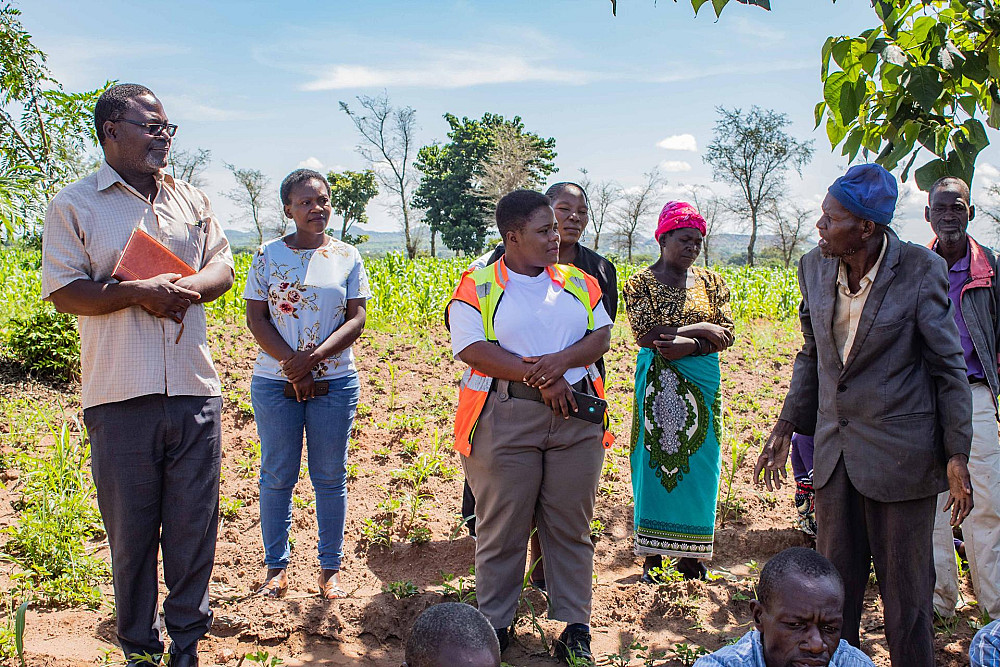 The Malawi University of Business and Applied Sciences (MUBAS) is committed to strengthening community relationships through meaningful stakeholder participation and inclusive decision-making. The University recognises the importance of involving local communities, local government authorities, civil society organisations and development partners in institutional planning and governance.
Our Commitment
To support this commitment, MUBAS has established stakeholder engagement guidelines that provide a framework for participation by individuals and organisations within and outside the University. These guidelines promote transparency, accountability and shared responsibility in university initiatives.
Key Mechanisms of Engagement
- Consultative Forums: Regular meetings with community leaders, local government officials, and partner organizations to provide input on university initiatives
- Advisory Committees: Inclusion of local representatives and civil society in committees that influence university policy and community projects.
- Open Dialogue Platforms: Town hall meetings and feedback sessions to ensure two-way communication between the University and local stakeholders.
- Collaborative Projects: Joint initiatives addressing community needs in areas such as entrepreneurship, environmental management, and education.
These mechanisms provide opportunities for stakeholders to contribute ideas, share concerns and participate in discussions on initiatives affecting the University and its surrounding communities.
The University also works to address community needs through collaborative projects in areas such as entrepreneurship, environmental management and education. These efforts strengthen cooperation between MUBAS and its stakeholders while supporting sustainable development and mutually beneficial relationships.
By promoting open communication and inclusive participation, MUBAS continues to demonstrate its commitment to responsible governance and meaningful community engagement.
Community Engagement Guidelines
Definitions
• Community: Refers to collective groups of individuals who are within the location around which MUBAS is located.
• Community Members: Refers to residents of the community of MUBAS.
• Engagement: Refers to a two-way process by which MUBAS connects, relates, and coexists with its community.
• Community Engagement: Refers to the process by which MUBAS involves the community who are affected by the decisions it makes or who can influence the implementation of decisions.
• Staff: Refers to anyone employed by MUBAS.
• Student: Refers to a student enrolled at MUBAS in an academic program designated by the statutes or rules to be an undergraduate or postgraduate program.
• Affiliates: Refers to all individuals or entities associated with the University other than its staff or enrolled students. These may include but not necessarily limited to collaborators, partners, exchange students, visiting scholars, consultants, and alumni.
• Alumni: Refers to graduates of MUBAS.
• The University: Has the same meaning ascribed to that expression inthe University’s enabling legislation (MUBAS).
Purpose
The purpose of these guidelines is to:
• Provide a structured framework for effective, transparent, and inclusive community communication and engagements;
• Establish and maintain sound and mutually beneficial relationships with community members;
• Strengthen the university’s contribution to national, regional, and global development priorities, including the Sustainable Development Goals (SDGs);
• Enhance mutual trust and collaboration between the university and community members;
• Ensure that all interactions with community members align with the university’s strategic vision and ethical values.
Scope
These guidelines apply to staff, students and affiliates of MUBAS.
Key Principles
All stakeholder engagements shall be guided by the following principles:
• Mutual benefit: MUBAS shall ensure community engagement creates value for both the university and the community.
• Inclusivity: MUBAS shall ensure that relevant community members, especially marginalized groups, should have the opportunity to participate in the activities of the University.
• Transparency: MUBAS shall undertake clear communication of objectives, expectations, and outcomes of its activities to the community.
• Mutual Respect: MUBAS shall ensure recognition of the value and contribution of community members.
• Accountability: MUBAS shall have clearly defined responsibilities and undertake regular reporting on the progress of its activities.
• Sustainability: MUBAS shall ensure that long-term relationships with community members are built on shared goals.
Guidelines
1. Identification and mapping of community members
To identify and manage community members, the university shall:
• Conduct an analysis of community members at the start of each project or initiative;
• Categorize community members based on their influence, interest, and relevance to university objectives;
• Maintain an updated database of community members.
2. Modes of Engagement
The engagements may take the form of:
• Consultations: These shall take the form of town hall meetings, focus groups, and surveys;
• Collaboration: This shall involve joint projects, research partnerships, and co-publications;
• Outreach: This shall involve public lectures, volunteer programs, policy advocacy and technical advisory roles;
• Internships and Externships: Student and staff placements or secondments;
• Co-creation: This pertains to the involvement of community members in curriculum design, research and administrative planning.
3. Formalisation of Engagements
Engagements shall be formalised through the following means:
• All formal partnerships shall be governed by written agreements such as signed contracts or Memoranda of Understanding (MoUs);
• Legal, ethical, and financial due diligence shall be carried out before signing the agreements;
• The agreements shall clearly outline the roles, expectations, and resource commitments of both parties.
4. Responsibilities
University Leadership: Shall conduct monitoring and evaluation, review and reporting to the University council.
Staff, Students and Affiliates: Engage the community in areas of mutual benefit as guided by the community engagement guidelines.
Partnerships With Local Government
MUBAS engages local government in community initiatives

The University engages local government in collaborative initiatives that address shared community priorities and promote environmental sustainability. In a cleaning campaign around the university’s main campus and surrounding areas, the University brought together students and local government representatives, including Blantyre City Council Mayor, accompanied by councillors and council officials, to address cleanliness and sanitation challenges affecting the campus and the wider community.
The engagement provided a platform for collaboration between the university community and local government on matters of mutual concern. During the campaign, Mayor Osman commended the students’ initiative and expressed his commitment to partnering with them, while announcing plans for a cleanliness competition among universities in Blantyre. These engagements demonstrate cooperation between university representatives and local authorities in identifying and advancing shared community priorities.
This collaboration provides evidence of MUBAS’ engagement with local government in community-focused initiatives.
MUBAS integrates inclusive decision-making
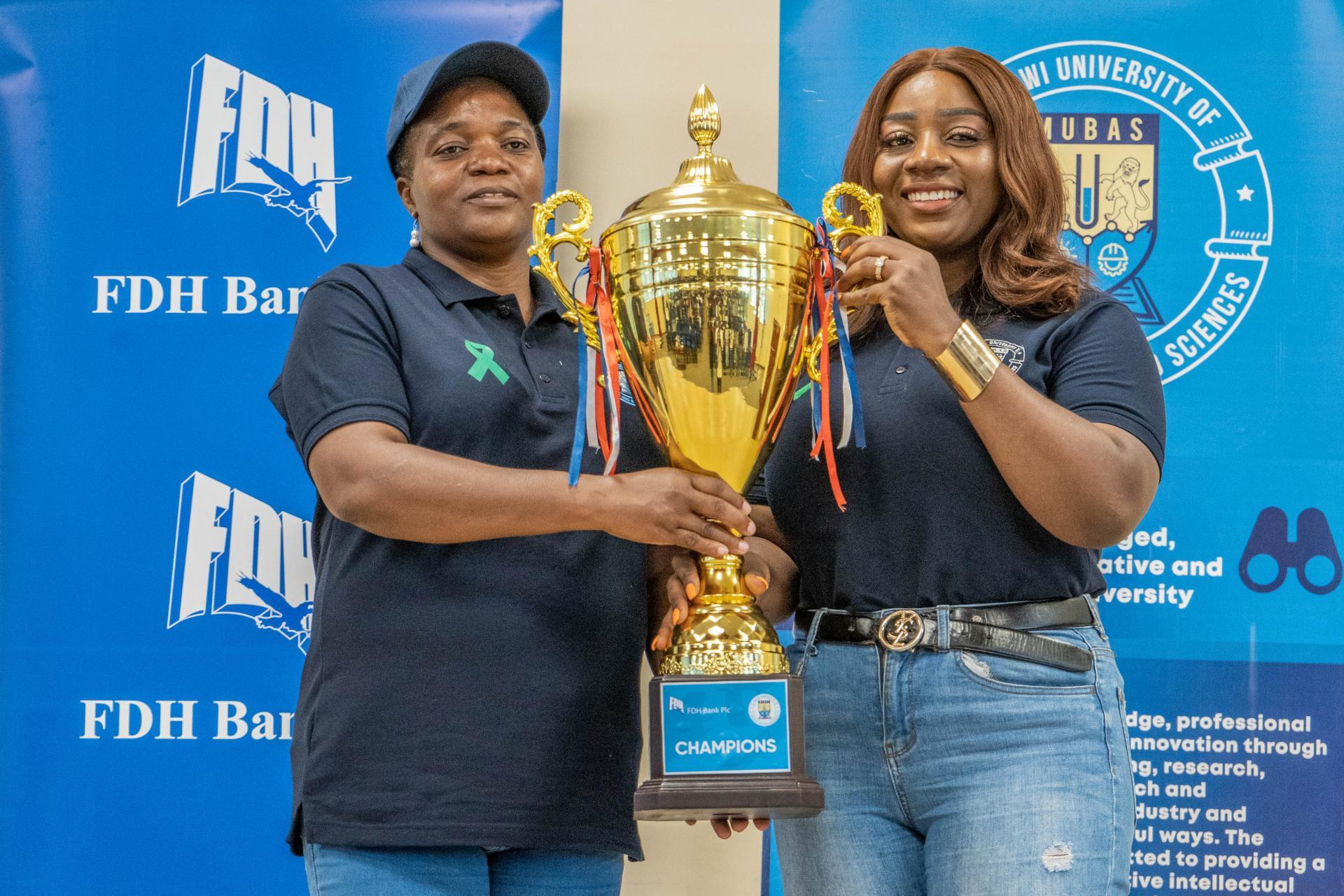
MUBAS integrates inclusive decision‑making into its governance by convening participatory forums that engage local government, civil society, community groups, and nearby residents. These sessions allow stakeholders to contribute directly to policy and initiative design, ensuring decisions reflect community needs and promote shared ownership.
During a recent consultative forum, MUBAS for Mental Health | Malawi University of Business and Applied Sciences, diverse stakeholders, including Banks (FDH), provided input on youth engagement, environmental management, Mental Health issues and community safety. Their contributions were formally incorporated into a revised wellbeing initiative, demonstrating how community voices shape institutional action and enhance responsiveness.
MUBAS opens door for TEVETA apprentices
The Malawi University of Business and Applied Sciences (MUBAS) and the Technical, Entrepreneurial, and Vocational Education and Training Authority (TEVETA), together with the Ministry of Labour, on 4th September 2025, signed a Memorandum of Understanding (MOU) aiming at enhancing human capital development in the country.
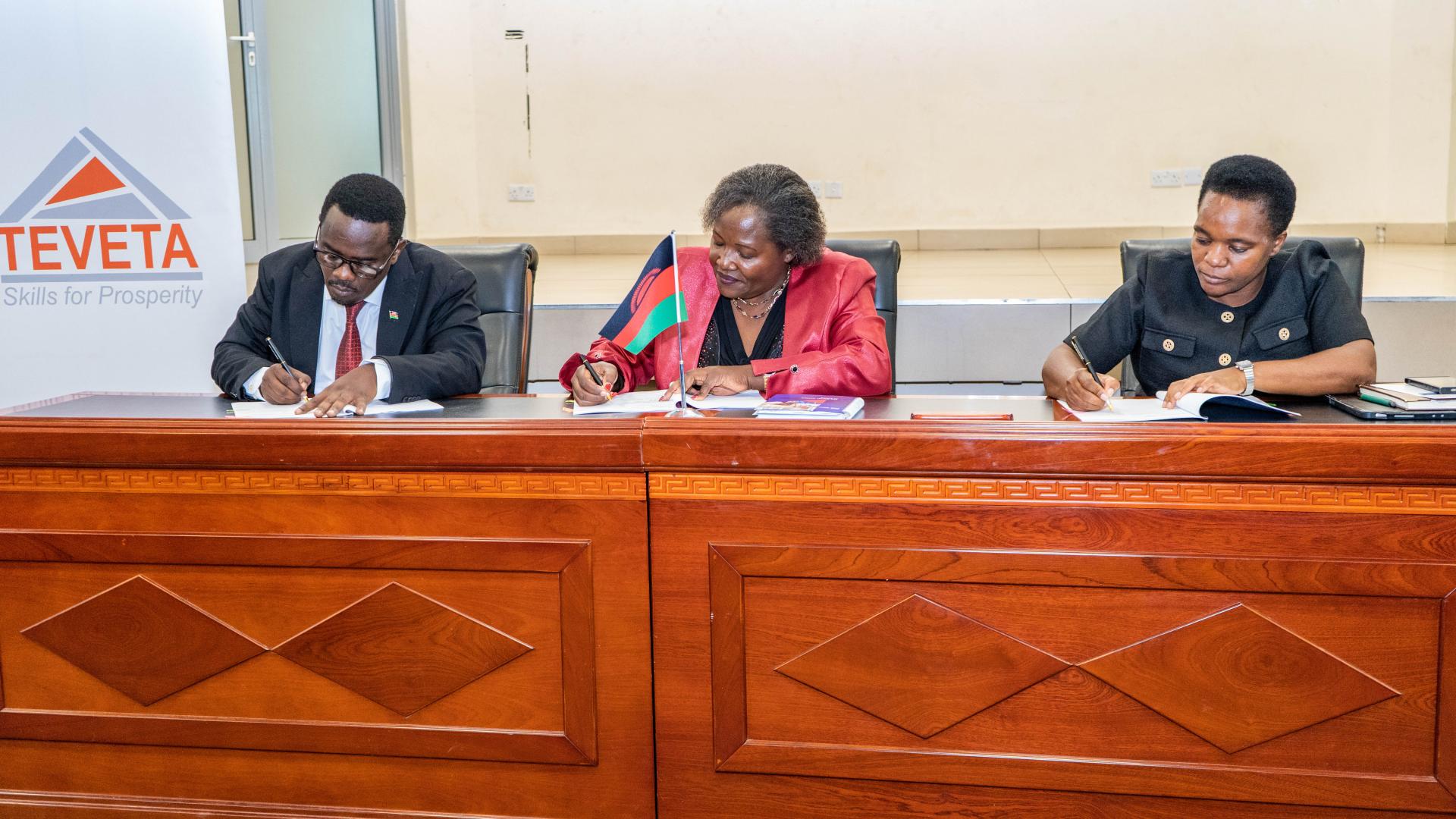
Associate Professor Nancy Chitera (R), PS for Labour Chikondano Mussa (C) and TEVETA Board Chairperson Pyoka Tembo sign MOU
The MOU signing ceremony took place at the University’s main campus in Blantyre, and it seeks to provide training and professional development opportunities for Malawians and create flexible learning pathways for students studying in technical and vocational colleges across the country. Principal Secretary for Labour, Chikondano Mussa, who signed the agreement on behalf of her ministry, said the MOU will create a formal working relationship between the three institutions and will ensure alignment in the development of human capital. Mussa challenged universities to create pathways for admission into their academic programmes to make tertiary education accessible for all people in the country.
“In addition to the standard selection process managed by the National Council for Higher Education, which requires a minimum of six credits, we also need to create pathways for candidates who may not meet these credit requirements but possess relevant prior learning and experience in their areas of interest”, Mussa said. She emphasised that the country needs skilled human capital to achieve economic development. “In Malawi, over nine million people are out of education, lack formal training, and remain unemployed. We must find innovative and sustainable ways of equipping this population with relevant skills that can enable them to secure formal employment or engage in meaningful self-employment”, she added.
According to the MOU, MUBAS and TEVETA will also collaborate in research and innovation initiatives to address industry challenges and foster technological advancements. MUBAS Vice-Chancellor, Associate Professor Nancy Chitera, stated that to expand access to tertiary education, the University has developed a Prior Learning Policy which will enable more Malawians to obtain formal qualifications. “We recognise that many Malawians possess valuable knowledge and skills despite not having gone through formal education, and we aim to support such individuals in obtaining formal qualifications to excel in their areas of specialisation”, she said.
The Board Chairperson, Pyoka Tembo, stated that under the MOU, TEVETA apprentices will now have the opportunity to advance their training up to Bachelor’s and Master’s degree levels. Under the agreement, TEVETA and MUBAS will also collaborate in staff development through trainer-of-trainers programmes, refresher courses and resource mobilisation.
Evidence Documents & Supporting Data
Verified institutional documentation, datasets, and certified audit artifacts for SDG evidence.